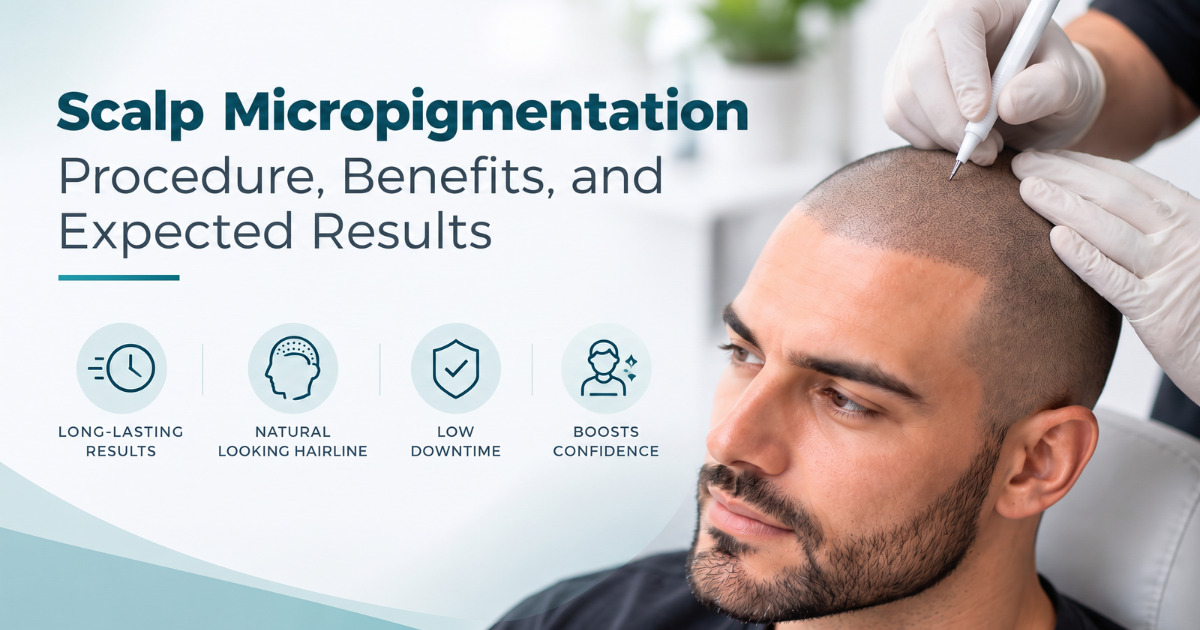
Hair thinning, a receding hairline, or visible bald patches can affect how you feel about your appearance. While hair loss treatments and hair transplantation may help address these concerns, they are not suitable for everyone. Scalp micropigmentation (SMP) offers another option by creating the appearance of fuller hair without surgery.
Scalp micropigmentation is a cosmetic procedure that deposits tiny pigment dots into the scalp to replicate the look of closely shaved hair follicles. It can help reduce the visual contrast between your hair and scalp, conceal certain scars, and create the appearance of greater density. Understanding the SMP procedure, its benefits, limitations, and expected results can help you decide whether it suits your hair restoration goals.
Key Takeaways
- Scalp micropigmentation is a non-surgical cosmetic procedure that creates the appearance of hair follicles using specialised pigments.
- SMP can help camouflage thinning hair, bald areas, receding hairlines, and certain scalp scars.
- Most people require multiple sessions to achieve a natural-looking result.
- Results can last for several years, although fading and touch-ups are possible.
- SMP does not stimulate hair growth or treat the underlying cause of hair loss.
What is Scalp Micropigmentation (SMP)?
Scalp micropigmentation (SMP) is a cosmetic pigmentation technique in which trained practitioners place tiny dots of pigment into the scalp. The dots are carefully positioned to resemble natural hair follicles, creating the visual impression of a closely shaved head or improved hair density. Scalp micropigmentation may be suitable if you experience:
- Male or female pattern hair thinning.
- A receding hairline or a visibly thinning crown.
- Bald patches caused by certain forms of hair loss.
- Scalp scars following injury or hair transplant surgery.
- Reduced visual density despite having existing hair.
However, suitability depends on your scalp condition, the pattern of hair loss, and your desired appearance. A professional consultation can help determine whether SMP is an appropriate option for you.
How Does Scalp Micropigmentation Work?
During scalp micropigmentation, a specialised needle deposits small amounts of pigment into the upper layers of the skin. The practitioner varies the placement, size, and spacing of the dots to create a realistic follicle-like pattern.
For someone with a shaved hairstyle, the pigmentation creates the appearance of short hair across the scalp. If you still have natural hair, carefully placed dots can reduce the contrast between your hair and the visible scalp, making thinning areas appear denser.
The quality of the result depends on pigment selection, skin tone, hair colour, needle depth, and the practitioner’s technical skill. Proper planning helps avoid overly large dots, uneven pigmentation, or an unnatural hairline.
Scalp Micropigmentation vs. Hair Transplant
| Factor | Micropigmentation | Hair Transplant |
| Procedure | Non-surgical cosmetic procedure that deposits pigment into the scalp. | Surgical procedure that relocates existing hair follicles. |
| Primary Purpose | Creates the appearance of short hair or improved hair density. | Aims to restore actual hair growth in treated areas. |
| Hair Growth | Does not stimulate new hair growth. | Can produce actual hair growth when transplanted follicles survive. |
| Recovery | Generally requires minimal downtime. | Requires surgical recovery and post-operative care. |
| Suitability | May suit people with thinning hair, bald areas, or selected scalp scars. | Depends on donor hair availability, hair loss pattern, and overall suitability. |
| Maintenance | May require touch-up sessions as the pigment fades. | Results require monitoring, and further treatment may be needed depending on future hair loss. |
Key Benefits of Scalp Micropigmentation
Scalp micropigmentation offers several potential benefits for people who want to manage the appearance of hair loss.
1. Creates the appearance of fuller hair
By placing pigment dots between existing follicles, SMP can make the scalp less visible. This can be particularly helpful if you have diffuse thinning or prefer a closely shaved hairstyle.
2. Helps conceal scalp scars
Pigmentation may reduce the visibility of scars. The result depends on scar characteristics, skin texture, and the surrounding hair pattern.
3. Requires relatively little downtime
You can generally return to routine activities quickly, provided you follow your practitioner’s aftercare instructions. Temporary redness or sensitivity may occur after treatment.
4. Provides long-lasting cosmetic results
Scalp micropigmentation can retain its appearance for several years.
Scalp Micropigmentation Procedure: Step by Step
The scalp micropigmentation procedure is usually completed over multiple appointments, allowing the practitioner to build up pigment gradually and refine the result.
Step 1: Consultation and scalp assessment
Your practitioner examines your scalp, hair density, skin condition, and pattern of hair loss. You can discuss your preferred hairstyle, hairline, and expectations.
Step 2: Hairline design and pigment selection
The practitioner plans the placement of the pigment dots and designs a hairline suited to your facial features and age. Pigment colour is selected to complement your natural hair and skin tone.
Step 3: Preparation of the scalp
The treatment area is cleaned, and the practitioner prepares the equipment using appropriate hygiene and sterilisation procedures. A topical numbing product may be considered to improve comfort.
Step 4: Pigment application
Using a specialised device, the practitioner deposits tiny dots of pigment into the scalp. The process requires careful control of needle depth, spacing, and pigment concentration to achieve a natural appearance.
Step 5: Follow-up sessions
Most people need around three or more sessions, with appointments spaced several weeks apart. The exact number depends on the size of the treatment area, the degree of hair loss, and the desired density.
Step 6: Final assessment
Once the scalp has healed, your practitioner reviews the colour, coverage, and overall appearance. Additional pigment may be applied if necessary.
How Long Does Scalp Micropigmentation Last?
Scalp micropigmentation is considered a long-lasting cosmetic procedure, but the pigment does not necessarily retain its original appearance indefinitely. Factors that influence longevity include:
- Skin type and individual healing response.
- Pigment quality and application technique.
- Sun exposure and skincare habits.
- Changes in natural hair colour or hair loss patterns.
- The need for periodic touch-ups.
Scalp Micropigmentation Aftercare & Recovery: What Should You Know?
Aftercare helps your scalp heal properly and supports the quality of your results. Your practitioner should provide instructions tailored to your treatment.
Follow these precautions:
- Keep the treated scalp dry for the period recommended by your practitioner.
- Avoid strenuous exercise, excessive sweating, swimming, and steam rooms during the initial healing period.
- Limit direct sun exposure while the scalp heals.
- Avoid scratching, rubbing, or picking at the treated skin.
- Resume washing your scalp and using skincare products according to professional guidance.
Risks, Complications, and Side Effects of Scalp Micropigmentation
Although scalp micropigmentation is minimally invasive, it involves needles and pigment application. The potential risks, complications, and side effects include:
- Temporary Redness and Swelling: You may experience mild redness, swelling, or sensitivity in the treated area, which generally settles during the initial healing period.
- Allergic Reactions: Some people may develop an allergic reaction to the pigments used during treatment.
- Infection: Poor hygiene, improperly sterilised equipment, or inadequate aftercare can increase the risk of infection.
- Uneven or Blurred Pigmentation: Incorrect needle depth, pigment application, or spacing can result in uneven dots, blurred pigmentation, or an unnatural hairline.
- Pigment Fading or Colour Changes: The pigment may gradually fade or change in appearance over time, making touch-up sessions necessary to maintain the desired result.
- Complications Due to Existing Scalp Conditions: If you have an active scalp infection or an inflammatory skin condition, seek medical advice before undergoing SMP to determine whether treatment is appropriate.
Conclusion
Scalp micropigmentation offers a practical, non-surgical option for improving the appearance of thinning hair, bald areas, and certain scalp scars. By replicating the look of closely cut hair follicles, it can create the appearance of greater density without requiring hair transplantation.
However, the best results depend on careful planning, appropriate pigment selection, skilled application, and realistic expectations. SMP does not regrow hair or stop progressive hair loss, so it is important to understand what the procedure can and cannot achieve before making a decision.
At DHI Thailand, you can explore your hair restoration options and seek professional guidance. Contact DHI Thailand to discuss your hair loss goals and learn whether scalp micropigmentation or another hair restoration option may be appropriate for you.
FAQs
1. Who is a suitable candidate for SMP?
SMP may suit people experiencing pattern hair loss, visible scalp thinning, selected bald patches, or scalp scars. A professional assessment is necessary to determine suitability, particularly if you have an active scalp condition.
2. How painful is scalp micropigmentation?
Discomfort varies depending on your pain tolerance, scalp sensitivity, and treatment area. You may experience a mild pricking sensation, and a topical numbing product may be considered to improve comfort.
3. How long does scalp micropigmentation last on the scalp?
Results commonly last four years or longer. Longevity varies, and touch-up sessions may be required as the pigment fades.
4. Does scalp micropigmentation look real?
When performed by an experienced practitioner, SMP can create a realistic appearance by replicating the size, colour, and spacing of natural hair follicles. The result depends heavily on technique and appropriate pigment selection.
5. Can hair still grow after scalp micropigmentation?
Yes. SMP does not destroy hair follicles when properly performed, so existing hair can continue to grow. However, the procedure does not stimulate new hair growth or prevent future hair loss.
6. How many sessions are required for scalp micropigmentation?
Many people require three or more sessions, usually spaced several weeks apart. The number depends on the treatment area, existing hair density, and desired result.
7. What is the difference between scalp micropigmentation and a hair transplant?
SMP uses pigment to create the appearance of hair follicles, while a hair transplant surgically relocates existing follicles to areas of hair loss. SMP is non-surgical, whereas a hair transplant aims to produce actual hair growth.