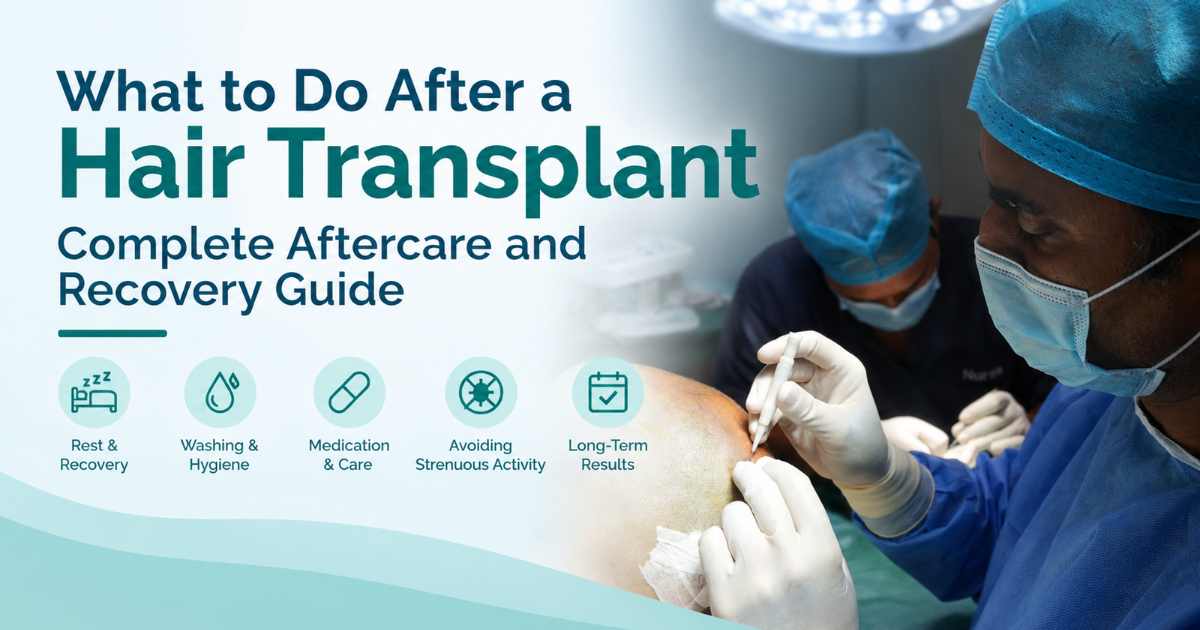
Knowing what to do after a hair transplant can make your recovery more comfortable and help protect your newly implanted grafts. The first few days require extra care because the scalp is healing and the transplanted follicles need time to establish securely.
Your clinic should give you personalised instructions based on the technique used, the number of grafts transplanted, and your scalp condition. Research and international expert consensus also support individualised post-transplant care and close follow-up during the first year.
Key Takeaways
- Protect the recipient area from unnecessary touching, pressure and friction during the early recovery period.
- Follow your clinic’s instructions for washing and prescribed medication.
- Mild redness, swelling, crusting and temporary shedding can occur during recovery.
- Avoid strenuous exercise, swimming and activities that may irritate the scalp until your doctor says they are safe.
- Transplanted hair may shed during the first few weeks before new growth becomes visible.
- Hair growth is gradual, so assess final results over several months rather than days.
What to Expect Immediately After a Hair Transplant
Immediately after your procedure, your scalp may feel sensitive or tight. You may notice mild redness, small crusts around the grafts and some swelling.
These effects are generally part of the healing process. A 2024 clinical study involving 98 patients undergoing FUE hair transplantation examined postoperative donor-site healing and reported that pain and itching were among the symptoms requiring postoperative management.
Your doctor may also prescribe medication to manage discomfort, inflammation or other postoperative concerns. Take these medicines exactly as directed.
Hair Transplant Aftercare: First 24 Hours
Keep the Transplanted Area Protected
The newly transplanted grafts require careful handling during the initial recovery period. Avoid rubbing, pressing or scratching the recipient area. Do not adjust dressings or apply products unless your clinic has instructed you to do so.
Research into graft anchoring found that grafts are particularly vulnerable to mechanical dislodgement during the early postoperative period. In one study, grafts were no longer at risk of being manually dislodged by day 9, while adherent scabs could still pose a risk earlier in recovery.
How to Sleep After a Hair Transplant
Your clinic may recommend sleeping with your head elevated during the first few nights. This can help minimise postoperative swelling. Try to avoid placing direct pressure on the recipient area. Sleeping on your back with your head slightly elevated may be recommended, depending on where your grafts were placed.
Medications and Products
Take prescribed medication according to your doctor’s instructions. Do not introduce new creams, oils, serums or hair-growth products without checking with your transplant team.
Your scalp may be more sensitive immediately after surgery, so keeping your routine simple can reduce unnecessary irritation.
Hair Transplant Aftercare: Days 2–7
The first week remains an important part of hair transplant aftercare. You may notice crusting, mild redness, itching or swelling during this period.
How to Wash Your Hair After a Hair Transplant
Your clinic will tell you when to begin washing your scalp and how to do it. Avoid assuming that one washing schedule applies to every patient. When washing is permitted:
- Use the shampoo recommended by your clinic.
- Apply it gently without vigorous rubbing.
- Avoid scratching the recipient area with your fingernails.
- Rinse carefully according to your clinic’s instructions.
- Pat or allow the scalp to dry rather than rubbing it aggressively.
A 2024 multicentre study found an association between untimely first postoperative washing and recipient-area perifollicular erythema, highlighting the importance of following an appropriate postoperative washing protocol.
Managing Scabs and Crusting
Small crusts around transplanted follicles are common during healing. Do not pick or forcibly remove them.
This is particularly important during the early days because mechanical disturbance can affect graft security. Your clinic may gradually adjust your washing technique as healing progresses.
Swelling and Redness
Mild swelling or redness can occur following hair transplantation. Follow your clinic’s instructions for managing these symptoms.
Contact your doctor if swelling becomes severe, pain increases significantly, or you develop symptoms that concern you.
Hair Transplant Recovery: Week 2 to Week 4
By the second to fourth week, much of the early scalp healing has progressed. Crusting usually decreases, and you can gradually return to your normal hair-care routine according to your doctor’s instructions.
You may also notice something that can be worrying: transplanted hairs may begin to shed.
This is often expected. Research on the natural course following transplantation reports that transplanted hair may fall during approximately the second to fourth week while the follicles remain in the scalp. New growth generally begins after a resting period of around three months.
Temporary shedding of existing, non-transplanted hair can also occur. This is sometimes called shock loss or postoperative effluvium. Recent literature reports that recipient-site shock loss can occur around 2–8 weeks after surgery, with regrowth often beginning around three months.
Hair Transplant Recovery Timeline: Month by Month
Your hair transplant recovery happens gradually rather than overnight.
Month 1
The scalp continues healing. Crusting and redness generally reduce, while transplanted hair may shed.
Months 2 to 3
This can feel like a quiet stage because visible growth may still be limited. Some patients may experience temporary shedding of surrounding native hair.
Months 3 to 4
New transplanted hair may begin emerging. The initial hairs can appear fine and uneven.
Months 5 to 6
Growth and density generally become more noticeable. Hair shafts may gradually become thicker.
Months 7 to 9
Visible improvement usually continues as more transplanted follicles produce growing hairs.
Months 10 to 12 and beyond
Further maturation and thickening can occur. Depending on the individual, technique and extent of hair loss, the final result may continue developing beyond the first year.
The exact timeline varies, so comparing your progress with someone else’s can create unnecessary concern.
What to Avoid After a Hair Transplant
Avoid Touching or Scratching the Grafts
Unnecessary touching creates mechanical stress on healing areas. Keep your hands away from the recipient area unless you are following your clinic’s washing or care instructions.
Avoid Heavy Exercise Initially
Strenuous exercise can increase sweating and physical stress during the early recovery period. Ask your surgeon when you can resume running, weight training and other intense activities.
You can generally return to activities gradually once your doctor confirms that your scalp has healed sufficiently.
Avoid Swimming and Activities That May Irritate the Scalp
Swimming pools, hot tubs and other activities involving prolonged water exposure may need to be avoided temporarily.
Your doctor can give you a specific timeline based on your healing progress.
Protect the Scalp From Excessive Sun Exposure
A healing scalp can be sensitive to sunlight. Follow your clinic’s instructions regarding hats and sun protection, particularly during the early recovery period.
Avoid placing anything on the scalp that has not been approved by your medical team.
Avoid Smoking and Alcohol as Advised by Your Doctor
Smoking and alcohol may interfere with aspects of postoperative recovery, and your doctor may recommend avoiding them around the procedure.
Follow the specific restrictions given by your transplant clinic.
Don’t Apply Unapproved Hair Products
Avoid oils, gels, dyes, strong styling products and other treatments until your doctor says they are appropriate.
Introducing several new products during recovery can make it harder to identify the cause of irritation if a reaction occurs.
Don’t Pick Scabs or Crusts
Allow crusts to loosen naturally according to your clinic’s washing protocol. Picking can unnecessarily disturb healing tissue and may increase irritation.
When Can You Resume Normal Activities After a Hair Transplant?
Light daily activities may often resume relatively quickly, while strenuous exercise, swimming and certain forms of work may require a longer break. Your surgeon’s advice should take priority because the appropriate timeline depends on the procedure, graft placement and your recovery.
An international expert consensus involving 38 hair-transplant specialists from 17 countries recommends individualised perioperative care and gradual resumption of normal hair-care routines after transplantation.
How to Care for Your Hair in the Months After a Transplant
Once your scalp has healed, your routine can gradually become more normal. Focus on:
- Washing your hair regularly with a suitable shampoo.
- Following any prescribed hair-loss medication.
- Maintaining a balanced diet with adequate protein and essential nutrients.
- Avoiding unnecessary chemical or mechanical damage.
- Attending scheduled follow-up appointments.
- Reporting unusual pain, persistent inflammation or other concerning symptoms.
Your transplanted follicles are intended to provide long-term hair growth, but your existing non-transplanted hair can continue to experience pattern hair loss. Your doctor may therefore recommend medical treatment alongside transplantation.
How Long Does It Take to Fully Recover From a Hair Transplant?
The visible recovery of the scalp usually occurs well before the final hair result. Early healing takes place over the first few weeks, while visible new hair growth may begin around three months. Hair density and thickness continue developing over subsequent months.
This means hair transplant recovery has two different stages: healing of the scalp and maturation of the new hair. Your final result should therefore be judged over a longer period rather than during the first few weeks.
Follow Your Hair Transplant Aftercare Plan With DHI International
At DHI International, your post-transplant care should be guided by your individual procedure and recovery needs.
From the first postoperative instructions through follow-up assessments, following professional guidance can help you understand what is expected at each stage of recovery.
If you have questions about washing, exercise, medication, shedding or the appearance of your scalp, speak with your transplant team rather than making changes to your routine independently.
Conclusion
Understanding what to do after a hair transplant can make the recovery period easier and help you care for your scalp correctly. Protect your grafts during the early days, follow your washing and medication instructions, avoid activities that may irritate the scalp, and give your hair time to grow. Temporary shedding during the first few weeks can occur and does not necessarily mean that your transplant has failed.
Most importantly, stay consistent with your personalised aftercare plan and attend follow-up appointments. If something seems unusual or your recovery differs significantly from what your doctor explained, contact your transplant team.
FAQs
How should I sleep after a hair transplant?
Sleep according to your clinic’s instructions, generally keeping the head elevated during the initial recovery period and avoiding direct pressure on the transplanted area. Your surgeon can recommend the safest position based on your procedure.
When can I wash my hair after a hair transplant?
Your clinic will tell you when to begin washing. The timing and technique can vary, so follow your surgeon’s specific instructions rather than using a generic schedule.
What should I avoid after a hair transplant?
Avoid touching or scratching the grafts, strenuous exercise, swimming and unapproved scalp products during the early recovery period. You should also follow your doctor’s advice regarding alcohol, smoking and sun exposure.
When can I return to work after a hair transplant?
Many people can return to desk-based work relatively soon, but the timing depends on swelling, redness, the nature of your work and the procedure performed. Physically demanding jobs may require more recovery time.
Is shedding normal after a hair transplant?
Yes. Transplanted hair commonly sheds during the first few weeks while the follicles remain in place. New growth may begin after a resting period of roughly three months.
How long does hair transplant recovery take?
Initial scalp healing generally occurs during the first few weeks, but visible hair growth and maturation take several months. Your final outcome may continue developing for a year or longer.
When will I see results after a hair transplant?
Early new growth may become visible around three months, followed by gradual improvement in density and thickness. Results vary between individuals and depend on factors such as the procedure, graft characteristics and underlying hair-loss pattern.