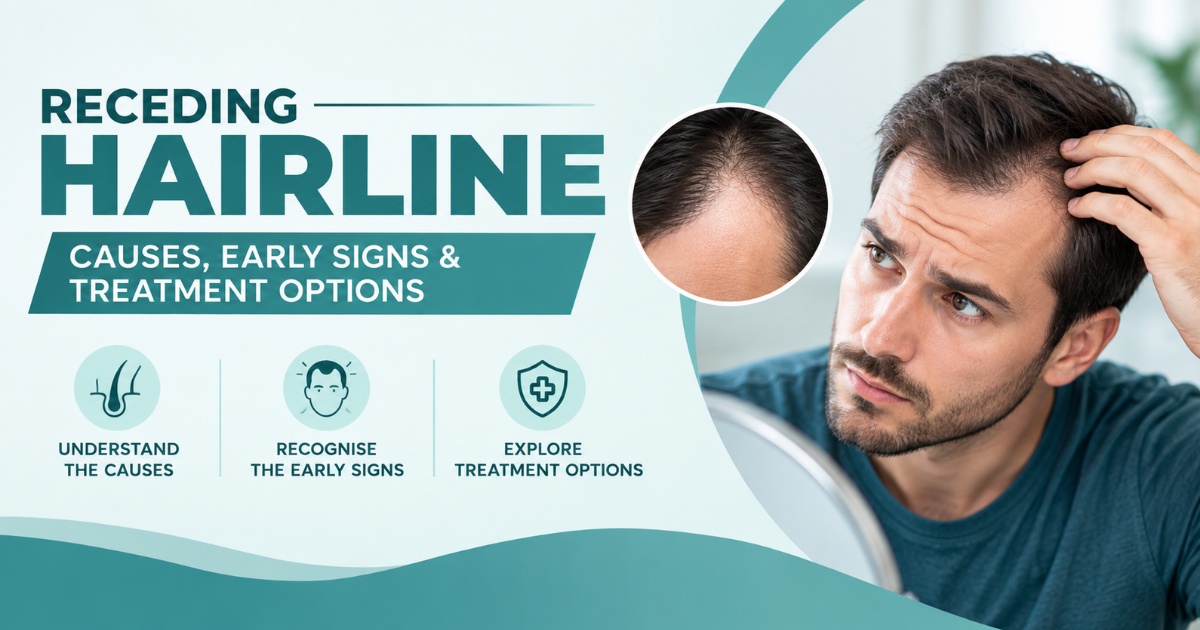
A receding hairline can be one of the earliest visible signs of hair loss. It may begin with subtle thinning around the temples before becoming more noticeable over time. Genetics, age, hormonal changes, certain medical conditions, stress and repeated tension on the hair can all play a role.
The early assessment can help you understand why your hairline is changing and which treatment options may be appropriate. Depending on the cause and extent of hair loss, treatment can range from medication and non-surgical therapies to hair transplantation.
Key Takeaways
- A receding hairline can have several causes, and it is not always a sign of hereditary hair loss.
- Male pattern hair loss commonly begins around the temples or frontal hairline.
- Women may experience a different pattern, often involving overall thinning rather than a sharply receding front hairline.
- A mature hairline is a normal age-related change and does not necessarily indicate progressive hair loss.
- Early diagnosis can help you address ongoing hair loss sooner.
- Medical treatments may slow or stabilise some types of hair loss.
- Hair transplantation can restore density in suitable candidates with a stable donor area.
What Is a Receding Hairline?
A receding hairline occurs when the front edge of your hair gradually moves backwards, usually starting around the temples or the central frontal area.
In men, this is commonly related to androgenetic alopecia, also called male pattern hair loss. The condition can begin in the late teens or twenties, although it often develops later. The American Academy of Dermatology notes that a receding hairline or thinning at the crown can be an early sign of hereditary hair loss.
The process usually develops gradually. Hair follicles become progressively smaller, producing finer and shorter hairs before visible density decreases.
Early Signs of a Receding Hairline
A changing hairline may be difficult to notice at first. You may see:
- Increased thinning around one or both temples
- A higher-looking forehead
- Short, fine hairs replacing thicker frontal hairs
- More scalp becoming visible near the hairline
- A widening V or M-shaped hairline
- Increasing difficulty styling the front of your hair
- Gradual thinning that becomes more obvious in photographs
How Is a Receding Hairline Diagnosed?
Diagnosis begins with a consultation and examination of your scalp and hair pattern. A dermatologist or hair-loss specialist may assess:
- Your hairline and overall density
- Family history of hair loss
- Pattern and speed of hair loss
- Scalp condition
- Hair shaft thickness
- Donor-area density
Depending on your symptoms, additional tests may be recommended to identify nutritional deficiencies, hormonal problems or other medical causes. In some cases, a scalp biopsy may be considered.
What Causes a Receding Hairline?
A changing hairline does not always have one single cause. Genetic predisposition is a common factor, but hormonal changes, ageing, nutritional issues, illness, stress, and repeated tension can also influence hair density.
1. Male Pattern Hair Loss
Male pattern hair loss is the most common cause of a receding hairline in men. It is influenced by genetics and sensitivity of hair follicles to androgens, particularly dihydrotestosterone or DHT.
The condition often affects the temples, frontal scalp and crown. A 2023 review reports that male androgenetic alopecia affects around 30–50% of men by age 50, although prevalence varies between populations.
2. Female Pattern Hair Loss
Female pattern hair loss usually presents differently from typical male pattern hair loss. Instead of a sharply receding frontal hairline, women more commonly experience gradual thinning across the top or central scalp and a widening part. However, some women can experience frontal or temporal recession depending on the underlying condition.
3. Genetics and Family History
Your genetic background can influence your likelihood of developing pattern hair loss. Having close family members with hair thinning or recession may increase susceptibility, although inheritance is complex and does not follow a simple single-gene pattern.
4. Age-Related Hairline Changes
Your hair naturally changes with age. Hair growth can slow, individual strands may become finer and overall density may decrease.
A slightly higher hairline does not automatically mean you have progressive hair loss. The pattern, rate of change and density of the surrounding hair are more useful indicators.
5. Hormonal Changes
Hormonal fluctuations can affect the hair-growth cycle and may contribute to thinning or changes in hair density. Changes associated with conditions affecting hormone levels, pregnancy, menopause, or other hormonal shifts can influence hair growth and should be assessed when symptoms persist.
6. Stress, Illness and Nutritional Factors
Significant physical or emotional stress, high fever, major illness and nutritional deficiencies can trigger increased shedding.
This type of temporary shedding is often called telogen effluvium. It may appear several weeks or months after the triggering event rather than immediately.
Iron deficiency and certain nutritional problems can also contribute to hair loss. Taking supplements without identifying a deficiency is not recommended, as excessive intake of some nutrients can actually worsen hair loss.
7. Hairstyles and Traction
Repeated tension from tight hairstyles such as ponytails, braids, extensions, or tightly secured hair can contribute to traction alopecia. Hairline areas are vulnerable because they are repeatedly pulled. Continued tension can cause progressive damage if you don’t address the underlying cause.
Receding Hairline vs Mature Hairline: What’s the Difference?
Not every change in the frontal hairline means progressive hair loss. A mature hairline can develop naturally after adolescence as the juvenile hairline settles into a slightly higher, more defined position. A receding hairline, however, generally involves ongoing recession or thinning that continues over time.
| Feature | Mature Hairline | Receding Hairline |
| Development | Natural transition with age | Often progressive |
| Hairline position | Slightly higher but stable | Gradually moves backward |
| Temples | Mild, stable recession | Increasing temple recession |
| Hair density | Generally maintained | May gradually decrease |
| Progression | Often stabilises | May continue over time |
| Possible cause | Normal maturation | Genetics, hormones, traction or other factors |
| Assessment | Usually monitored | May require professional evaluation |
When Should You See a Hair Loss Specialist?
Consider seeking professional advice if you notice:
- Rapid or sudden hair loss
- A progressively changing hairline
- Significant thinning over a short period
- Bald patches
- Scalp itching, pain or inflammation
- Hair loss accompanied by other unexplained symptoms
- Hair loss that continues despite changes in your routine
Treatment Options for a Receding Hairline
Treatment depends on the cause, stage, and extent of hairline recession. Some approaches aim to slow further thinning or support existing follicles, while others focus on restoring hair that has already been lost.
1. Medical Treatments
Medical treatments may help slow progression and support existing hair, particularly when the recession is related to pattern hair loss. Options such as minoxidil may be recommended depending on individual suitability. A specialist should assess the cause before recommending medication.
2. Non-Surgical Hair Restoration
Non-surgical options may include treatments such as PRP, GFC, or regenerative approaches designed to support existing hair follicles. These treatments are generally more relevant when viable follicles are still present and should be selected according to the individual’s hair and scalp condition.
3. Hair Transplant for a Receding Hairline
A hair transplant can restore areas where hair has been permanently lost by transferring healthy follicles from a suitable donor area to the hairline. Careful planning is essential to create an appropriate hairline shape, density, direction, and natural transition with existing hair.
Can You Prevent a Receding Hairline?
You cannot prevent genetically determined pattern hair loss completely. However, you can reduce avoidable damage and seek treatment early.
Helpful steps include:
- Avoid hairstyles that place continuous tension on your hair.
- Handle thinning hair gently.
- Avoid excessive heat and harsh chemical treatments.
- Maintain a balanced diet with adequate protein and essential nutrients.
- Address underlying medical conditions with professional guidance.
- Avoid taking hair supplements unless a deficiency has been identified.
- Monitor changes in your hairline over time.
- Seek professional advice when progressive thinning becomes noticeable.
These steps cannot reverse every type of hair loss, but they can help protect existing hair and support appropriate treatment.
Conclusion
A changing hairline does not always mean that you are developing permanent baldness. A mature hairline, genetic hair loss, temporary shedding, hormonal changes, and traction can all produce different patterns of change.
The important step is understanding why your hairline is changing. Early assessment can help distinguish normal maturation from progressive hair loss and give you more options for management.
Depending on your condition, treatment may involve medical therapy, non-surgical approaches, or hair transplantation. If permanent recession has developed and sufficient donor hair is available, transplantation can help restore the hairline while maintaining a natural appearance.
FAQs:
1. Can medications help treat a receding hairline?
Yes. Medications such as minoxidil can help slow hair loss and stimulate growth in some people. Finasteride may also be prescribed for suitable men with pattern hair loss. Treatment should be selected with guidance from a qualified medical professional.
2. Can lifestyle changes help prevent a receding hairline?
Lifestyle changes cannot prevent genetically driven pattern hair loss, but they can reduce avoidable hair and scalp damage. Avoiding tight hairstyles, excessive heat and harsh chemical treatments can help protect vulnerable hair.
3. What is the difference between a mature hairline and a receding hairline?
A mature hairline generally refers to a normal change in hairline shape with age, while a receding hairline usually indicates ongoing hair loss. A specialist can assess the pattern and progression to distinguish between the two.
4. At what age does a receding hairline start?
There is no fixed age. Pattern hair loss can begin as early as the late teens or twenties, while many people notice changes later in life. Genetics and individual susceptibility play an important role.
5. Can stress cause a receding hairline?
Stress can trigger increased hair shedding, particularly telogen effluvium. However, stress-related shedding is different from genetically driven pattern hair loss. If your hairline continues to recede, a specialist can help identify the underlying cause.
6. Is hair transplant an effective solution for a receding hairline?
A hair transplant can be an effective and long-lasting option for suitable candidates with permanent hair loss and sufficient healthy donor hair. Your doctor should assess your hair-loss pattern, donor area and future progression before recommending the procedure.
7. How long do hair transplant results for a receding hairline last?
Transplanted hair can provide long-lasting results because the follicles used are generally resistant to the pattern of hair loss affecting the recipient area. Visible growth usually develops gradually, with many patients seeing results around six to nine months and some requiring up to 12 months.