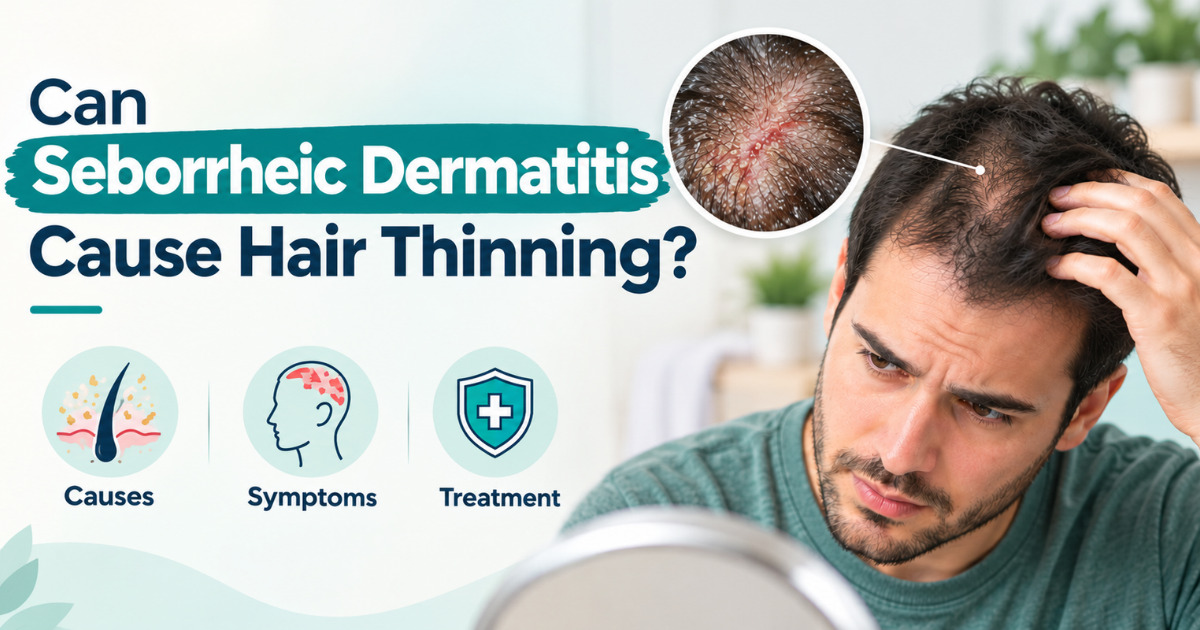
Seeing more hair on your pillow, comb, or shower floor can be concerning, especially when you also have an itchy, flaky scalp. This often raises an important question: Can seborrheic dermatitis cause hair thinning?
Seborrheic dermatitis is a common inflammatory skin condition that mainly affects areas rich in oil-producing glands, including the scalp. A 2024 systematic review and meta-analysis of 121 studies involving more than 1.26 million people estimated the global prevalence of seborrheic dermatitis at 4.38%, with a higher pooled prevalence of 5.64% among adults.
The condition itself does not usually cause permanent hair loss. However, persistent inflammation, intense scratching, scalp irritation, and hair-care practices during flare-ups may contribute to increased shedding or make existing hair thinning more noticeable.
Key Takeaways
- Seborrheic dermatitis is a chronic or recurring inflammatory scalp condition.
- It commonly causes itching, redness, greasy or dry scales, and dandruff-like flakes.
- Can seborrheic dermatitis cause hair thinning? It can contribute to temporary shedding, particularly when inflammation and scratching are significant.
- Seborrheic dermatitis is not generally considered a direct cause of permanent baldness.
- Treatment usually focuses on controlling inflammation, reducing scaling, and managing the underlying scalp condition.
- If thinning continues after the scalp improves, another cause such as androgenetic alopecia, nutritional deficiency, thyroid problems, or another scalp disorder may need to be investigated.
What Is Seborrheic Dermatitis?
Seborrheic dermatitis is a common, long-lasting inflammatory skin disorder that occurs where your skin has many oil-producing glands. The most common site is the scalp. Other sites include around the eyebrows, ears, along the sides of the nose, the chest, and other oily skin areas.
The root causes are more complicated. Acne flares are thought to result from excess sebum, inflammation, and proliferation of the yeast Malassezia, which naturally occurs on the skin. Genetics, fatigue, hormone changes, environment, and skin irritation are all possible contributors.
Seborrheic dermatitis often looks thicker than mild dandruff. It can involve more obvious erythema or inflammation, persistent itching, and oily or yellowish scales.
What Causes Seborrheic Dermatitis?
Several factors may contribute to the development or worsening of seborrheic dermatitis:
- Malassezia yeast: This naturally occurring yeast can play a role in the inflammatory response associated with the condition.
- Excess sebum: Oilier areas of the scalp may provide conditions in which symptoms become more noticeable.
- Genetic and individual factors: Some people are more prone to recurrent seborrheic dermatitis.
- Stress: Periods of stress may trigger or worsen flare-ups.
- Weather changes: Cold or dry conditions can aggravate symptoms in some people.
- Skin and hair-care products: Certain products may irritate an already sensitive scalp.
Understanding your triggers can make long-term management easier.
Symptoms of Seborrheic Dermatitis on the Scalp
Common scalp symptoms include:
- Persistent itching
- White, yellowish, or greasy flakes
- Redness or irritation
- Scaly patches
- Oily scalp
- Burning or discomfort during severe flare-ups
- Increased sensitivity when washing or brushing
The symptoms can come and go. Seborrheic dermatitis may require long-term use of medicated shampoos or other treatments to control symptoms and prevent flare-ups.
Can Seborrheic Dermatitis Cause Hair Thinning?
Yes, seborrheic dermatitis can be associated with increased hair shedding, but it is generally not considered a direct cause of permanent hair loss.
The condition can create an unhealthy scalp environment when inflammation and irritation persist. Repeated scratching may physically disturb hairs, while severe flaking can make the scalp uncomfortable and affect normal hair-care routines.
The important distinction is between temporary shedding associated with scalp inflammation and progressive hair loss caused by another condition. If your hair continues to thin after your seborrheic dermatitis is controlled, you should not automatically assume that dermatitis is responsible.
Genetic hair loss, hormonal changes, nutritional deficiencies, thyroid disorders, alopecia areata, and other scalp conditions can produce similar changes in hair density. A proper examination can help identify the actual cause.
How Seborrheic Dermatitis May Contribute to Hair Shedding
Scalp Inflammation
Inflammation can make the scalp itchy and uncomfortable. During an active flare-up, the surrounding skin may become irritated and sensitive.
Controlling the inflammation is therefore an important part of managing both scalp health and associated shedding.
Excessive Scratching
Itching can lead to frequent scratching. Aggressive or repeated scratching may irritate the scalp further and can contribute to mechanical breakage or shedding.
Try to avoid scratching with your fingernails. If itching is persistent, treating the underlying dermatitis is more useful than repeatedly disturbing the scalp.
Flaking and Scalp Irritation
Heavy scaling can make the scalp feel congested and uncomfortable. Removing scales forcefully can increase irritation.
Instead, use the shampoo or scalp treatment recommended by your dermatologist and allow it to loosen the scales gradually.
Hair-Care Practices
When your scalp is irritated, aggressive brushing, frequent chemical treatments, tight hairstyles, excessive heat, or harsh cleansing may add further stress to the hair.
A simple routine using suitable products can help reduce unnecessary irritation while the condition is being treated.
Seborrheic Dermatitis vs Other Causes of Hair Thinning
Hair thinning has many possible causes, so identifying the pattern matters.
| Possible Cause | Typical Clues |
| Seborrheic dermatitis | Itching, flakes, inflammation and increased shedding during flare-ups |
| Androgenetic alopecia | Gradual patterned thinning, often around the hairline, crown or central part |
| Alopecia areata | Sudden, smooth, patchy hair loss |
| Telogen effluvium | Increased shedding after illness, stress, major weight change or other triggers |
| Scalp infection | Scaling, inflammation, broken hairs or patchy loss |
| Nutritional deficiency | Diffuse thinning with possible dietary or medical risk factors |
How Is Seborrheic Dermatitis Diagnosed?
A dermatologist can often diagnose seborrheic dermatitis by examining your scalp and asking about your symptoms and medical history. In some cases, another condition such as psoriasis may occur alongside seborrheic dermatitis, making diagnosis more difficult.
If your hair loss pattern is unusual, sudden, patchy, or continuing despite treatment, your doctor may investigate other possible causes.
When Should You See a Hair Loss Specialist?
Consider professional evaluation if you notice:
- Sudden or rapid hair shedding
- Visible thinning that continues for several months
- Patchy bald spots
- Hairline recession
- Painful, swollen, or severely inflamed scalp
- Broken hairs or unusual scalp scaling
- Hair loss that continues after dermatitis symptoms improve
Persistent hair loss should not automatically be attributed to dandruff or seborrheic dermatitis. Early assessment can help determine whether you need scalp treatment, hair-loss medication, or a combination of approaches.
Treatment for Seborrheic Dermatitis
Treatment depends on the severity of your symptoms and how frequently they return.
- Medicated Anti-Dandruff Shampoos
Medicated shampoos are commonly used for scalp seborrheic dermatitis. Depending on your condition, they may contain ingredients such as:
- Ketoconazole
- Ciclopirox
- Selenium sulfide
- Zinc pyrithione
- Salicylic acid
- Coal tar
The American Academy of Dermatology notes that dandruff shampoos can be effective for mild to moderate seborrheic dermatitis, with frequency depending on your hair type and medical advice.
Topical Treatments
When shampoo alone is insufficient, a dermatologist may recommend topical antifungal or anti-inflammatory treatments. Ketoconazole is commonly used, while corticosteroid preparations may be prescribed for short-term control of significant inflammation.
Do not use prescription scalp treatments longer or more frequently than recommended.
Scalp-Care Routine
Your daily habits can support treatment:
- Wash your scalp according to your dermatologist’s recommendations.
- Use a suitable medicated shampoo during active flare-ups.
- Avoid aggressive scratching or picking.
- Minimise harsh styling products when your scalp is irritated.
- Rinse shampoo thoroughly.
- Follow your maintenance routine even after symptoms improve if recommended.
Seborrheic dermatitis can recur, so ongoing maintenance may be necessary.
Treating the Underlying Hair Loss
If your scalp condition improves but thinning continues, your doctor may investigate another cause.
Depending on the diagnosis, treatment could include medical therapy, nutritional correction where a deficiency is confirmed, or hair restoration options for suitable candidates.
Hair transplantation is generally considered only after the cause and pattern of hair loss have been properly evaluated. Treating active scalp inflammation should remain an important part of the overall plan.
Will Hair Grow Back After Seborrheic Dermatitis?
In many cases, hair shedding associated with scalp irritation improves once the underlying condition is brought under control. Seborrheic dermatitis itself does not generally cause permanent hair loss.
However, recovery depends on why the hair is thinning in the first place. If you also have genetic hair loss or another condition affecting the follicles, treating seborrheic dermatitis alone may not restore lost density.
This is why persistent thinning deserves a proper scalp and hair assessment rather than repeated use of anti-dandruff products without a diagnosis.
Take the Next Step With DHI Thailand
If you are experiencing persistent scalp inflammation together with visible hair thinning, getting the cause assessed can help you choose the appropriate treatment.
DHI Thailand offers hair-loss assessment and hair restoration services, with treatment planning based on the individual’s hair and scalp condition. Its website also describes diagnostic hair-scan services and hair restoration options.
If your thinning continues even after your scalp symptoms are controlled, consult a qualified hair specialist to determine whether another form of hair loss is contributing.
Conclusion
So, can seborrheic dermatitis cause hair thinning? It can contribute to increased shedding, particularly when scalp inflammation, itching, scratching, and irritation are persistent. However, it is important to distinguish temporary shedding associated with an inflamed scalp from permanent or progressive hair loss caused by another condition.
The good news is that seborrheic dermatitis is manageable. Medicated shampoos, appropriate topical treatments, and a consistent scalp-care routine can help control symptoms and reduce flare-ups.
If your hair continues to thin despite controlling the scalp condition, seek professional evaluation. Identifying the underlying cause is the first step towards choosing the right treatment.
FAQs
1. What is the difference between seborrheic dermatitis and dandruff?
Dandruff is generally considered a mild form of seborrheic dermatitis. Seborrheic dermatitis can involve more noticeable inflammation, redness, itching, and greasy or thicker scaling.
2. Can seborrheic dermatitis cause permanent hair loss?
Seborrheic dermatitis itself generally does not cause permanent hair loss. However, persistent inflammation and scratching may contribute to temporary shedding. If thinning continues, another hair-loss condition should be investigated.
3. How often should you wash your hair with seborrheic dermatitis?
The ideal frequency depends on your scalp, hair type, and treatment plan. The AAD notes that some people may use dandruff shampoo two to three times weekly during treatment, while others may need a different schedule. Follow your dermatologist’s advice.
4. Does dandruff cause hair loss?
Mild dandruff does not usually cause permanent hair loss. However, severe itching and repeated scratching can contribute to irritation and temporary shedding. Persistent hair loss should be assessed separately.
5. What is the best treatment for seborrheic dermatitis on the scalp?
There is no single treatment that works for everyone. Medicated shampoos containing ingredients such as ketoconazole, ciclopirox, selenium sulfide, or zinc pyrithione are commonly used, while topical medication may be added for more persistent inflammation.
6. How can you tell if hair thinning is caused by dermatitis or genetics?
Dermatitis-related shedding is often accompanied by itching, scaling, redness, or active scalp inflammation. Genetic hair loss usually follows a gradual pattern, such as progressive recession or thinning around the crown. Because both can occur together, a professional examination can provide a more reliable diagnosis.
7. Can diet affect seborrheic dermatitis?
Diet may influence symptoms for some individuals, but it is not considered a single established cause of seborrheic dermatitis. If you notice consistent symptoms after specific foods, discuss them with a healthcare professional rather than making major dietary restrictions without guidance.