What Causes Baldness?
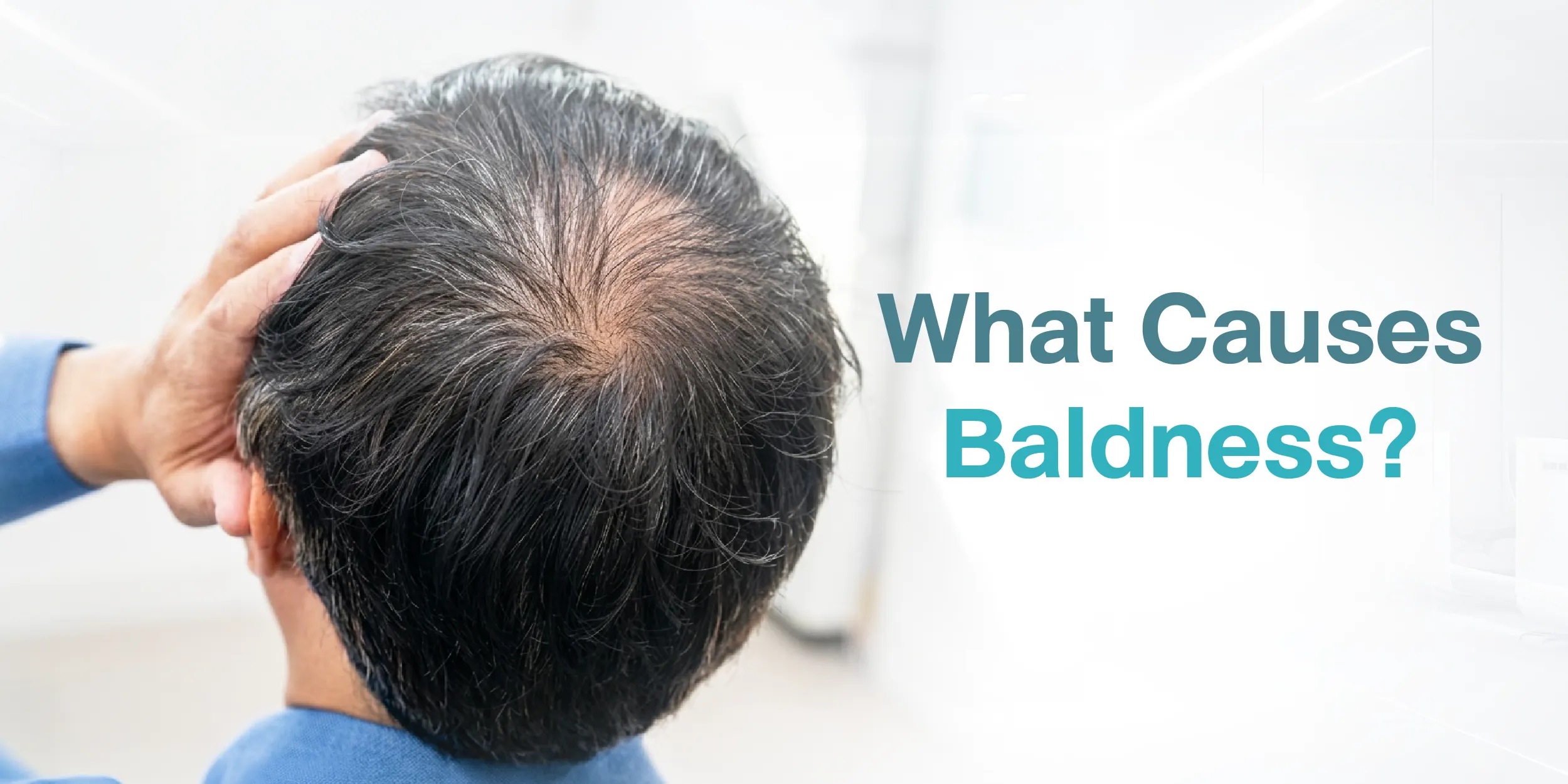
The problem of baldness can occur due to multiple factors combined. The main common causes are genetics and hormonal changes, which affect the hair growth cycle, causing the lifespan of hair strands to become shorter, hair roots to weaken, and hair to fall out more easily than normal. When this continues, it results in thinner hair and eventually develops into clear baldness if proper care or treatment is not provided from the early stages.
At present, most people who experience baldness begin to look for treatment options that provide more long-term results. One approach that has gained attention is DHI hair transplant, which is a technique that helps restore the hairline in areas with thinning hair or baldness in a targeted manner. This method relies on systematic evaluation and treatment planning by DHI Clinic to ensure that the resulting hairline is suitable for each individual’s hair condition, scalp condition, and specific hair loss problems.
Characteristics of People Who Are Beginning to Be at Risk of Baldness
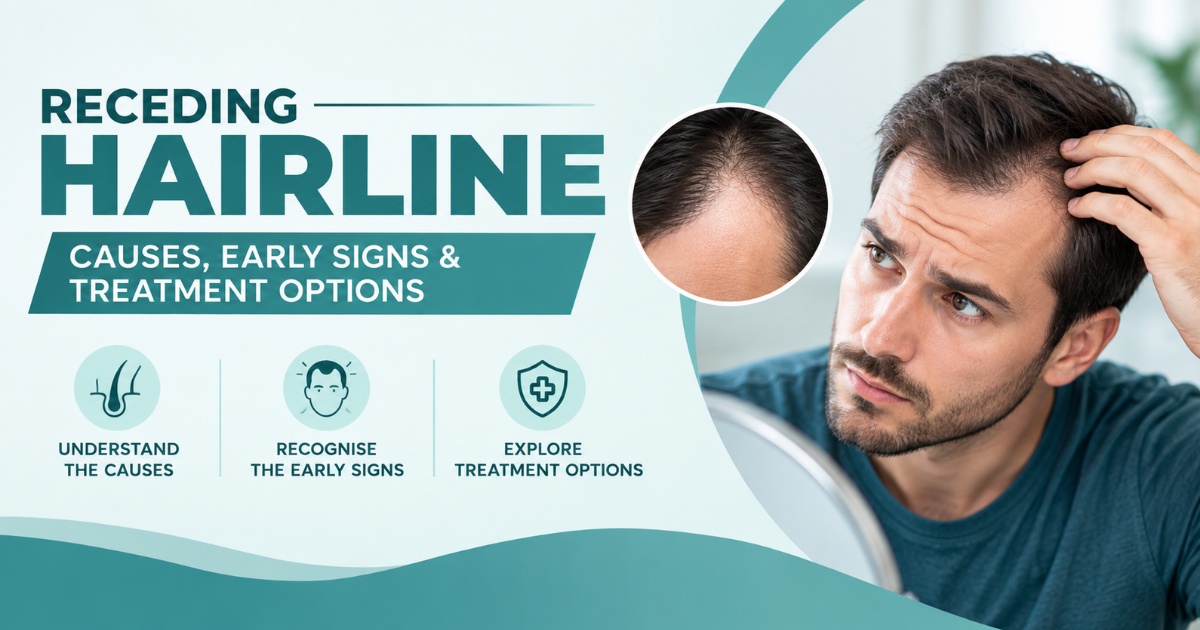
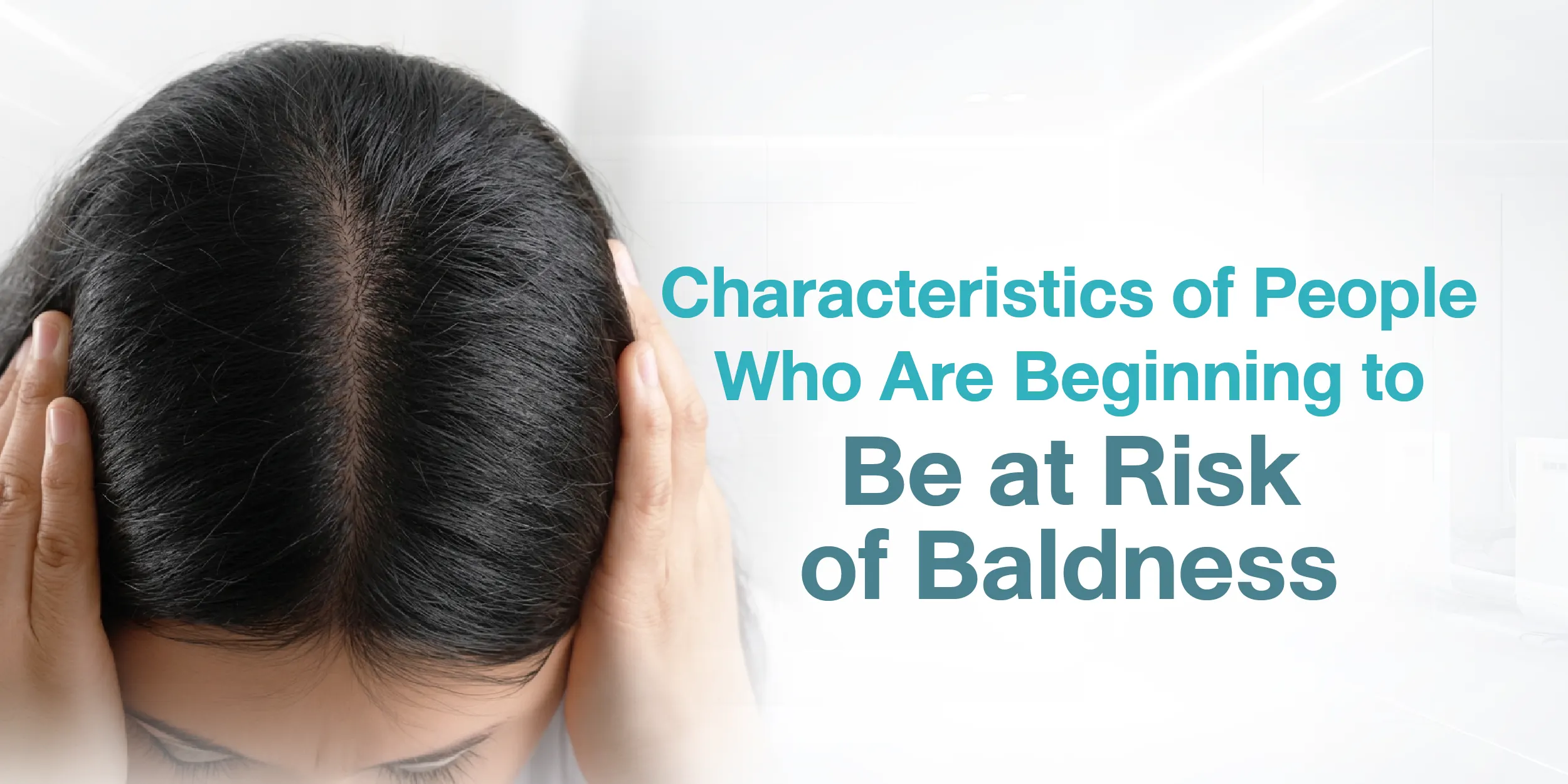
People who are starting to be at risk of baldness often show certain warning signs in advance. These can be found in both men and female hair thinning cases. The symptoms may change gradually, causing many people to not notice them in time. Recognizing abnormalities from the early stage helps with planning proper care or choosing a more suitable treatment approach.
Common characteristics found among those who are beginning to be at risk include:
- A receding front hairline, a wider forehead, or a clearly visible receding forehead.
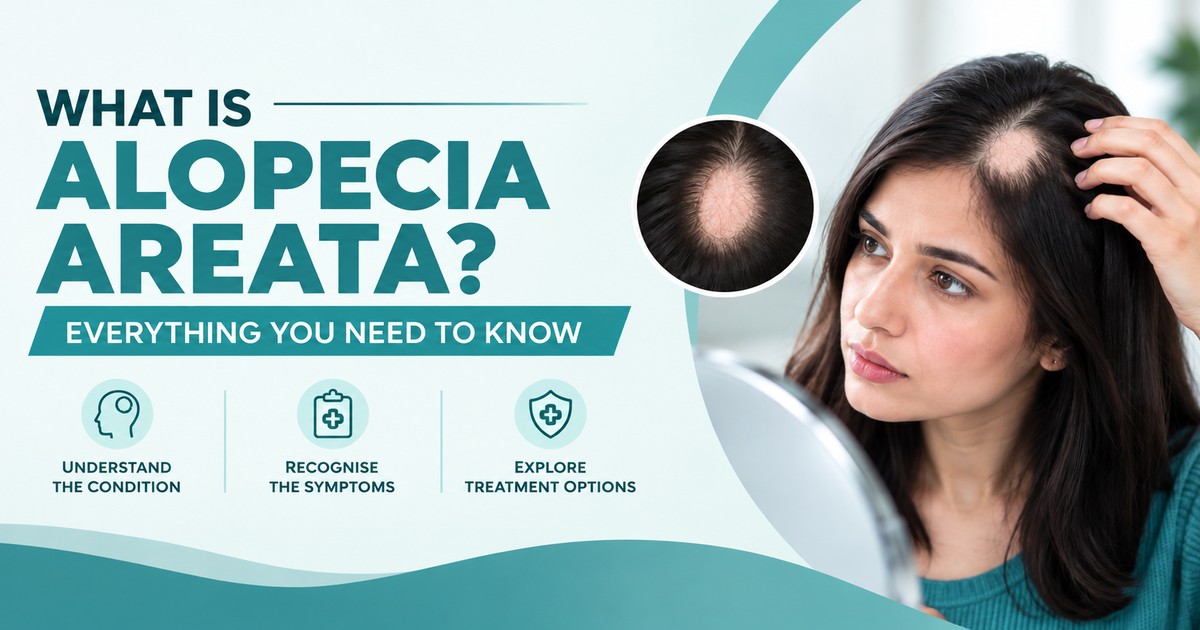
- Thinning hair in specific areas such as the temples, the center of the scalp, or the crown, with more visible scalp or thinning at the top of the head.
- Newly grown hair strands that are smaller, finer, and fall out more easily than normal.
- Starting to look for temporary solutions, such as hairline camouflage, to make the hairline appear fuller.
These signs are considered important early indicators that the hair roots may be starting to weaken and should be properly evaluated before the problem develops into long-term hair thinning or baldness.
What Is Hairline Camouflage?
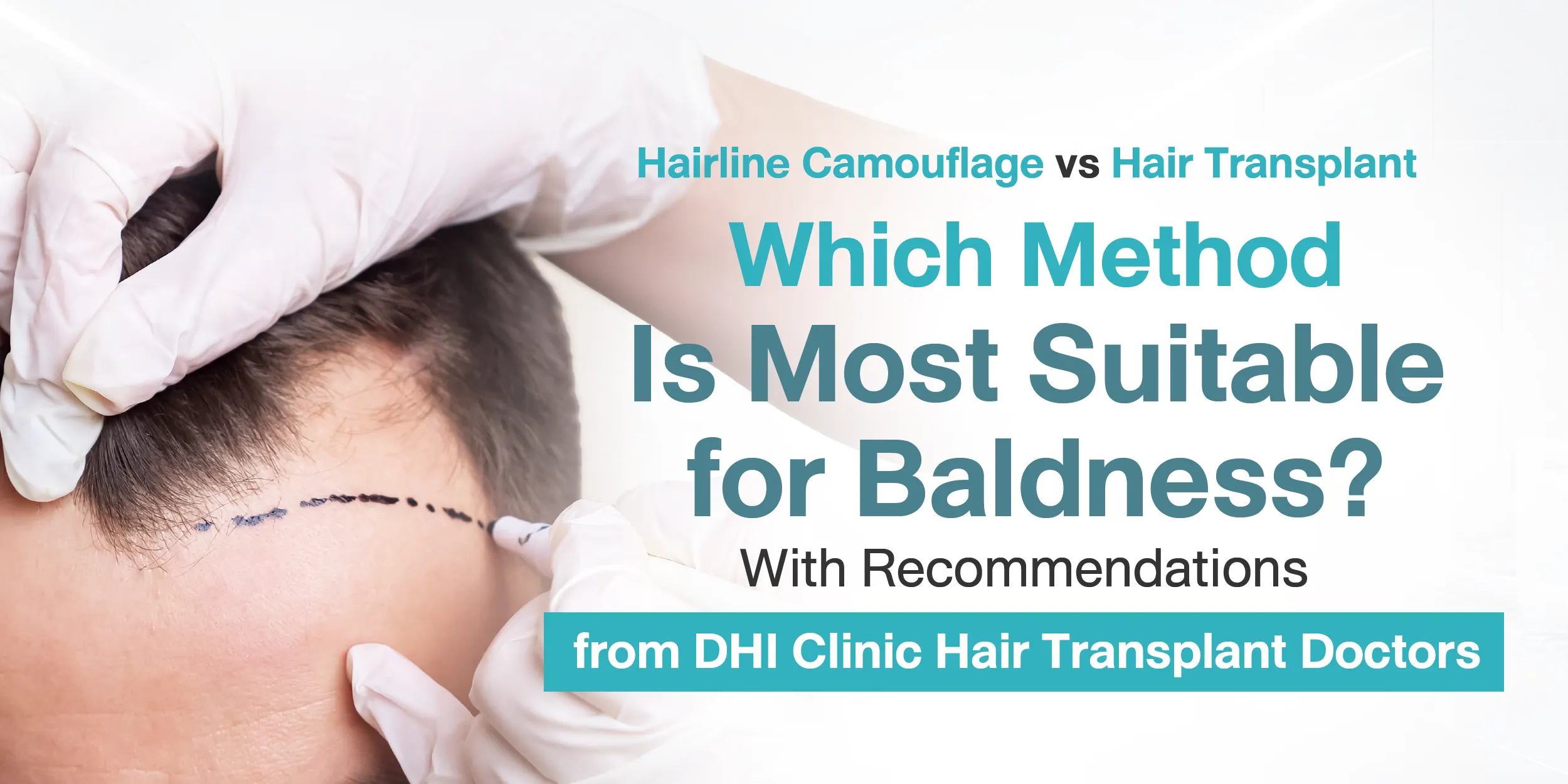
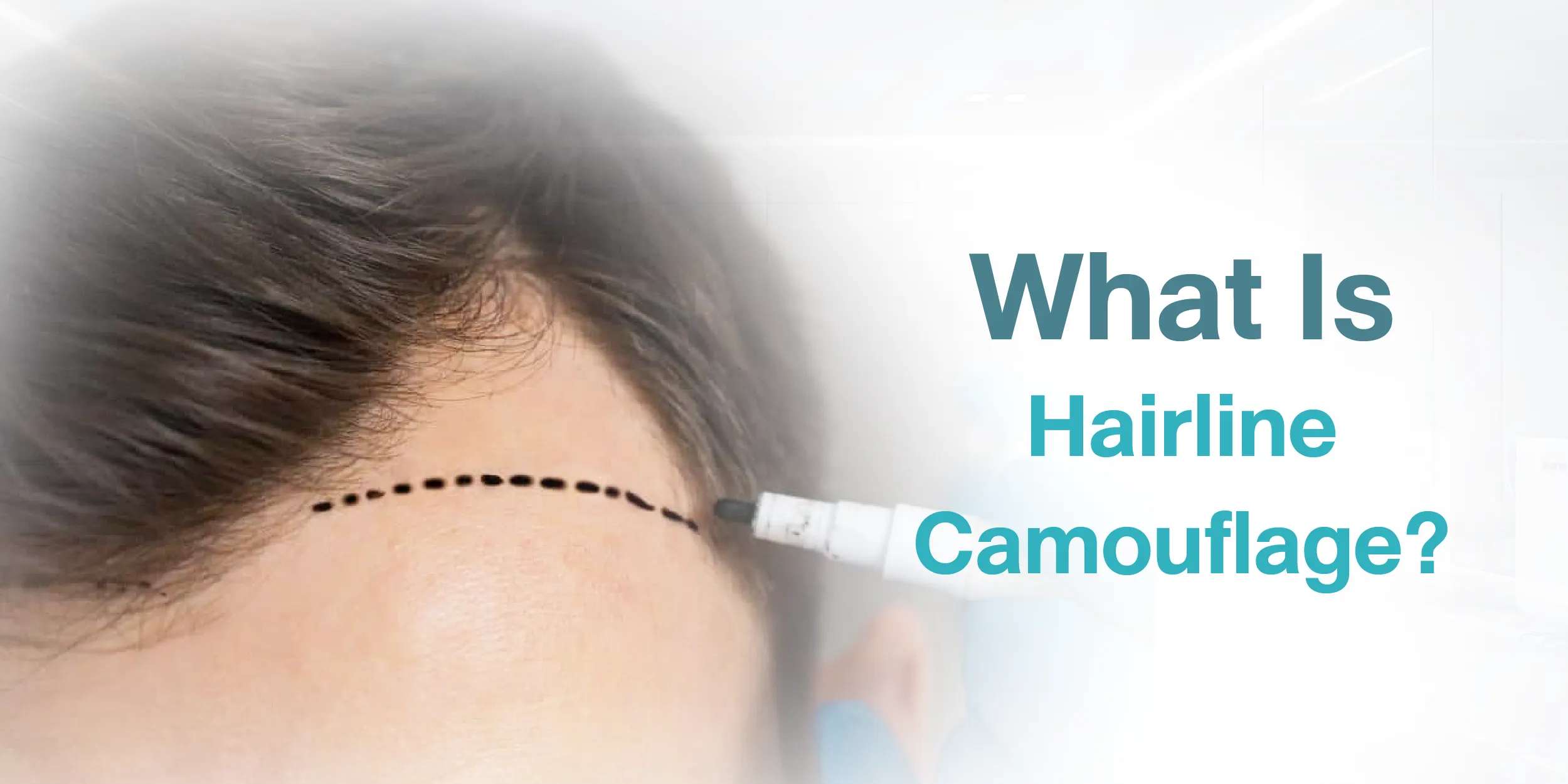
Hairline camouflage is the arrangement and design of the existing hairline to help conceal areas of thinning hair, uneven hairlines, or a receding hairline so that they appear more balanced. This method does not increase the number of new hair strands, but instead focuses on adjusting hair direction and hairline design to enhance appearance in the short term. Therefore, it is suitable for people who still have a reasonable amount of remaining hair and are not yet at the stage that requires treatment with DHI hair transplant.
However, if hair loss or baldness becomes more obvious, hairline camouflage may not be effective in the long term. Doctors often recommend considering options that address the problem more directly, such as DHI hair transplant, which involves transplanting real hair follicles to problem areas in order to increase hair density naturally. This type of treatment should be carried out under the supervision of specialist doctors at DHI Clinic, who have experience in DHI hair transplant and can accurately assess and plan treatment approaches suitable for each individual’s scalp condition.
Who Is It Suitable For?
- People with a receding hairline or early-stage thinning hair who still have a relatively large amount of existing hair in the front and middle areas of the scalp.
- People who want to adjust their appearance to make the hairline look more balanced, but do not yet want to undergo hair transplant surgery such as DHI hair transplant.
- People who want a temporary solution to boost confidence in daily life before deciding on a more serious treatment approach.
- People who are in the process of evaluating hair loss problems and want to carefully compare options with DHI hair transplant.
- People who are not yet ready for surgical hair transplant treatment but want to start taking care of their appearance first.
Advantages and Limitations of Hairline Camouflage
Advantages
- It is a non-surgical method and does not affect the structure of the scalp.
- It helps adjust the hairline to look more balanced and can reduce the prominence of a receding hairline or frontal thinning to a certain extent.
- It provides relatively fast visual results, making it suitable for short-term or immediate solutions.
- Preparation time and post-procedure care are minimal, allowing a quick return to normal daily life.
- It is suitable for people who still have a reasonable amount of existing hair and whose condition is not yet severe.
Limitations
- It does not increase the number of new hair strands, so it cannot address the root cause of the problem.
- It is not suitable for people with moderate to severe hair thinning or baldness.
- The results are not permanent and require ongoing styling or maintenance.
- If hair loss continues, the hairline may recede further, making this method ineffective.
- It cannot replace more in-depth treatment approaches that address long-term hair loss problems.
What Is Hair Transplantation?
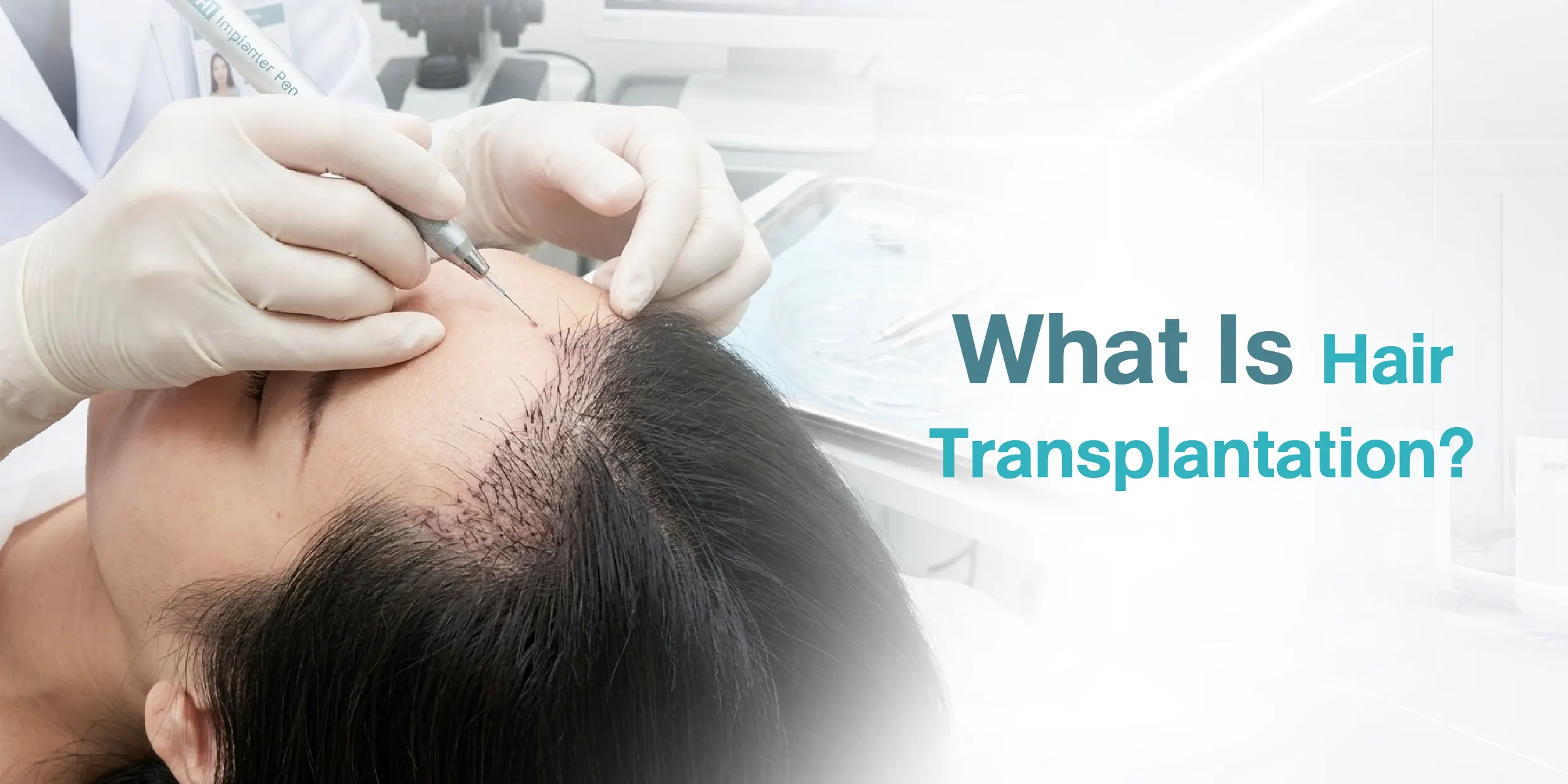
Hair transplantation is a medical treatment process for hair loss and baldness. It involves transplanting real hair follicles from areas with strong and dense hair to areas with thinning hair or a receding hairline, in order to increase the number of hair strands and restore natural-looking hair density.
At present, one of the most popular techniques is DHI hair transplant, which allows precise control over the position, direction, and depth of hair implantation. This results in a hairline that aligns well with the facial structure and the natural growth pattern of existing hair. Hair transplant surgery is usually performed under the supervision of specialist doctors at DHI Clinic, where the scalp condition is evaluated and the hairline is designed to suit each individual. This approach helps ensure natural-looking, long-term results without negative side effects.
Who Is It Suitable For?
- People with moderate to severe hair loss or baldness who can clearly see thinning areas.
- People with a receding hairline, wide forehead, or genetically inherited baldness.
- People who want a long-term solution and natural-looking results.
- People who have sufficient strong hair follicles at the back or sides of the scalp for transplantation.
- People who have been evaluated by a doctor and found suitable for DHI hair transplant.
- People who want to undergo hair transplant surgery under the care of specialist doctors at DHI Clinic, in order to plan treatment that matches each individual’s scalp condition.
Advantages and Limitations of Hair Transplantation
Advantages
- It addresses baldness at the root cause by using the patient’s own real hair follicles.
- It helps increase the number of hair strands and hair density in a natural-looking way.
- It provides long-term results, making it suitable for those who want a serious and lasting solution.
- The hairline can be designed to suit each individual’s facial structure and hair condition.
- DHI hair transplant allows precise control over the direction and placement of hair follicles.
- The procedure is carried out under the supervision of specialist doctors at DHI Clinic, ensuring safety and medical standards.
Limitations
- A detailed evaluation of the scalp condition is required before undergoing treatment.
- The patient must have sufficiently strong hair follicles at the back or sides of the scalp.
- Recovery time is needed, and results take time for new hair to grow.
- The cost is higher than general hair care or cosmetic adjustment methods.
- It cannot completely stop the natural hair loss process, so ongoing care is required after treatment.
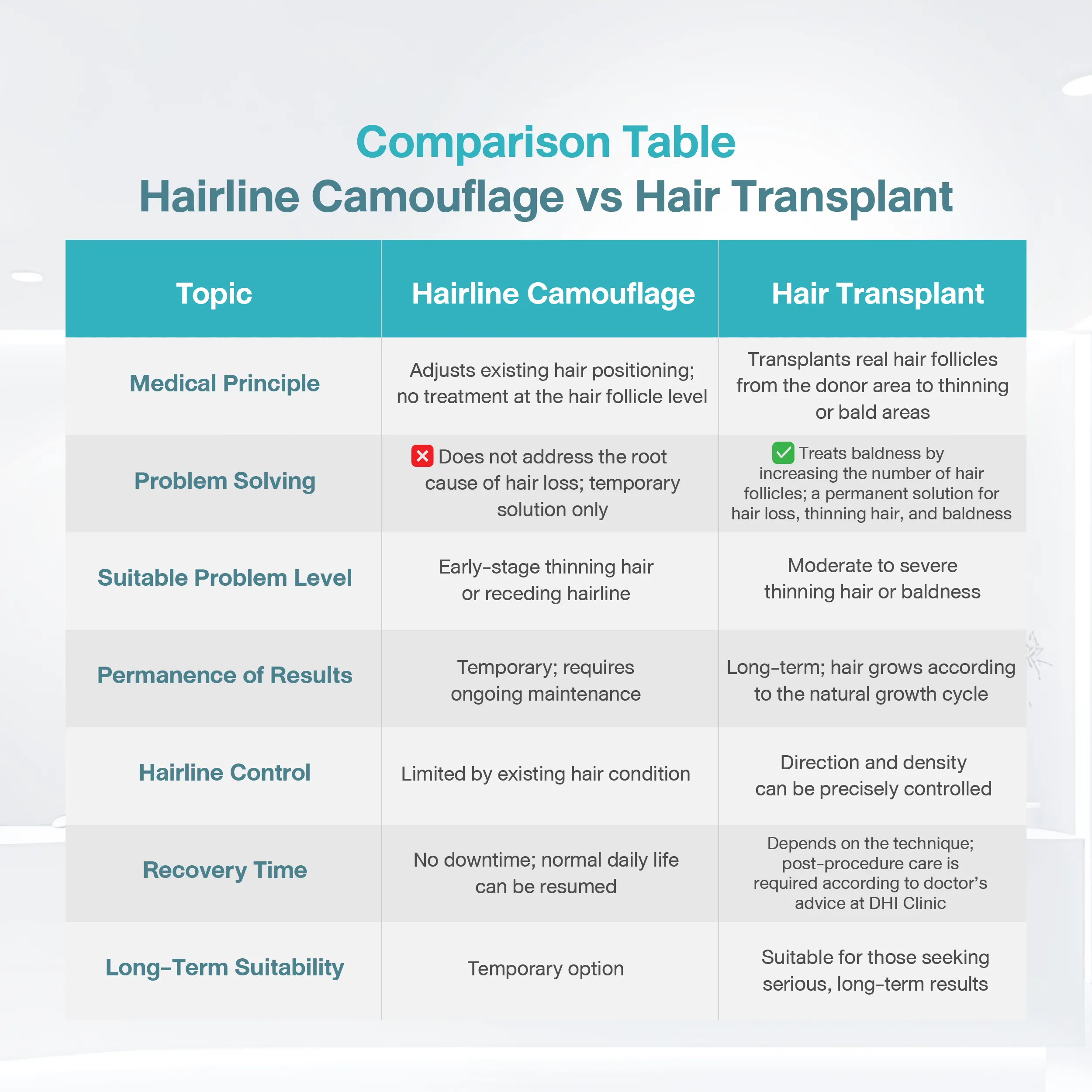
Comparison Table: Hairline Camouflage vs Hair Transplant
| Topic | Hairline Camouflage | Hair Transplant |
| Medical Principle | Adjusts existing hair positioning; no treatment at the hair follicle level | Transplants real hair follicles from the donor area to thinning or bald areas |
| Problem Solving | ❌ Does not address the root cause of hair loss; temporary solution only | ✅ Treats baldness by increasing the number of hair follicles; a permanent solution for hair loss, thinning hair, and baldness |
| Suitable Problem Level | Early-stage thinning hair or receding hairline | Moderate to severe thinning hair or baldness |
| Permanence of Results | Temporary; requires ongoing maintenance | Long-term; hair grows according to the natural growth cycle |
| Hairline Control | Limited by existing hair condition | Direction and density can be precisely controlled |
| Recovery Time | No downtime; normal daily life can be resumed | Depends on the technique; post-procedure care is required according to doctor’s advice at DHI Clinic |
| Long-Term Suitability | Temporary option | Suitable for those seeking serious, long-term results |
Baldness Treatment Approach with DHI Hair Transplant Technique at DHI Clinic
The approach to treating baldness with the DHI hair transplant technique is a medically planned treatment that focuses on solving hair loss at its root cause. It begins with a detailed evaluation of the scalp condition, hair density, and individual hair loss patterns, under the care of specialist hair doctors at DHI Clinic.
A key step in DHI hair transplant is the selection of strong hair follicles from the back or sides of the scalp, areas where follicles are resistant to hormones that cause baldness. Doctors then design the hairline to match the facial structure, age, and future hair loss tendencies, ensuring results that look natural and remain visually consistent over time.
The approach of DHI Clinic does not focus solely on making hair grow, but also emphasizes long-term treatment planning for people with baldness. This helps ensure stable results, reduces the risk of future thinning, and supports greater confidence in everyday life.
Summary
Choosing an approach to solve baldness should be considered based on the severity of the problem and each individual’s long-term goals. If stable and lasting results are desired, treatment through a permanent hair transplant is an option that can address the issue directly from a medical perspective. This is especially true when performed using the DHI technique, which allows precise control over the direction, depth, and density of hair implantation, under a systematic treatment plan designed by experienced doctors.
For those who are looking for hair transplant options in Thailand, hair transplant Bangkok is currently internationally recognized for both medical standards and the experience of treating physicians. Undergoing evaluation and treatment planning at DHI Clinic helps patients clearly understand their own hair condition and choose the most appropriate treatment approach, in order to achieve natural-looking and long-term results.