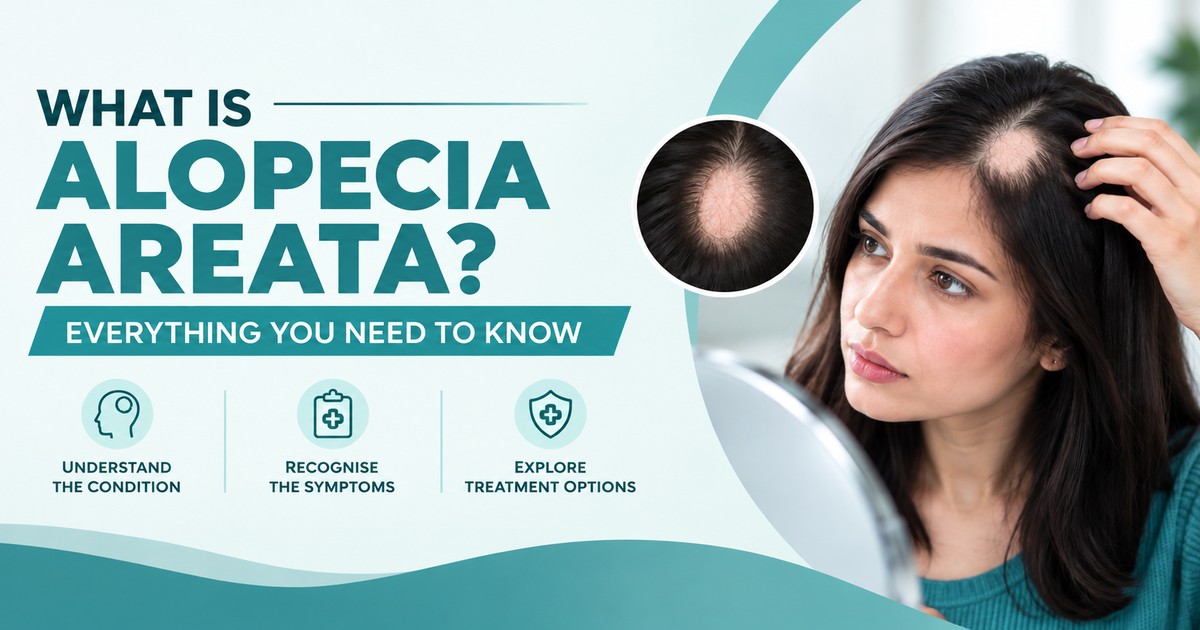
Sudden bald patches can be alarming, especially when they appear without an obvious reason. Alopecia areata is an autoimmune condition that causes hair loss when the immune system mistakenly attacks hair follicles. It can affect the scalp, eyebrows, eyelashes, beard, or other areas of the body.
Unlike hereditary hair loss, which usually develops gradually, alopecia areata often appears suddenly as smooth, round or oval patches. The condition can vary significantly from person to person, with some experiencing limited patchy loss and others developing more extensive hair loss.
Key Takeaways
- Alopecia areata is an autoimmune form of hair loss.
- It can affect hair on the scalp and other parts of the body.
- Hair loss often appears suddenly as smooth, clearly defined patches.
- The condition can range from a few patches to extensive or complete hair loss.
- Genetic and immune-related factors can increase susceptibility.
- Stress, illness, and other factors may contribute to flare-ups in some people, but they are not considered direct causes.
- Hair may regrow naturally, although recurrence or further hair loss can occur.
What Is Alopecia Areata?
Alopecia Areata is an autoimmune condition in which the immune system mistakenly attacks hair follicles, disrupting normal hair growth. It most commonly causes one or more smooth, round or oval bald patches, although hair loss can occur anywhere hair grows.
The condition can affect people of any age and gender. Some people experience only a few patches, while others may lose most or all of their scalp or body hair. Eyebrows, eyelashes, beard hair, and other areas can also be affected.
Importantly, the condition does not usually permanently destroy the hair follicles. This means hair can potentially regrow, either naturally or with appropriate treatment, depending on the individual case.
What Causes Alopecia Areata?
There is no single cause that explains every case. The condition develops through an abnormal immune response, while genetics and certain environmental or physical factors may influence a person’s susceptibility.
1. Autoimmune Response
The primary mechanism is an autoimmune reaction. The immune system mistakenly identifies hair follicles as a threat and attacks them, disrupting the normal hair growth cycle. This can result in sudden hair loss in clearly defined areas of the scalp or body.
2. Genetic Factors
Genetics can play a role in susceptibility. People with a close family member affected by alopecia areata may have a higher likelihood of developing the condition. However, carrying associated genes does not necessarily mean that someone will develop it.
3. Common Triggers: Stress, Illness, Hormonal Changes
Some people report intense stress or a significant illness before experiencing hair loss. These factors may influence immune activity or trigger a flare-up, but they should not be considered direct causes. The exact relationship between such triggers and alopecia areata remains complex.
Types of Alopecia Areata
The condition can present in different patterns depending on how much hair is affected and where the loss occurs.
1. Patchy Alopecia Areata
This is the most recognisable form, typically appearing as one or more smooth, round or oval bald patches. Hair loss may remain limited to a few areas or progress to additional patches over time.
2. Alopecia Totalis
Alopecia totalis refers to complete loss of hair on the scalp. It represents a more extensive form of the condition and can develop after hair loss progresses beyond individual patches.
3. Alopecia Universalis
Alopecia universalis is a rare and more extensive form in which hair is lost from essentially the entire body. This can include the scalp, eyebrows, eyelashes, beard, and body hair.
4. Diffuse Alopecia Areata
Instead of producing clearly defined bald patches, diffuse alopecia areata can cause more widespread thinning across the scalp. Because it can resemble other forms of diffuse hair loss, proper diagnosis is particularly important.
5. Ophiasis Alopecia Areata
Ophiasis is a distinctive pattern in which hair loss forms a band along the back and sides of the scalp, often extending toward the temples. It is considered a specific pattern of alopecia areata.
Symptoms of Alopecia Areata
The signs can appear suddenly and may vary depending on the extent of hair loss. Recognising these changes early can help with timely evaluation and appropriate treatment.
1. Sudden Hair Loss
Alopecia areata often begins with sudden hair loss, sometimes developing within a short period. It may affect the scalp, beard, eyebrows, eyelashes, or other areas where hair grows.
2. Round or Oval Bald Patches
Smooth, round or oval bald patches are one of the most common signs. The affected skin usually appears normal without obvious scaling or scarring. Additional patches may develop if the condition progresses.
3. Changes in Hair and Nails
Some people may notice changes beyond scalp hair loss. Hair can become affected in different areas, while nail changes may include tiny dents, ridges, brittleness, or crumbling.
4. Itching, Tingling or Burning
Some people experience itching, tingling, or a burning sensation in areas where hair is about to fall out or has already been lost. These sensations can occur before visible hair loss appears.
How Is Alopecia Areata Diagnosed?
Diagnosis usually begins with a detailed examination of the scalp, hair, and nails. A dermatologist may also review your medical and family history to distinguish alopecia areata from other causes of hair loss.
1. Physical Examination & Scalp Biopsy
A dermatologist can often identify alopecia areata by examining the affected areas. A dermatoscope may provide a closer view of the scalp. In uncertain cases, a small skin biopsy may be performed to confirm the diagnosis.
2. Blood Tests to Rule Out Other Conditions
Blood tests may be recommended when the doctor needs to rule out other conditions associated with hair loss. Depending on the symptoms and medical history, testing may include thyroid function and certain nutritional markers.
Can Alopecia Areata Be Cured?
There is currently no definitive cure for alopecia areata. However, hair can regrow naturally in some cases, while others may benefit from medical treatment. The course is unpredictable, and periods of regrowth can be followed by new episodes of hair loss.
Treatment decisions depend on factors such as the amount and location of hair loss, how long it has been present, age, and individual circumstances. A dermatologist can recommend the most appropriate approach after diagnosis.
Alopecia Areata Treatment Options
Treatment aims to encourage hair regrowth and manage the condition. There is no single treatment that works for everyone, so the approach depends on the extent and pattern of hair loss.
1. Corticosteroid Injections & Topical Treatments
Corticosteroids may be applied to affected areas or injected directly into bald patches. For adults with limited patchy hair loss, corticosteroid injections are commonly used and may produce visible regrowth within several months.
2. Minoxidil
Minoxidil may be included in a treatment plan to support and maintain hair regrowth. It can be used for areas such as the scalp, beard, and eyebrows, depending on the dermatologist’s recommendation.
3. Immunotherapy (DPCP/SADBE)
Contact immunotherapy uses topical chemicals such as DPCP or SADBE to create a controlled immune response on the affected skin. It may be considered for people with more extensive hair loss and requires regular clinical supervision.
4. JAK Inhibitors
JAK inhibitors are newer medicines that target immune-system signalling involved in alopecia areata. Certain JAK inhibitors are approved for specific patients with extensive or severe hair loss, with eligibility depending on factors such as age and treatment history.
Hair Transplant: Is It an Option for Alopecia Areata?
Hair transplantation is generally associated with permanent hair loss conditions such as pattern baldness rather than active alopecia areata. Because alopecia areata can cause new hair loss after transplantation, suitability requires careful evaluation by a qualified hair-restoration specialist and dermatologist.
Lifestyle and Hair-Care Tips for People With Alopecia Areata
Managing alopecia areata involves more than medical treatment. Simple hair-care and lifestyle habits can help protect the scalp, reduce unnecessary irritation, and make day-to-day hair management easier.
- Use Gentle Hair Products: Choose mild shampoos and hair-care products that are less likely to irritate the scalp. Avoid products containing harsh chemicals when possible.
- Avoid Tight Hairstyles: Tight ponytails, braids, buns, or other styles that pull on the hair can create unnecessary tension. Opt for loose hairstyles instead.
- Limit Heat Styling: Reduce frequent use of hair dryers, straighteners, and curling tools. Excessive heat can make existing hair more fragile and prone to breakage.
- Protect the Scalp: Areas with reduced hair coverage are more exposed to sunlight and cold. Use suitable head coverings or dermatologist-recommended scalp protection when needed.
- Avoid Excessive Rubbing or Scratching: Handle the scalp gently while washing, drying, or styling. Avoid scratching affected areas, particularly if the scalp feels sensitive or irritated.
- Maintain Overall Wellbeing: A balanced diet, adequate sleep, regular physical activity, and stress-management practices can support general wellbeing, although they do not cure alopecia areata.
- Follow Your Treatment Plan: Continue recommended medical treatment and attend follow-up appointments. Avoid unproven hair-loss remedies without discussing them with your dermatologist first.
When Should You See a Doctor
Sudden or unexplained hair loss is worth discussing with a dermatologist, particularly when smooth bald patches appear on the scalp, beard, eyebrows, or eyelashes. Early evaluation can help determine whether the hair loss is caused by alopecia areata or another condition.
You should also seek medical advice if hair loss is spreading quickly, recurring frequently, or accompanied by noticeable nail changes or unusual scalp symptoms. A dermatologist can examine the affected areas and recommend further testing when necessary.
If hair loss is affecting your confidence or emotional wellbeing, professional support can also be valuable. The right diagnosis is the first step toward choosing an appropriate treatment approach.
Conclusion
Alopecia areata can cause sudden and unpredictable hair loss, but it does not affect everyone in the same way. Some people experience limited patches, while others may develop more extensive hair loss.
Understanding the symptoms, possible causes, and available treatment options can help you make informed decisions about managing the condition. Since hair may regrow and loss can recur, regular medical evaluation is important, particularly when symptoms change.
If you notice sudden bald patches or unusual hair loss, consult a dermatologist for an accurate diagnosis and personalised treatment plan rather than assuming the cause on your own.
FAQs:
1. What is alopecia areata?
Alopecia areata is an autoimmune condition that causes the immune system to mistakenly attack hair follicles, resulting in sudden hair loss. It commonly appears as smooth, round patches but can affect different areas of the body.
2. Is alopecia areata an autoimmune disease?
Yes. Alopecia areata is an autoimmune disease in which the immune system mistakenly targets hair follicles. This disrupts normal hair growth and can cause temporary or recurring hair loss in affected areas.
3. What causes alopecia areata?
The exact cause is not fully understood. Genetic susceptibility and immune-system factors play important roles, while events such as illness or significant stress may contribute to flare-ups in some individuals.
4. Is alopecia areata contagious?
No, alopecia areata is not contagious. It results from an abnormal immune response rather than an infection, so it cannot spread from one person to another through physical contact.
5. Can alopecia areata go away on its own?
Yes, hair can sometimes regrow without treatment, particularly in limited cases. However, regrowth is unpredictable, and hair loss can recur. A dermatologist can assess the condition and discuss appropriate treatment options.
6. Will hair grow back after alopecia areata?
Hair can grow back after alopecia areata because the condition usually does not permanently destroy the hair follicles. However, the timing and extent of regrowth vary, and some people may experience repeated episodes.
7. Can alopecia areata cause complete baldness?
Yes. In more extensive cases, alopecia areata can progress to complete scalp hair loss, known as alopecia totalis. Rarely, it can affect hair across the entire body, a condition called alopecia universalis.