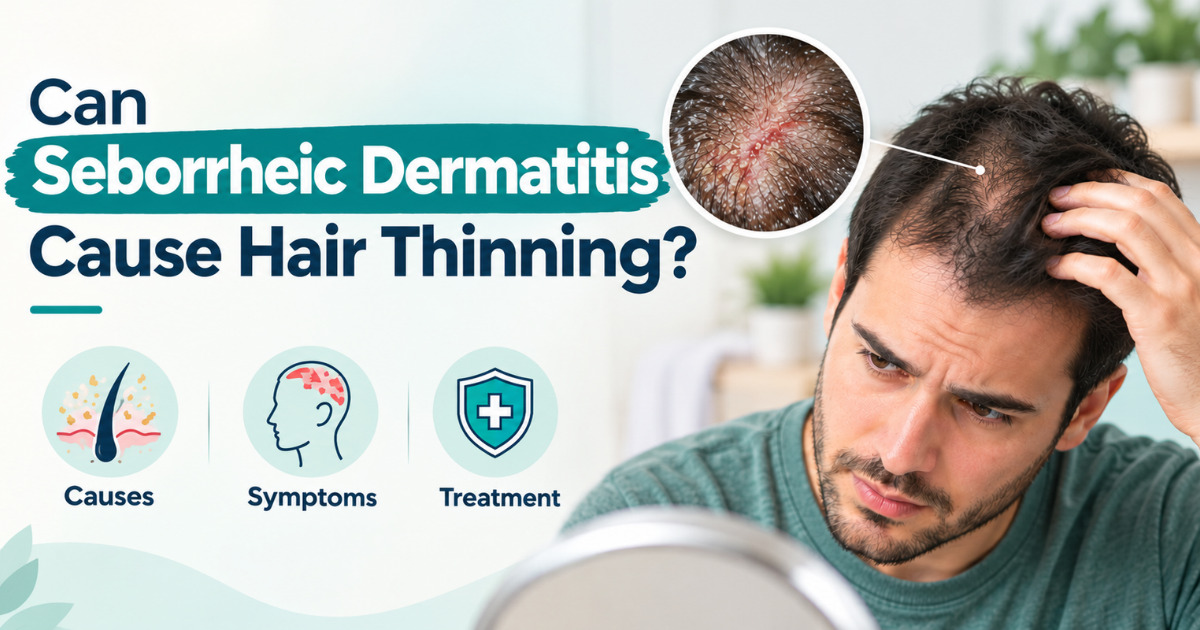
Chronic inflammation from seborrheic dermatitis can lead to hair loss symptoms, because weakened scalp conditions directly affect the strength of the hair roots. When hair roots are damaged or unstable, it can result in hair loss and thinning hair. Even though many people try to manage the condition on their own, incorrect methods may worsen the inflammation.
In this article, we will explore the causes, symptoms, care methods, and the frequently asked question: how to treat seborrheic dermatitis, including restoration options from experienced specialists and how to choose a suitable hair transplant clinic for individuals with severe conditions or those experiencing hair loss and thinning hair alongside the symptoms

What is seborrheic dermatitis on the scalp?
seborrheic dermatitis is a chronic form of skin inflammation caused by abnormal functioning of the sebaceous glands together with the body’s response to certain fungi. This leads to itching, redness, and flaky scalp, which are characteristic signs of seborrheic dermatitis on the scalp. This condition differs from regular dandruff because it involves more visible inflammation, recurs more frequently, and responds easily to skin conditions and hormones. This is why many people feel that the symptoms improve slowly and tend to come back easily, even when they try to take good care of themselves.
Although not a dangerous disease, it causes significant discomfort especially for those with sensitive or irritation-prone skin. When inflammation occurs over a long period, the scalp becomes weakened, making hair roots easily damaged and resulting in hair loss symptoms in the early stages. Without proper care, it may progress to hair loss and thinning hair, affecting confidence and long-term quality of life. Understanding what causes seborrheic dermatitis on the scalp and managing it correctly is an important step in preventing worsening symptoms and future hair-related problems.

What causes seborrheic dermatitis on the scalp?
When talking about the important question: what causes seborrheic dermatitis on the scalp, it is necessary to understand that this condition is part of seborrheic dermatitis, which is directly related to chronic skin inflammation together with multiple contributing factors. The commonly found causes are as follows:
Overactivity of the sebaceous glands
People with oily skin often have higher risk because excess oil triggers inflammation and makes flaky scalp occur more easily.
Malassezia yeast on the scalp
This group of fungi naturally exists on the skin, but when it increases excessively, it triggers seborrheic dermatitis on the scalp together with inflammation.
Stress and lack of sleep
Stress and insufficient rest reduce skin immunity, making skin inflammation flare up more frequently and more severely.
Genetics and skin type
Those with a family history of seborrheic dermatitis or naturally oily skin tend to develop symptoms more easily.
Weather changes
Extremely hot, cold, or dry weather can disrupt skin balance and lead to flaky scalp.
Irritating hair-care products
Hair cleansers with harsh chemicals, sprays, gels, or certain substances may trigger inflammation and worsen seborrheic dermatitis on the scalp.
Underlying skin diseases or allergic flare-ups
Skin allergies, dermatitis, or chronic rashes can make the skin highly sensitive, causing symptoms to appear quickly and recur more easily.
When these factors cause chronic inflammation, the hair roots gradually weaken and lead to hair loss symptoms, or progress into hair loss and thinning hair if proper care or evaluation is not provided. This is why many people search for answers to how to treat seborrheic dermatitis or seek help from specialists in a hair transplant clinic to restore the scalp and hair roots systematically.

Symptoms of seborrheic dermatitis on the scalp that should be monitored
The symptoms of seborrheic dermatitis often begin with minor abnormalities on the scalp, but when they become more noticeable, specific characteristics appear that indicate true seborrheic dermatitis on the scalp, which is usually caused by chronic skin inflammation. Warning signs include itching, redness, and excess oil accumulation due to overactivity of the sebaceous glands. Some individuals also experience white or yellow patches of peeling skin, which are typical signs of flaky scalp, and may notice odor or oily buildup even with regular shampooing.
Those with severe symptoms may become easily irritated when washing their hair or sweating, because the skin is weakened from chronic inflammation. The symptoms may spread along the hairline, eyebrows, mustache, or areas with many sebaceous glands. This aligns with the nature of what causes seborrheic dermatitis on the scalp, which is often linked to immune-related factors and oily skin.
When these symptoms persist repeatedly, inflammation penetrates deeper into the hair follicles and can lead to hair loss symptoms easily. If left untreated without understanding how to treat seborrheic dermatitis, or without receiving guidance from specialists, the condition can progress to hair loss and thinning hair, which requires evaluation from a hair specialist at a reputable hair transplant clinic for maximum safety.

Why does seborrheic dermatitis cause hair loss and thinning hair?
Many people wonder why symptoms from seborrheic dermatitis or seborrheic dermatitis on the scalp, which are forms of skin inflammation, affect the hair more than expected. In reality, when chronic inflammation occurs, the membrane around the hair follicles and the surrounding skin becomes weakened, leading to hair-root damage and making hair shed easily a key mechanism causing hair loss symptoms in individuals with seborrheic dermatitis.
The abnormal functioning of the sebaceous glands causes excess secretion and buildup, which disrupts the hair roots, weakening them and increasing the risk of hair loss and thinning hair. It also leads to flaky scalp, hardened scales, and clogged follicles, preventing hair from growing properly.
Individuals who ignore chronic inflammation without proper care and without understanding how to treat seborrheic dermatitis may experience faster follicle miniaturization. If the hair roots become weakened for a long time, recovery may require assessment from professionals specializing in hair health, such as medical experts from a hair transplant clinic like DHI Thailand, who have direct expertise in hair restoration.

How to treat seborrheic dermatitis? Proper care and treatment
Many people who begin to develop symptoms of seborrheic dermatitis or seborrheic dermatitis on the scalp often ask the first question: how to treat seborrheic dermatitis, because this condition is related to chronic skin inflammation and persistent symptoms such as flaky scalp. Treatment requires a systematic approach and adjustments according to severity, which can be divided into three levels:
Basic self-care
Start by adjusting scalp-care habits, such as choosing gentle shampoo, reducing the use of hot dryers or any heat, and avoiding scratching the scalp because it can worsen inflammation. This is suitable for those in the early stages of seborrheic dermatitis on the scalp.
Medical treatment
For individuals with clear or recurring symptoms, doctors may prescribe mild steroid medication to reduce inflammation, along with antifungal shampoos such as ketoconazole or zinc pyrithione to control the organisms that trigger inflammation. If there are thick scales or significant flaky scalp, the doctor may also prescribe medication to help dissolve the buildup before treatment.
Lifestyle adjustments
Getting enough sleep, reducing stress, and avoiding harsh chemicals such as hair sprays or styling products can help reduce flare-ups of seborrheic dermatitis on the scalp, making it suitable for long-term management.
Proper early care not only helps reduce skin inflammation but also lowers the risk of hair loss symptoms and hair loss and thinning hair. If symptoms do not improve, professional guidance is recommended to provide targeted treatment.

Warning signs that require immediate medical attention!
Self-care may not be enough, especially when signs of worsening inflammation appear, such as continuous flare-ups longer than 1–2 months, thick scales, increased flaky scalp, or red patches spreading around the hairline or face all indicating severe skin inflammation.
Another important sign is excessive hair loss symptoms, where thinning areas of the scalp become visible. This occurs due to inflammation inside the hair follicles. If hair loss and thinning hair begins to appear, it is important to consult an experienced doctor who can use scalp-scanning tools to analyze hair-root conditions more accurately than self-observation. Moreover, receiving advice from a hair transplant clinic will provide more precise treatment and restoration plans to prevent further hair loss and thinning hair and reduce flaky scalp or long-term skin inflammation.
Summary
The conditions of seborrheic dermatitis and seborrheic dermatitis on the scalp arise from key factors such as overactive sebaceous glands combined with skin inflammation and sensitivity to certain fungi. These issues gradually affect the scalp, and long-term inflammation weakens hair follicles, causing hair to shed easily. This leads to hair loss symptoms and may progress into hair loss and thinning hair if individuals do not understand how to treat seborrheic dermatitis from the early stages.
Proper care from the beginning is essential because it helps reduce inflammation, control flaky scalp, and prevent further damage to the hair roots. Regular self-monitoring is necessary to avoid progression.
If symptoms become severe or visible hair loss and thinning hair develops, consulting specialists at a professional hair transplant clinic such as DHI Thailand will provide the most appropriate and safest treatment and restoration program tailored to each individual.