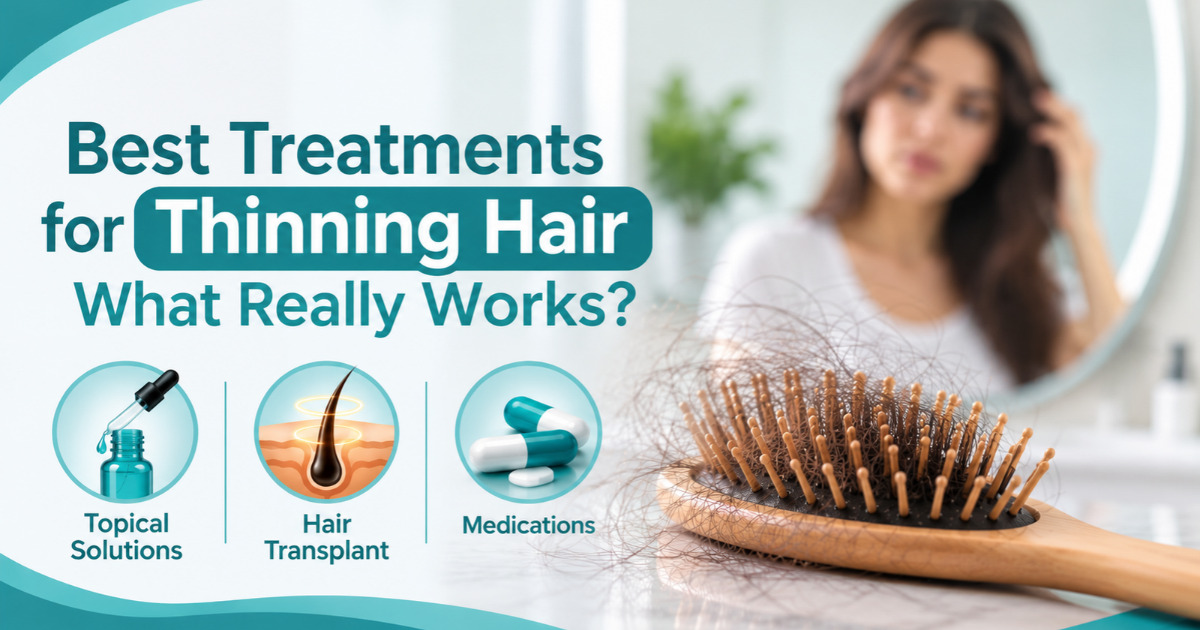
Thinning hair can be worrying, especially if you begin noticing more hair on your pillow, widening gaps in your hairline, and less fullness throughout your hair. Hair thinning can happen to anyone, either slowly because of genetic factors, hormone changes, nutrient deficiencies, stress, or certain medical conditions. Plenty of treatments are available to help.
The right treatment depends on what is causing the issue and how severe it is. Different treatments such as topical medications, injectable treatments, low-level laser therapy, or even hair transplants can be used. Understanding how these treatments work, their benefits, and their limitations can help you make an informed decision.
Key Takeaways
- Hair thinning can result from genetics, hormonal changes, nutritional deficiencies, stress, and medical conditions.
- Minoxidil and finasteride are established treatment options for certain types of pattern hair loss.
- PRP, GFC, and low-level laser therapy may support hair growth in selected individuals, although evidence varies.
- Hair transplantation can restore hair growth in suitable candidates with sufficient donor hair.
- Early diagnosis helps identify the cause and improve treatment planning.
What Is Thinning Hair?
Thinning hair is when your hair becomes less dense, thick, and full. You may notice more of your scalp showing, a widening hairline, and a receding hairline. Losing around 50 to 100 hairs every day is normal. However, if you are continually losing hair, having less volume, or patches showing, then there could be an underlying issue.
One of the most common reasons for hair thinning is androgenetic alopecia (male/female pattern hair loss). It is caused by genetic and hormonal factors and can worsen over time.
What Causes Thinning Hair?
Hair thinning can be caused by various reasons. Identifying the cause is key to finding the right treatment.
- Genetics: Hair loss can be hereditary and cause slow thinning around the crown, temples, and center.
- Hormones: Changes to your hormones can happen during pregnancy, menopause, thyroid issues, and hormone imbalances.
- Nutrients: Low iron, lack of protein, and certain vitamin deficiencies can cause excessive hair loss.
- Stress/illness: Stress (physical/emotional), infections, surgery, and significant weight loss can cause temporary hair loss.
- Medical Conditions: Thyroid issues, autoimmune conditions and hair infections can impact your hair follicles.
- Hair styling: Excessive heat styling, chemicals, and tight hairstyles can cause breakage.
Understanding if your hair thinning is temporary, progressive, or related to a medical condition will help find the right treatment.
What is The Best Treatment For Thinning Hair?
There isn’t one treatment that will work for everyone. You should consider why you are suffering from hair loss, how well your follicles are working, and your medical history.
Minoxidil
Minoxidil is a topical treatment that can help with male and female pattern hair loss. It helps to encourage hair growth and can slow down any further thinning.
You usually apply it directly to your scalp as prescribed at the right strength and frequency. It can take around 6-12 months to see results.
Expect to see more volume and less hair loss. However, this should be used regularly to see continued benefits. Some people may experience increased hair loss or irritation.
Finasteride
Finasteride is an oral prescription medication used to treat male pattern hair loss. It works by reducing the production of the hormone dihydrotestosterone (DHT), which causes certain hairs to shrink over time.
Reducing DHT can help slow hair loss and encourage regrowth in some men.
What to expect: Results generally take several months to become noticeable, and continued treatment is needed to maintain improvements. Possible side effects include sexual health-related effects and mood changes. Discuss the benefits and risks with your doctor. It is not suitable for everyone, particularly during pregnancy.
Prescription Medication
Depending on your diagnosis, your specialist may prescribe other medications.
Spironolactone can be prescribed to certain women with female pattern hair loss. This helps to reduce the effects of certain hormones on your hair follicles. Oral minoxidil can also be considered in certain cases.
Not everyone will be suitable for these medications. You may need to be monitored for side effects. A doctor will consider your medical history, hormone levels, and goals.
Platelet Rich Plasma (PRP)
Platelet Rich Plasma (PRP) is an injection that uses a concentrated section of your own blood containing platelets and growth factors. The process usually involves:
- Taking a small amount of blood.
- Putting it in a centrifuge to separate out the platelet-rich plasma.
- Injecting the plasma into certain areas of your scalp.
This can help to encourage your follicles to work and increase volume in those with certain types of pattern hair loss.
A systematic review published in 2024 looked at 9 studies involving 291 people. 6 studies showed a significant increase in hair volume. However, treatments vary, and study quality can make results uncertain.
Growth Factor Treatments (GFC)
Growth Factor Concentrate (GFC) is a regenerative treatment that uses concentrated growth factors taken from your own blood. These are injected into certain areas of your scalp to encourage your current hair follicles.
It can help with increasing thickness, encourage follicles to work, and reduce hair loss in some people with pattern hair loss.
Low Level Laser Therapy (LLLT)
LLLT uses specific wavelengths of light to encourage cell activity in your hair follicles. This can be done using specialist devices such as laser caps, combs and helmets.
This can help increase hair volume in those with hereditary hair loss. Results can vary, and you will generally need to use this regularly for several months.
This can be considered with other treatments after being assessed by a specialist.
Hair Transplant
When thinning hair progresses to significant baldness, or areas have lost functional follicles, medical treatments may not provide sufficient coverage. In such cases, hair transplantation may be an option.
During a hair transplant, healthy follicles are moved from the donor area (usually the back/sides of your scalp) to areas of hair loss.
Common techniques include:
- Follicular Unit Extraction (FUE): Single follicles are extracted and implanted.
- Follicular Unit Transplantation (FUT): A strip of scalp is removed, and follicles are prepared.
- Direct Hair Implantation (DHI): Follicles are implanted using a special implanter pen. This gives the surgeon more control over the angle, direction, and depth of implantation.
DHI is the best option for people with thinning hair. This can help to carefully implant grafts between existing hairs.
Most patients will begin to see visible hair growth 6-9 months after the transplant. Some may need up to 12 months.
Nutrition, Supplements, and Gentle Hair Care
Having the right diet can help with healthy hair growth. Lack of iron, zinc, vitamin D, and protein can contribute to hair loss for some people. To help keep your hair healthy, try:
- Eating foods high in protein, leafy vegetables, nuts, and seeds.
- Treating any confirmed nutrient deficiencies with medical advice.
- Avoid tight hairstyles that put pressure on your follicles.
- Minimize heat styling and harsh chemicals.
- Use gentle shampoos and conditioners.
You shouldn’t take supplements unless you have a deficiency. If you do take them, they will be most beneficial if you are lacking in certain nutrients. Too much can cause health issues.
When Should You See a Thinning Hair Specialist?
If you are experiencing:
- Persistent or increasing hair loss
- Widening gaps in your hairline
- Receding hairline/crown
- Sudden hair loss and well-defined bald spots
- Itchy, red, flaky scalp
Then you should consider seeing a specialist for hair restoration. They may recommend blood tests, examining your scalp, or other tests to identify the cause. Seeing someone early can help avoid unnecessary treatments and give you better results.
Contact DHI Thailand For Expert Thinning Hair Treatment
Choosing an appropriate hair thinning treatment starts with understanding your hair loss pattern and the condition of your follicles. At DHI Thailand, you can discuss your hair restoration concerns and explore suitable treatment options.
Whether you are experiencing early thinning or more advanced hair loss, a professional assessment can help determine whether medical treatments, regenerative procedures, or hair transplantation may be appropriate.
Consult the DHI Thailand team to understand your options and receive guidance based on your hair restoration goals.
Conclusion
The best treatment for hair thinning depends on what is causing it, how severe it is, and whether your follicles are working. Minoxidil and finasteride are proven treatments for certain types of pattern hair loss. PRP, GFC, and LLLT can help in certain cases. Hair transplants can help restore real hair if you have enough healthy donor follicles.
Don’t base your treatment choice on what is popular. Speak to a professional to understand what is causing your hair thinning. An individualized treatment plan can help you manage your hair loss and have realistic expectations.
FAQs
1. What causes thinning hair in males and females?
Common causes include genetics, hormone changes, lack of nutrients, stress, medical conditions, and certain medications. The pattern of hair loss and cause may differ between males and females.
2. What is the best treatment for thinning hair?
Minoxidil is a proven treatment for certain types of pattern hair loss. Finasteride may be recommended for suitable males. Other treatments include PRP, GFC, LLLT, and hair transplants.
3. Can thinning hair grow back?
In some cases, yes. If the thinning is due to temporary hair loss, lack of nutrients, or illness that has been tackled, then your hair may grow back. However, genetic hair loss generally needs to be managed.
4. Is PRP effective for thinning hair?
PRP can help increase hair volume in some people with pattern hair loss. However, results can vary, and more high-quality research is needed.
5. How long until I see results from thinning hair treatments?
It will depend on the treatment. Minoxidil can take 6-12 months. Hair transplant results are generally visible after 6-9 months. Injectables can take time.
6. When should I consider a hair transplant?
If you have significant/permanent hair loss, enough donor hair, and realistic expectations, then you may want to consider a hair transplant. A specialist should examine your scalp and hair loss pattern.
7. Is DHI suitable for thinning hair?
DHI can be suitable for certain people with thinning hair. This can help to implant grafts between existing hairs. It will depend on your scalp condition, hair density, and the surgeon’s assessment.