Hair transplantation is widely popular in Thailand and around the world today, with advancements in medical technology making the procedure safer and its results more natural. Many people interested in hair transplantation may wonder, “Is hair transplantation safe?” and worry about the Hair transplantation side effects or potential risks. This article provides in-depth information on the safety of hair transplantation in Thailand, specifically using the DHI (Direct Hair Implantation) technique at hair clinics in Thailand like DHI Thailand. It also explains possible side effects and how to reduce risks to build confidence for those considering the procedure.
Thailand is a popular global destination for hair transplantation, with a reputation for expert medical teams, modern technology, and reasonable costs. Many hair clinics in Thailand meet international standards, especially DHI Thailand, which is licensed and certified by DHI Global, a leading hair transplant organization with over 50 years of experience. This allows them to use a specialized technique that offers natural results, no scars and fast recovery. This combination of global expertise and Thai medical standards makes hair transplantation performed by skilled doctors in Thailand highly safe and reliable.

Are There Side Effects of Hair Transplantation, and How Reliable Are Hair Clinics in Thailand?
Hair transplantation is a relatively safe medical procedure, especially when performed by an expert doctor in a standardized clinic. Modern techniques and equipment have significantly reduced the risks or side effects of hair transplantation compared to the past. Contemporary methods like FUE and DHI are designed to minimize tissue damage and increase precision. New hair grows naturally with a high survival rate. In general, if a patient is healthy and follows the doctor’s instructions correctly, the risk of severe complications is very low.
The DHI hair transplant technique, which is an advancement of FUE, is highly regarded for its safety. Because it is a non-surgical method with minimal incisions, it greatly reduces risks. The DHI technique is recognized as a safe technique that is highly precise, gives natural results, and, importantly, requires very little downtime. These qualities are a great solution for thinning hair and a reassuring answer for those who are worried about safety or have limited time for recovery.
Moreover, Thailand has standardized clinics like DHI Thailand that operate under medical standards equivalent to international standards. The medical team undergoes specialized training and has extensive experience in hair transplantation, ensuring patients receive close and safe care at every step. Combining modern techniques with expert medical teams, hair transplantation today is considered highly safe and reliable, building complete confidence in patients.

How DHI Technique Increases Safety and Reduces Risks
DHI (Direct Hair Implantation) is a non-surgical permanent hair transplant technique known for its safety and precision, developed by DHI Global Medical Group. This technique uses a special tool called the Implanter Pen to implant hair grafts directly into the scalp without making incisions or requiring stitches, unlike older methods like FUT, which involves cutting a strip of the scalp. The Implanter Pen allows the doctor to precisely control the direction, angle, and depth of each hair strand, minimizing damage to surrounding tissue. This results in micro-sized wounds that heal quickly, enabling the body to recover fast without a hospital stay or taking several days off work. This method is an excellent solution for thinning hair and is ideal for those with an active lifestyle or who cannot afford a long recovery.
With the DHI technique, the risk of infection after the transplant is greatly reduced because the wounds are small and all equipment is strictly sterilized. Patients also tend to experience less swelling and redness compared to other methods because there is minimal tissue trauma. When wounds heal quickly and swelling is minimal, the risk of other complications like inflammation and infection is also very low.
Another major benefit that provides peace of mind is that the DHI technique does not require shaving the head (especially for women) and leaves no scars and fast recovery on the scalp. This means patients don’t have to worry about scars or a change in hairstyle. The result looks natural and blends seamlessly with existing hair, as if it grew naturally. Because there are no large surgical wounds, patients don’t have to worry about scars or pain after surgery, unlike older methods. DHI is designed to minimize risks and side effects of hair transplantation while providing excellent results.

What Are the Side Effects of Hair Transplantation?
While hair transplantation is highly safe and reliable, minor and temporary side effects of hair transplantation may occur shortly after the procedure. These are mostly short-term and can resolve on their own. Common side effects after a hair transplant include:
- Swelling and redness on the scalp: The transplanted area may have slight swelling or redness for the first 2-3 days, which is a natural response to the procedure. Patients can reduce swelling by sleeping with their head elevated during the first few nights to reduce blood pressure to the scalp. These symptoms usually improve and disappear within 1-2 weeks as the wounds fully heal.
- Small scabs and itching: Small scabs often form where the hair grafts were implanted. These scabs act as a protective barrier, preventing dirt and germs from entering the new follicles. It is crucial not to pick or scratch the scabs, as doing so before they are ready can cause the still-unstable grafts to fall out and lead to deeper wounds or infection. The scabs should be left to fall off naturally within about 7-10 days. If you feel itchy, you can gently tap the area around the wounds or apply medication as prescribed by the doctor to relieve the itch.
- Minor tightness or numbness: In the first few days, patients may feel slight tightness, minor swelling, or numbness in the transplanted area and the donor area (at the back of the head). This is due to the local anesthetic and the procedure itself. These symptoms are generally not severe and will gradually improve within a few days. Taking pain medication as recommended by the doctor can help relieve any discomfort. Slight numbness or tingling of the scalp is also normal and will go away on its own.
- Initial hair shedding (Shock Loss): About one month after the hair transplant, the new hair often enters a temporary shedding phase known as “Shock Loss” before regrowing again in the following 3-6 months. This initial shedding is not a sign of failure but a normal cycle as the hair roots adjust before producing new, permanent hair. Patients may be surprised to see the transplanted hair fall out after a while, but it is a normal symptom. Soon after, the transplanted hair roots will begin to produce new, stronger hair, and the full results will be visible around 6-12 months after the procedure (with maximum density at about 1 year).
In summary, the side effects of hair transplantation are usually minor and temporary, such as swelling, redness, itching, or short-term shedding. All of these can be managed with proper self-care as advised by the doctor. The symptoms will mostly subside and return to normal within a few days or weeks. It is crucial for the patient to strictly follow post-transplant care instructions, such as avoiding rubbing or scratching the scalp, sleeping with an elevated head initially, refraining from strenuous exercise, and temporarily avoiding smoking and alcohol. Additionally, consistently taking any medication or using products prescribed by the doctor will help prevent complications and maximize the survival rate of the transplanted grafts. After the recovery period, patients can return to their normal lives with new, strong, and natural hair.
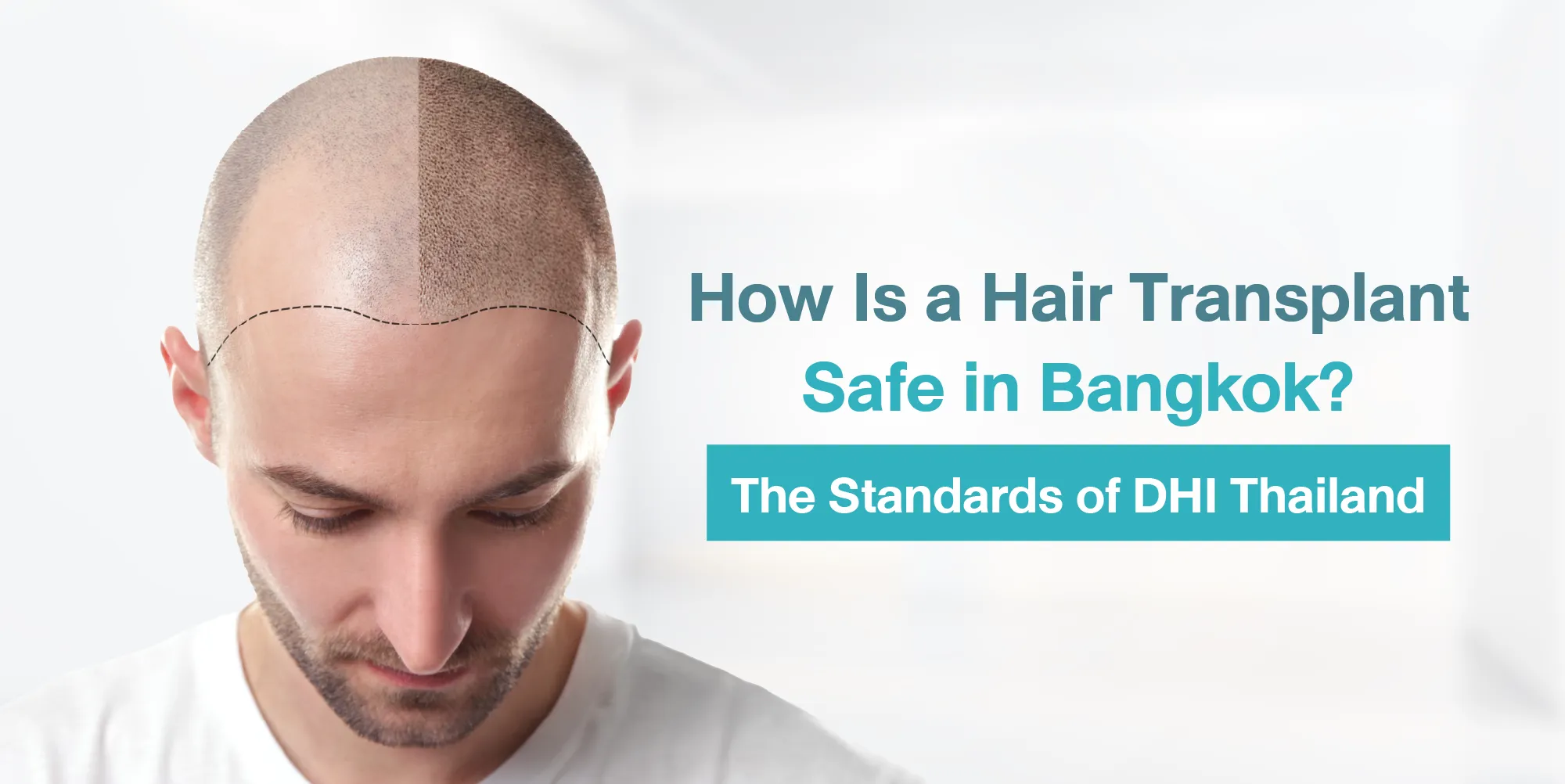
How Is a Hair Transplant Safe in Bangkok? – The Standards of DHI Thailand
Bangkok, Thailand, is a hub for aesthetic medicine in the region, attracting many Thais and foreigners for hair transplant services because of its skilled doctors and high-quality clinics. One of the leading clinics is DHI Thailand, located in Bangkok, which operates with global safety standards, ensuring that a hair transplant there is highly safe and reliable. Here’s why a hair transplant with DHI Thailand is both safe and exceptional:
- Authentic DHI Technique Licensed from Europe: The clinic uses the genuine DHI technique, directly licensed from DHI Global. They use a small Implanter Pen that precisely controls the direction, angle, and depth, making the procedure highly detailed. It requires no large incisions, leaves no scars and fast recovery, and patients don’t need a long recovery. The results are natural and blend seamlessly with existing hair. This specialized technology greatly reduces both physical risks and patient anxiety.
- Specialized Medical Team: DHI Thailand has a resident medical team that has been directly trained in the DHI technique by DHI Global. Every step of the treatment, from scalp assessment and hairline design to the implantation of each graft, is overseen by a specialized doctor. The doctors pay close attention to detail and sterilization at every step to ensure each transplanted graft takes and grows as well as possible.
- International-Standard Sterilization and Cleanliness: The clinic conducts all procedures under cleanliness and safety standards equivalent to hospitals in Europe. Operating rooms are strictly controlled for sterility, and single-use medical equipment is used to minimize the risk of infection. Patients can be confident in the prevention of infection and safety during the procedure.
- Certified by Global Medical Organizations: DHI Thailand is certified by DHI Global as well as international quality and safety verification bodies such as ISO, TUV, ACHS, and the World Health Academy. These certifications confirm the clinic’s high-level treatment and safety standards. Receiving these certifications means the clinic’s quality and safety management systems meet rigorous global criteria. Patients can be sure they are in the care of professionals in a safe environment.
- Comprehensive and Caring Service: For the safety and convenience of international patients, DHI Thailand offers comprehensive services from pre-travel planning and accommodation arrangements near the clinic to airport transfers and close post-treatment follow-up. Every step is designed to make patients feel as comfortable and safe as possible. When they arrive in Bangkok, patients are cared for like family and can ask the team for assistance at any time. This helps build peace of mind and trust for international patients traveling to Thailand for a hair transplant.
Based on all the factors mentioned, hair transplantation in Bangkok at DHI Thailand has comprehensive safety standards, including advanced medical techniques, expert personnel, and a strict sterilization and cleanliness system. This combination makes hair transplantation a highly safe and reliable process that delivers satisfying results for both health and appearance. Both Thai and international patients increasingly choose Thailand and the DHI clinic as a solution for thinning hair and hair loss.

Conclusion on Hair Transplant Safety
Modern hair transplantation techniques (such as DHI) are considered a very safe solution for thinning hair and hair loss. Most side effects of hair transplantation are minor and temporary, such as swelling, redness, or slight itching after the procedure, all of which can be easily managed with proper care as advised by a doctor. Leading hair clinics in Thailand like DHI Thailand also have global treatment and sterilization standards, reducing the risk of complications to a minimum.
In conclusion, “Is hair transplantation safe?” The answer is: it is very safe if you choose a standardized clinic and use an appropriate technique. Patients will gain both confidence in the results and peace of mind regarding safety. When combined with strict adherence to post-transplant care, the new hair can grow strong, giving you back a confident and great-looking appearance that lasts. DHI Thailand is one of the choices that meets both safety and effectiveness for hair transplantation. If you are looking for a solution for thinning hair that provides definite and highly safe and reliable results, hair transplantation with the DHI technique in Thailand is the most attractive option right now.