Hair Transplant Methods have become more advanced than ever in 2025, offering permanent solutions for both men and women struggling with thinning hair. Hair makes us feel confident, but hair loss and thinning are clearly more common among men than women. As men transition from adolescence to adulthood, many notice excessive shedding during washing or brushing. Their hairline gradually recedes, and their self-esteem often declines along with it.
But why are men more prone to hair loss and what is the real solution that works in 2025?
In this article, we’ll walk you through the 10 main causes of hair loss in men, and recommend the best hair transplant methods that can help restore thicker hair and boost your confidence once again.
10 Main Causes of Hair Loss in Men
 1. Higher levels of DHT (male hormone)
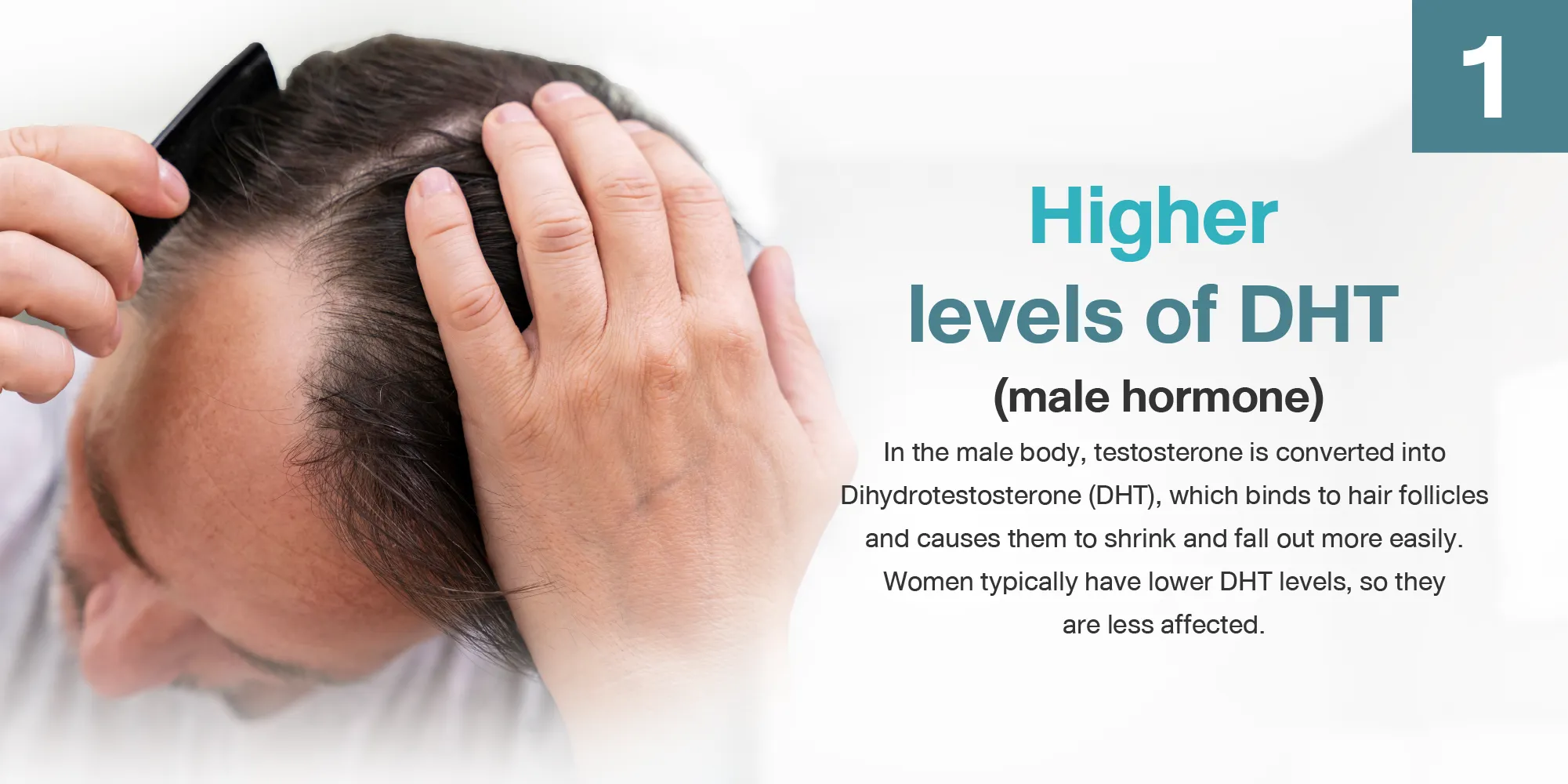 1. Higher levels of DHT (male hormone)
In the male body, testosterone is converted into Dihydrotestosterone (DHT), which binds to hair follicles and causes them to shrink and fall out more easily. Women typically have lower DHT levels, so they are less affected.

2. Genetics (Androgenetic Alopecia)
A hair loss condition caused by genetics affects up to 50% of men by age 50. While women can also inherit this, the genes for DHT sensitivity are more dominantly expressed in men.

3. Shorter hair growth cycles
Men generally have a shorter anagen (growth) phase and a quicker telogen (shedding) phase than women, leading to more frequent shedding and slower regrowth.

4. Mental and physical stress
Chronic stress from work or daily life can increase cortisol levels, which contributes to hair loss symptoms. Men may be more prone to this due to differing stress-response systems.

5. Poor scalp and hair care
Overuse of styling products or frequent harsh shampooing can dry and irritate the scalp. This increases inflammation and accelerates hair loss, especially in men.

6. Underlying health issues and medications
Conditions like thyroid problems, diabetes, or high blood pressure, as well as medications (e.g., antidepressants, antihypertensives), can trigger hair loss condition, often more noticeably in men.

7. Poor nutrition
A diet lacking in protein, iron, B vitamins, or zinc weakens hair structure. Since men may overlook balanced nutrition, they are more vulnerable to hair loss.

8. Smoking and alcohol consumption
Nicotine and alcohol reduce blood flow to hair follicles, weakening them. These habits are more prevalent in men and significantly contribute to hair loss symptoms.

9. Environmental exposure
Prolonged sun exposure, pollution, and failure to protect the scalp from UV or dust can dry out and damage hair, especially for men working or exercising outdoors.

10. Earlier onset of balding
Men can begin balding as early as their late teens to mid-20s. In contrast, women usually experience hair thinning after menopause.

Best Hair Transplant Methods for Men and Women in 2025
Thanks to medical advancements, hair transplant methods in 2025 are now scar-free, minimally invasive, and deliver ultra-natural results. Here are the top 3 options:
1. DHI (Direct Hair Implantation)
- Uses a fine Implanter Pen, creating extraction and implantation sites smaller than 1mm
- Highest graft survival rate (~97%)
- Precise control over angle, direction, and depth of implantation
- Shortest downtime: resume daily activities within 1–3 days
This hair transplant technique is offered at DHI Thailand, which is certified by DHI Global and is highly trusted for personalized and safe treatment.
2. FUE (Follicular Unit Extraction)
- Leaves tiny dot scars scattered across the scalp
- Graft survival rate between 80–90%
- Moderate control of hair direction and angle
- Recovery time: 3–5 days
Although a widely-used hair transplant method, FUE has slightly less precision than DHI but still works well for many men.
3. FUT (Follicular Unit Transplantation)
- Leaves a linear scar at the back of the scalp
- Graft survival rate: 70–80%
- Less control over hair direction
- Longest recovery time: 7–10 days
FUT may be suitable for those needing large graft volumes, though it is less common in modern clinics due to scarring concerns.
Which Hair Transplant Method Is Right for You?
Choosing the right solution depends on your lifestyle, expectations, and hair loss condition severity. If you prioritize natural density, fast recovery, and minimal scarring, DHI (Direct Hair Implantation) is the most recommended choice in 2025.
Understanding that hair loss in men is driven by DHT levels, genetics, habits, and overall health can help you address the root cause. Selecting the right hair transplant method ensures lasting results and restored confidence.
If you’re looking for a permanent solution to thinning hair, DHI Thailand offers authentic DHI Hair Transplant services licensed by DHI Global, performed with an advanced Implanter Pen for maximum precision and natural outcomes—scar-free and fast-recovering.
Book Your Consultation
Book DHI Hair Transplant Appointment today for a free consultation with our medical experts.
📞 Call: +66 61 145 5969
🌐 Or click to reserve your appointment online.
Don’t let hair loss symptoms take away your confidence. Take the first step to fuller, naturally beautiful hair with DHI Thailand.