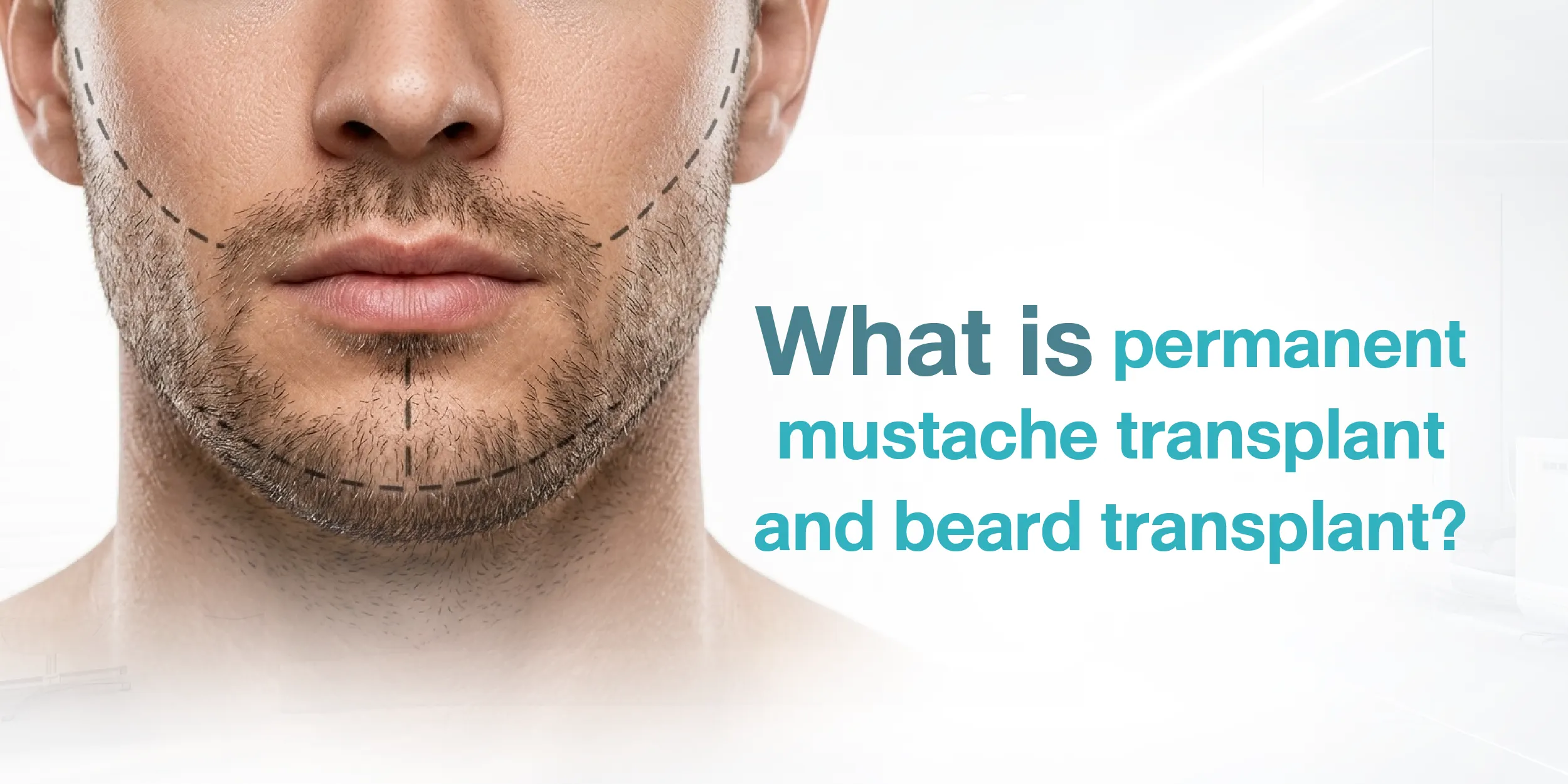
What is permanent mustache transplant and beard transplant?
Permanent mustache transplant and beard transplant are aesthetic medical procedures that help solve the problem of thin mustache and beard or an unclear growth pattern. For male mustache transplant, hair follicles are moved from the donor area at the back of the head or the occipital area, which is a strong hair region, and transplanted to the mustache and beard area on the face. This allows new hair to grow naturally, resulting in permanent outcomes, and the hair can be trimmed and styled like real facial hair. It is suitable for those who want to enhance their look to appear more sharp, dimensional, and confident in their overall appearance, including those who have problems with male mustache transplant not growing fully or growing unevenly.
This procedure is ideal for people with thin beard or uneven mustache lines because the mustache line can be designed to match the facial structure appropriately, making the face look more defined. It is also popular among those who want to improve their personality to look more mature and trustworthy. However, the success of the result depends on the surgical technique of mustache transplant surgery, the doctor’s expertise, and post-procedure care, which directly affect the density and natural appearance of the mustache and beard line.
Who is suitable for permanent mustache transplant and beard transplant?
Permanent moustache transplant and beard transplant are not suitable for everyone, but they are intended for specific groups who have problems with mustache and beard growth or who want to improve their facial appearance to look sharper and more dimensional. The suitable groups can be divided as follows:
- People who have mustache growth that is not fully filled or grows in patchy areas
- People who have thin beard, making the face look less defined or lacking dimension
- People who have no mustache or beard since birth and want to increase hair density
- People who want to improve their appearance to look more sharp, defined, and mature
- People who use their appearance in their profession, such as sales, business, or client-facing work
- People who have tried nourishing or stimulating hair growth methods but got no results
- People who want a permanent solution for mustache and beard problems through mustache transplant surgery
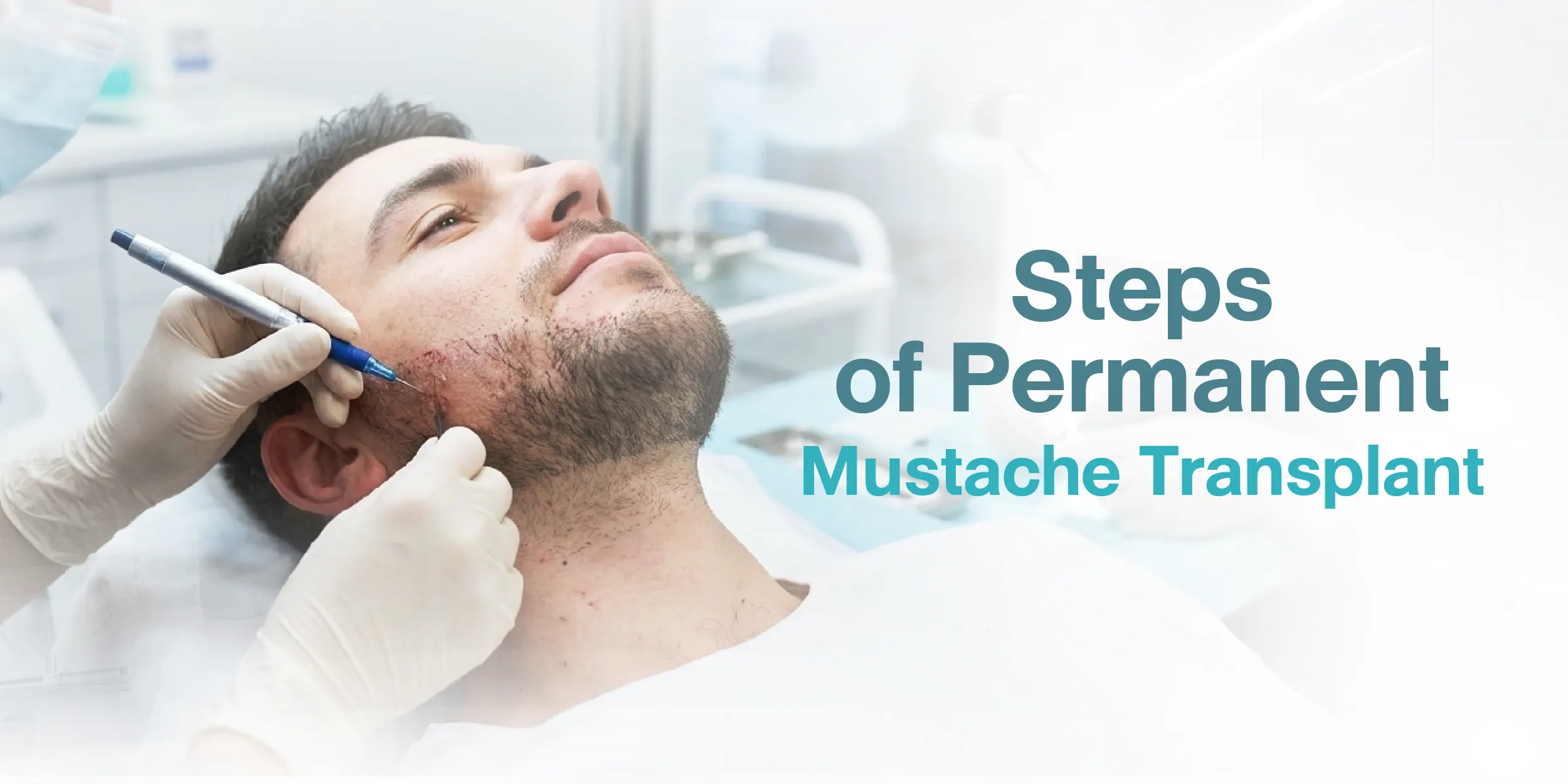
Steps of Permanent Mustache Transplant
Permanent mustache transplant and beard transplant are medical procedures that must be performed by a specialist in hair transplantation (Hair Transplant Specialist). This is because they require precision in designing the mustache line, positioning hair direction, and controlling graft density to achieve the most natural-looking results. The steps can be arranged as follows:
1. Facial assessment and analysis by the doctor
The doctor will examine the facial skin condition, the density of existing hair, and select the donor area (usually the back of the scalp). The mustache or beard style is then designed to match the facial shape and the patient’s preferences.
2. Preparation of the area and graft extraction
The area is cleaned and sterilized, and local anesthesia is applied. Hair follicles are carefully extracted to avoid scarring, selecting only the strongest grafts.
3. Mustache implantation and direction control
The doctor implants the grafts one by one, considering the angle, direction, and growth pattern of the mustache and beard to ensure a natural, skin-adapted appearance.
4. Post-transplant care and follow-up
Patients are instructed on proper facial care and advised to avoid activities that may cause irritation. Follow-up appointments are scheduled to evaluate hair growth and the long-term completeness of the mustache and beard results.
Does a mustache transplant hurt? What are the after-effects?
Pain is one of the main concerns for many people before deciding to undergo a permanent mustache transplant, but in reality, mustache transplant and beard transplant are procedures that cause much less pain than most people expect. The level of discomfort can also be well controlled using medical techniques. During the mustache transplant surgery, the doctor applies local anesthesia, which makes both the implantation area and the donor area painless. Most patients usually feel only slight pressure or mild tightness of the skin rather than actual pain.
- In the first 1–2 days after the procedure, there may be mild soreness, tightness, or a slight burning sensation in the mustache and beard area, which is a normal response after a permanent mustache transplant. These symptoms usually improve on their own and can be relieved with prescribed medication, along with proper aftercare instructions from the doctor.
- After about 3–5 days, pain or discomfort significantly decreases, leaving only slight skin tightness or dryness, which does not affect daily activities.
Therefore, mustache transplant and beard transplant are considered low-pain procedures, well-controlled, and not something to worry about in terms of pain. Experienced doctors from DHI Thailand will closely monitor your condition to ensure safety and comfort throughout the treatment process.
Advantages and Limitations of Mustache Transplant Surgery
Advantages
- It provides a permanent solution for problems such as no mustache growth, patchy mustache, or unclear mustache lines.
- The hair obtained from permanent mustache transplant and beard transplant is real hair from your own body, making it look natural.
- The mustache and beard design can be customized to match each individual’s facial structure and personality.
- It reduces concerns for people with thin beard and increases confidence in appearance.
- Once the hair follicles are strong, they can be shaved, trimmed, or styled just like natural facial hair.
Limitations
- It requires recovery time and results must follow the natural hair growth cycle.
- Results depend on hair graft quality, the doctor’s technique, and post-procedure care.
- It is more expensive compared to general hair nourishment or stimulation methods.
- It must be performed by an experienced doctor in mustache transplant surgery and at a certified mustache transplant clinic.
- People looking for Beard Transplant in Bangkok or a mustache transplant clinic should study the information carefully and consult a doctor directly before making a decision.
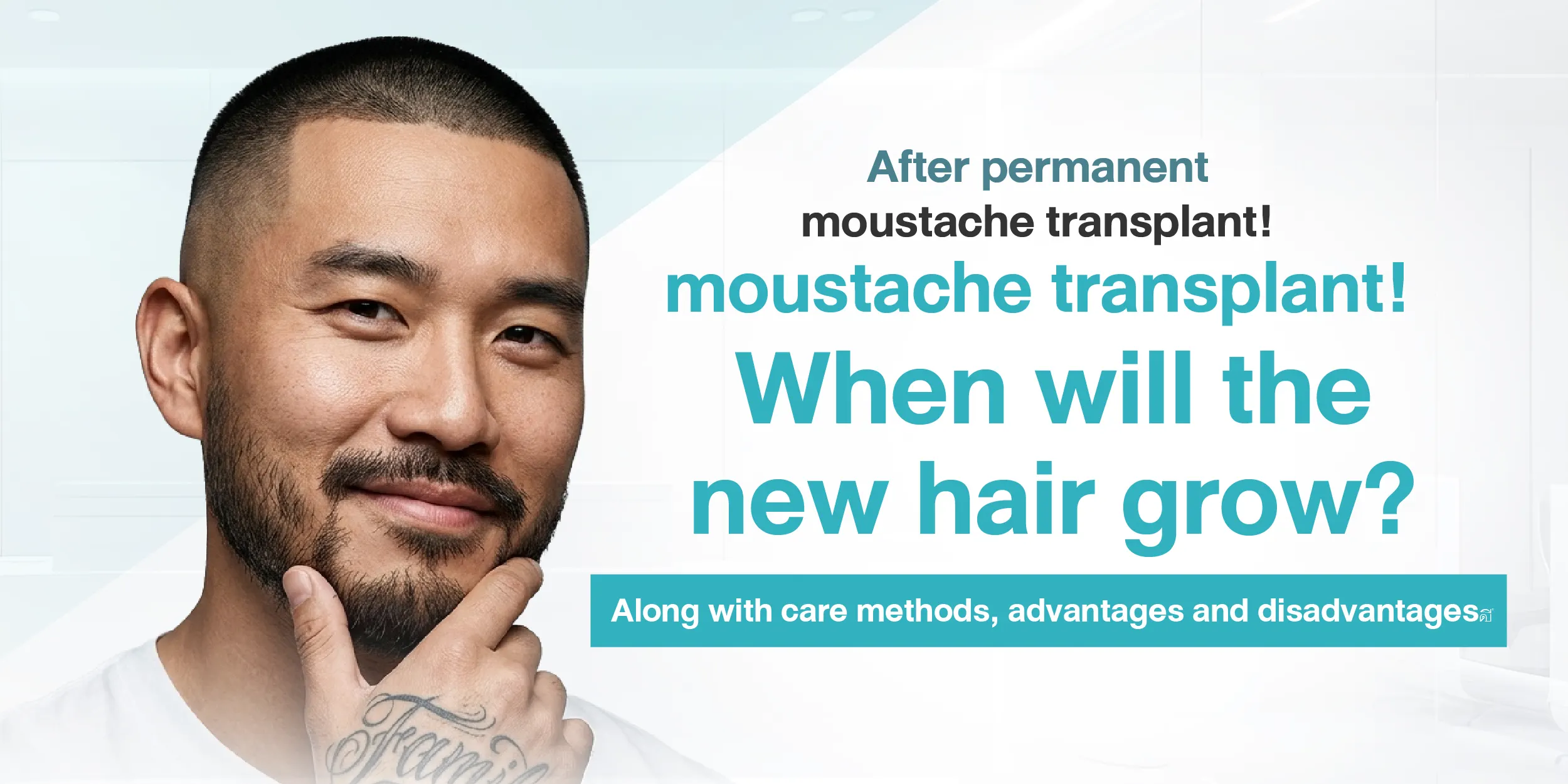
When will new hair grow after a permanent mustache transplant?
After a permanent mustache transplant, many people wonder when the new hair will start to grow. In reality, hair growth follows the natural hair cycle and does not appear immediately after the procedure is completed.
In the first 2–4 weeks, the transplanted hairs may temporarily shed (Shock Loss). This is a normal part of the permanent mustache transplant process and does not mean the procedure has failed. The hair follicles remain under the skin and begin to stabilize.
After that, during 3–4 months, new hair will gradually start to grow in a more consistent pattern. The hairs will initially appear thin and soft before becoming thicker, stronger, and more natural-looking over time.
The results of permanent mustache transplant and beard transplant become more noticeable at around 6–8 months, and full results are typically seen at approximately 9–12 months. However, the growth timeline may vary depending on several factors such as post-care, skin condition, the surgical technique used, and each individual’s hair growth cycle. Proper care helps the new hair become stronger, well-aligned, and natural-looking.
Summary
Deciding to undergo permanent mustache transplant and beard transplant, or mustache transplant surgery, is an effective solution for problems such as no mustache growth, unclear mustache lines, or thin beard. When performed with appropriate medical techniques and under the care of an experienced mustache transplant surgery specialist, it helps ensure strong graft survival, natural hair growth, and reduces long-term complications, resulting in a natural appearance that suits each individual’s facial structure.
However, choosing a certified mustache transplant clinic with experienced doctors specializing in mustache and beard transplantation is a crucial factor that significantly affects the outcome. For those considering Beard Transplant in Bangkok, consulting a mustache transplant clinic in detail before making a decision will help you better understand the procedure, recovery period, and expected results.