The problem of Baldness is not something that happens and then improves in the blink of an eye, but rather a process that gradually changes over time, age, and internal factors within the body. Many people may start with slight hair loss, a receding hairline, or thinning in specific areas, before deciding to undergo Hair transplant surgery to address the problem and regain confidence once again.
However, after several months or even many years, some people begin to notice that the overall appearance of their hair is not entirely as expected. Some people have transplanted hair that grows well but lacks sufficient density, while others may encounter the problem of Hair transplant not growing, the transplanted area becoming thinner over time, or issues caused by Graft loss. This also includes factors such as the DHT hormone, which can continue to affect the existing hair. These situations lead to the question: if you have already had a transplant and want Repeat hair transplantation, is it still possible to undergo a Second hair transplant or a Repeat hair transplant?
This article is therefore intended for the medical team at DHI Thailand clinic to summarize all the key points you need to know before deciding on a Repeat hair transplant, from the reasons why you should or should not proceed, the evaluation process, to perspectives that help you plan before deciding to consult a Hair transplant clinic, with an emphasis on providing straightforward information so that you can make a careful and well-informed decision.
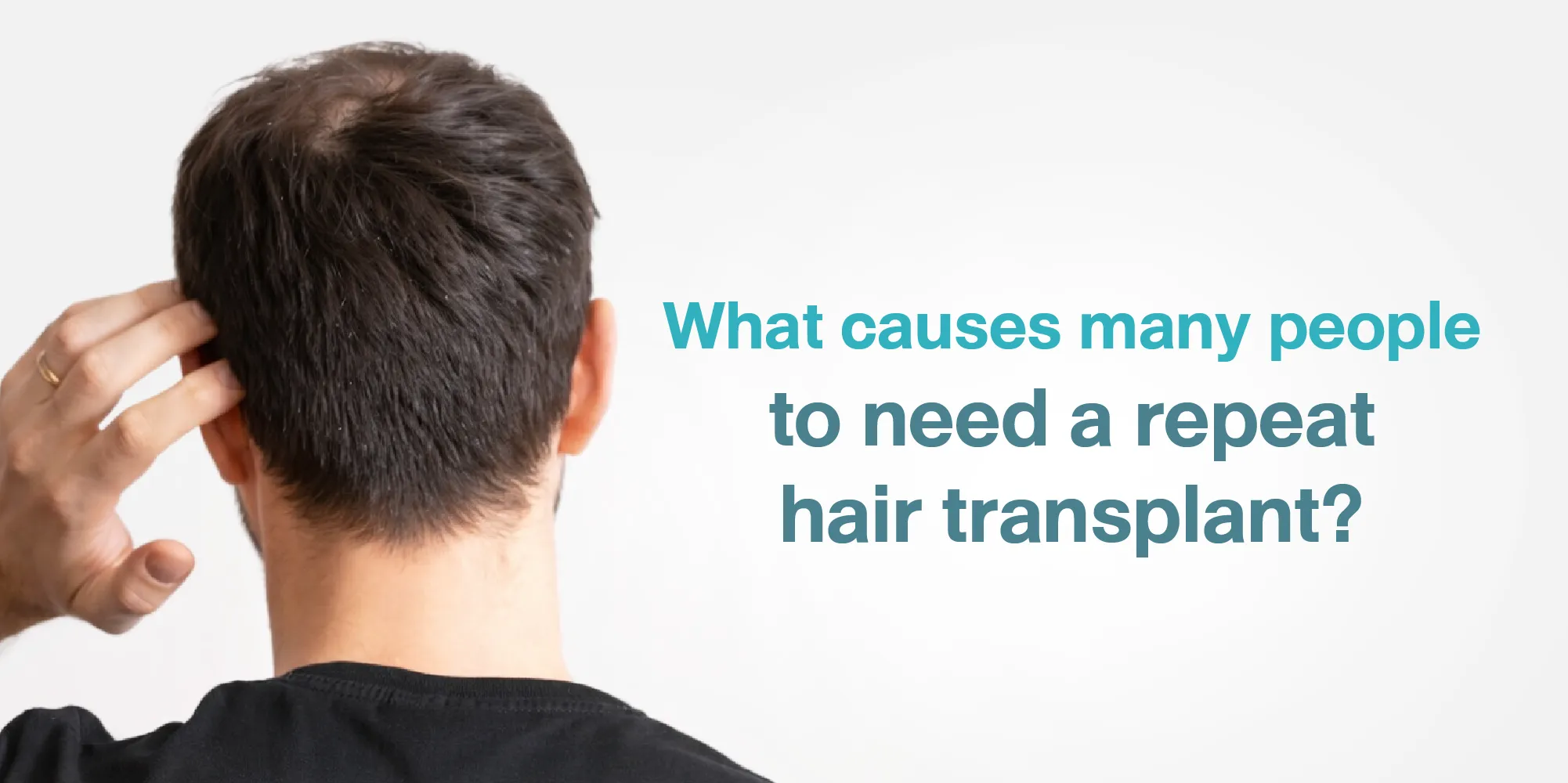
What causes many people to need a repeat hair transplant?
Even though many people have already undergone Hair transplant surgery, over time they may find that the results do not fully meet their expectations. Deciding on Repeat hair transplantation is therefore not unusual and does not always mean that the first procedure was a failure. The main reasons why many people reconsider a Second hair transplant usually come from the following factors.
1. Hair density is still insufficient
Even if the transplanted grafts grow well, some people may feel that the overall appearance still looks thin compared to their initial expectations, leading them to want increased density for a more natural look.
2. Baldness progresses to new areas
Some patients only have hair transplanted in the frontal area, but as they get older, new areas begin to experience hair loss or thinning, which can again lead to Baldness.
3. Problems such as hair not growing or graft loss
Some patients may experience Hair transplant not growing or Graft loss, which may result from scalp condition assessment, post-transplant care, or individual factors that were not anticipated at the beginning.
4. The effects of the DHT hormone
Although transplanted hair is generally resistant to the DHT hormone, the original hair surrounding the transplanted area can still thin over time, making it necessary to plan for Repeat hair transplantation.
For these reasons, consulting an experienced Hair transplant clinic that focuses on long-term results is important before deciding on Repeat hair transplantation or a Repeat hair transplant.
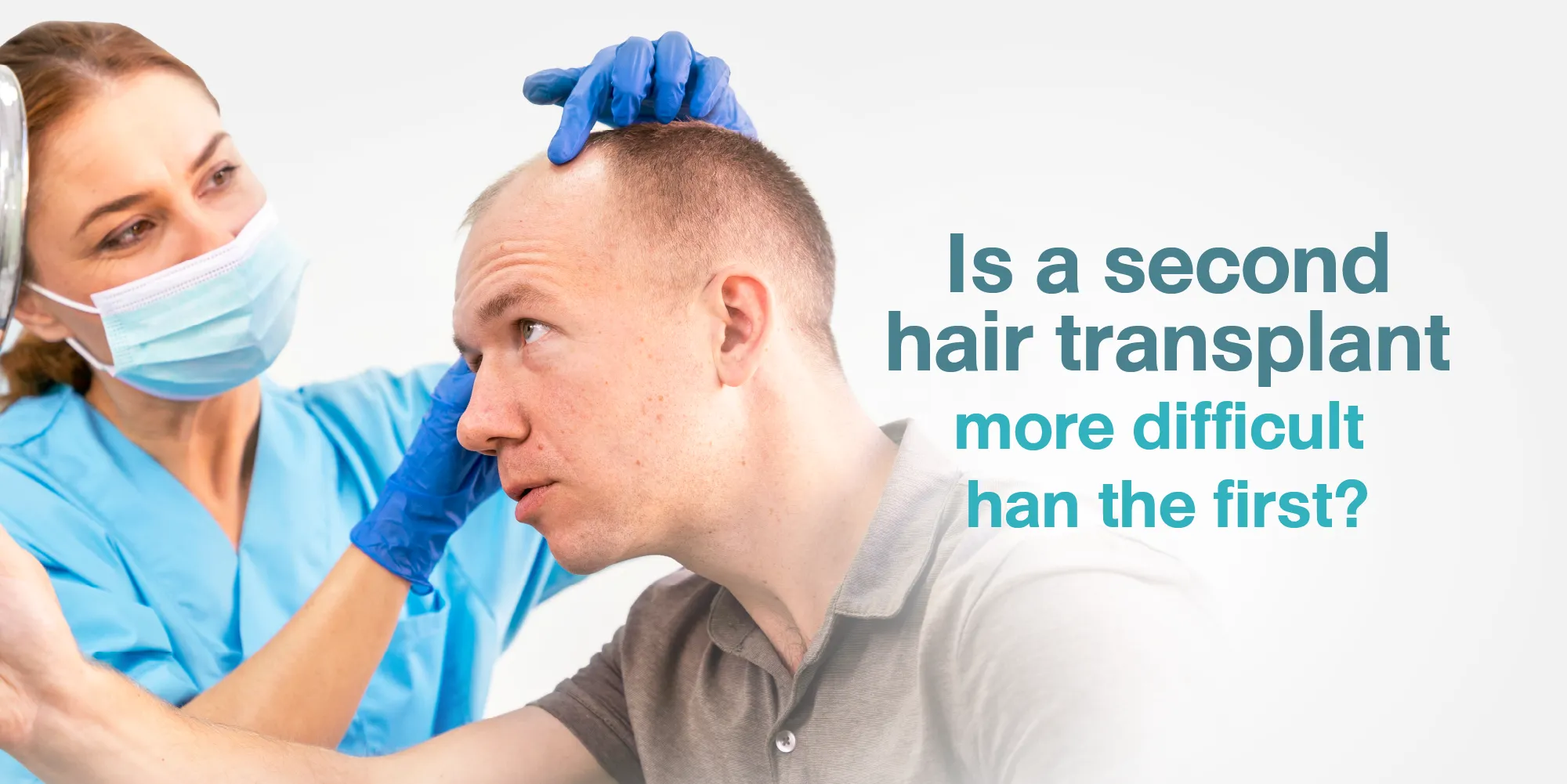
Is a second hair transplant more difficult than the first?
From a technical perspective, a Repeat hair transplant or Repeat hair transplantation is often more complex than the first procedure because the doctor must work in areas that have already undergone Hair transplant surgery, which are not in the same condition as a scalp that has never been operated on. One of the challenges is that previously transplanted areas may have scar tissue, altered blood circulation, or existing grafts already in place. Therefore, the doctor must carefully plan new graft placement to avoid damaging existing hair roots and to reduce the risk of problems such as Graft loss or weakening hair that has already grown.
In addition, repeat hair transplantation must consider the overall hair density to ensure a natural appearance, not simply adding more grafts to the same area. Poor planning may result in hair looking stiff, clumped, or inconsistent with the natural direction of existing hair especially in patients who still have Baldness caused by factors such as the DHT hormone. For all these reasons, choosing a Hair transplant clinic with American Board certified physicians and a team experienced in handling repeat hair transplant cases is far more important than considering price alone.
When can you have a second hair transplant?
After the first hair transplant, the results will not appear immediately. The transplanted hair will begin to grow and gradually become thicker according to the natural hair growth cycle, with clearer results appearing at around 12–18 months after Hair transplant surgery. This period is an important phase for doctors to evaluate whether Graft loss has occurred, how well the transplanted grafts have grown, how dense the hair is, and whether the hairline looks natural or not.
If approximately 18 months have passed and the patient is still dissatisfied for example, the hair looks thinner than expected, the hair does not grow as well as it should, there are visible gaps between the hairs, or they are unhappy with the originally designed hairline it may then be possible to consider a Second hair transplant or Repeat hair transplantation.
However, the decision to undergo a Repeat hair transplant should not be based on feelings alone. It should be evaluated together with a doctor to understand the real causes related to the initial Hair transplant surgery, in order to achieve the most natural-looking results possible.
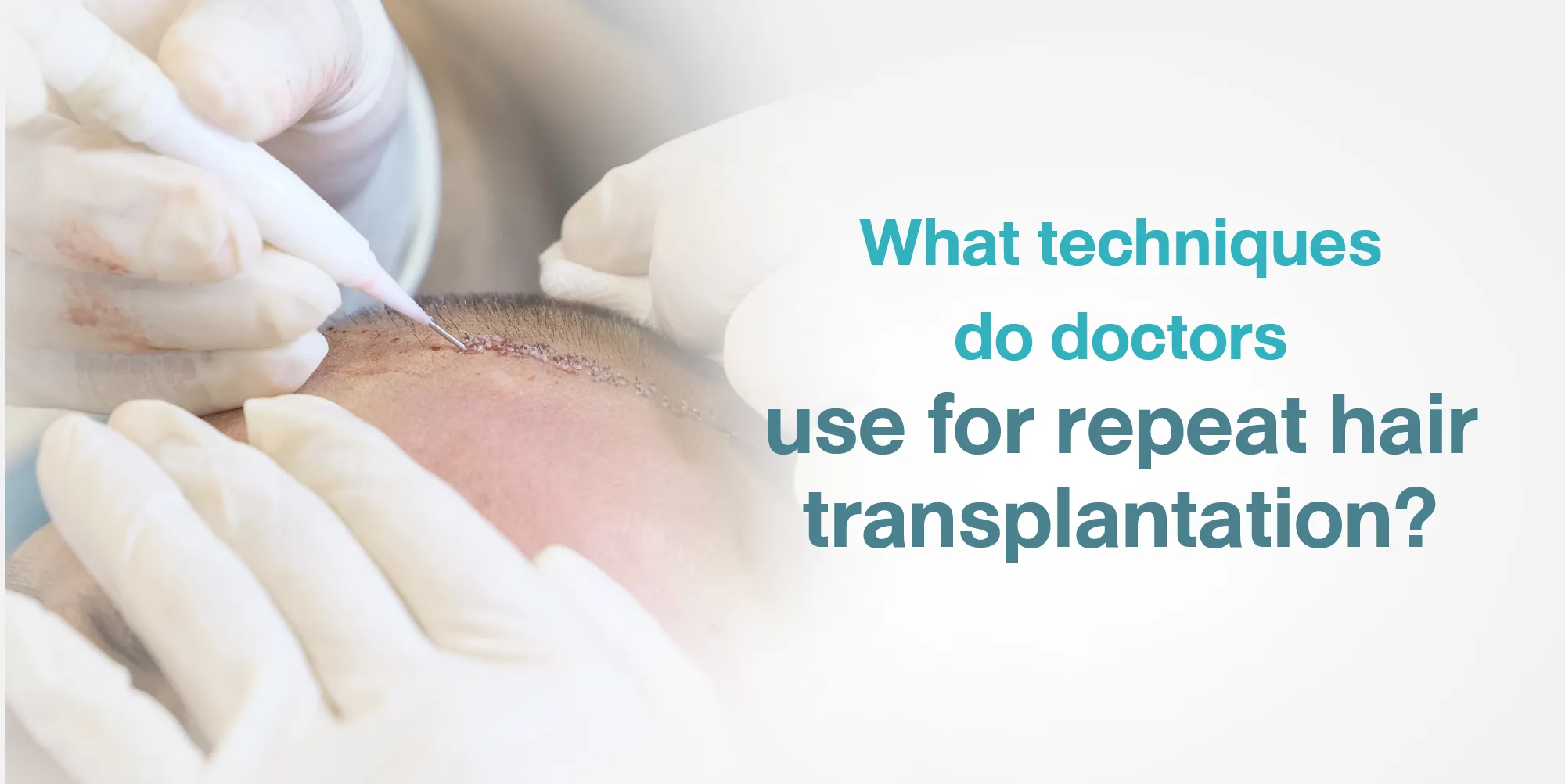
What techniques do doctors use for repeat hair transplantation?
When treatment moves into the correction or density-enhancement stage, Repeat hair transplantation cannot rely entirely on the same approach as the first procedure. This is because the doctor must work on areas that have already undergone Hair transplant surgery, which involves limitations related to the scalp, existing hair roots, and the remaining number of hairs. Therefore, the chosen technique must emphasize precision, accuracy, and maximum safety for the existing hair, so that the results of a Repeat hair transplant look natural and do not increase long-term risks.
-
FUE (Follicular Unit Extraction)
The FUE technique is considered one of the most popular methods for a Second hair transplant. This is because the doctor can selectively extract only the healthiest hair follicles from the remaining donor area, reduce trauma to the scalp, and create very small wounds that are almost invisible. It is suitable for increasing hair density or correcting areas where Hair transplant not growing has occurred.
-
DHI (Direct Hair Implantation)
The DHI technique is an advanced development of FUE, using a Choi Implanter Pen to implant hair follicles directly. This technique allows doctors to insert new hairs precisely into the gaps between existing hairs, reduces the risk of Graft loss, does not disturb the original hair roots, and enables precise control of hair direction so that it blends well with the existing hairstyle. It is especially suitable for Baldness cases that require a particularly seamless and natural-looking result.
How should you choose a clinic if you want a second hair transplant?
When you reach the point of considering Repeat hair transplantation or a Repeat hair transplant, choosing a Hair transplant clinic is just as important as choosing the right treatment technique. This is because the second Hair transplant surgery is more complex than the first whether in terms of scalp condition, the amount of remaining grafts, and the future tendency of Baldness. Therefore, the criteria for selecting a clinic should be more detailed and careful, and you can consider the following key factors.
1. Direct experience with repeat or corrective hair transplant cases
The clinic should have experience treating patients who have already had a transplant, not only first-time cases, because working on previously transplanted areas requires high expertise to reduce risks to existing hair roots and complications.
2. Long-term graft planning
A good clinic will not rush to use all grafts in a single session, but will assess an appropriate graft number while considering Baldness and the effects of the DHT hormone that may occur in the future.
3. Straightforward consultation without rushing decisions
The doctor should be able to clearly explain whether you should or should not proceed with Repeat hair transplantation at that time, and be willing to advise you to wait if it is not yet the right timing.
4. Options beyond surgery
A professional clinic will also propose other care or treatment approaches alongside surgery, rather than focusing only on surgery, in order to achieve the best possible results for the patient.

What you should know and how to prepare for a second hair transplant
Preparing before a second Hair transplant surgery according to the doctor’s recommendations will help reduce risks, increase the survival rate of new grafts, and make the results of a Repeat hair transplant look more natural and closer to what you expect. Since Repeat hair transplantation is more complex than the first procedure both in terms of scalp condition and the remaining amount of hair preparation from the beginning is recommended as follows.
1. Leave an appropriate interval before repeating the procedure
You should wait at least 12 months after the first transplant to see the true results of the first round and allow the scalp tissue to fully recover. Repeating too soon may increase risks to grafts and make the evaluation inaccurate.
2. Provide detailed transplant history
Patients should provide details such as the number of grafts previously transplanted, the technique used, post-transplant care history, and any medications taken regularly. This information helps doctors plan a Second hair transplant accurately and reduces the chance of repeating problems such as Graft loss or Hair transplant not growing.
3. Keep the existing hair roots healthy and strong
If hair loss is related to the DHT hormone, starting care or treatment early can strengthen existing hair roots before the new transplant and help slow down thinning of the original hair.
4. Choose a clinic skilled in corrective cases
A Repeat hair transplant requires higher-level skill than a first-time procedure because it must deal with scar tissue and limitations of the remaining hair. Choosing a Hair transplant clinic with experience in corrective work can make planning and outcomes safer.
Summary
Having thick, natural-looking hair can greatly improve confidence in daily life. If you have already undergone Hair transplant surgery but still feel the results are not complete whether due to insufficient density, a hairline that still does not feel right, or Hair transplant not growing in certain areas Repeat hair transplantation or a Repeat hair transplant may be a good solution.
However, what should not be overlooked is that your hair supply is limited. Deciding on a Second hair transplant should therefore be based on careful planning, understanding the causes of Baldness, and evaluating the impact of the DHT hormone, so that grafts are not wasted or you do not need repeated corrective procedures multiple times.
At DHI Thailand Hair transplant clinic, we understand that people seeking correction with a Second hair transplant or a Repeat hair transplant often have more concerns than first-time patients. That is why our medical team prioritizes personalized treatment design, evaluates your donor capacity transparently, and selects advanced techniques that help reduce Graft loss and ensure results that fit each individual. If you are still unsure whether this is the right time for a Repeat hair transplant, coming in for a detailed discussion and evaluation is a practical way to help you decide more easily and understand clearer expected results.