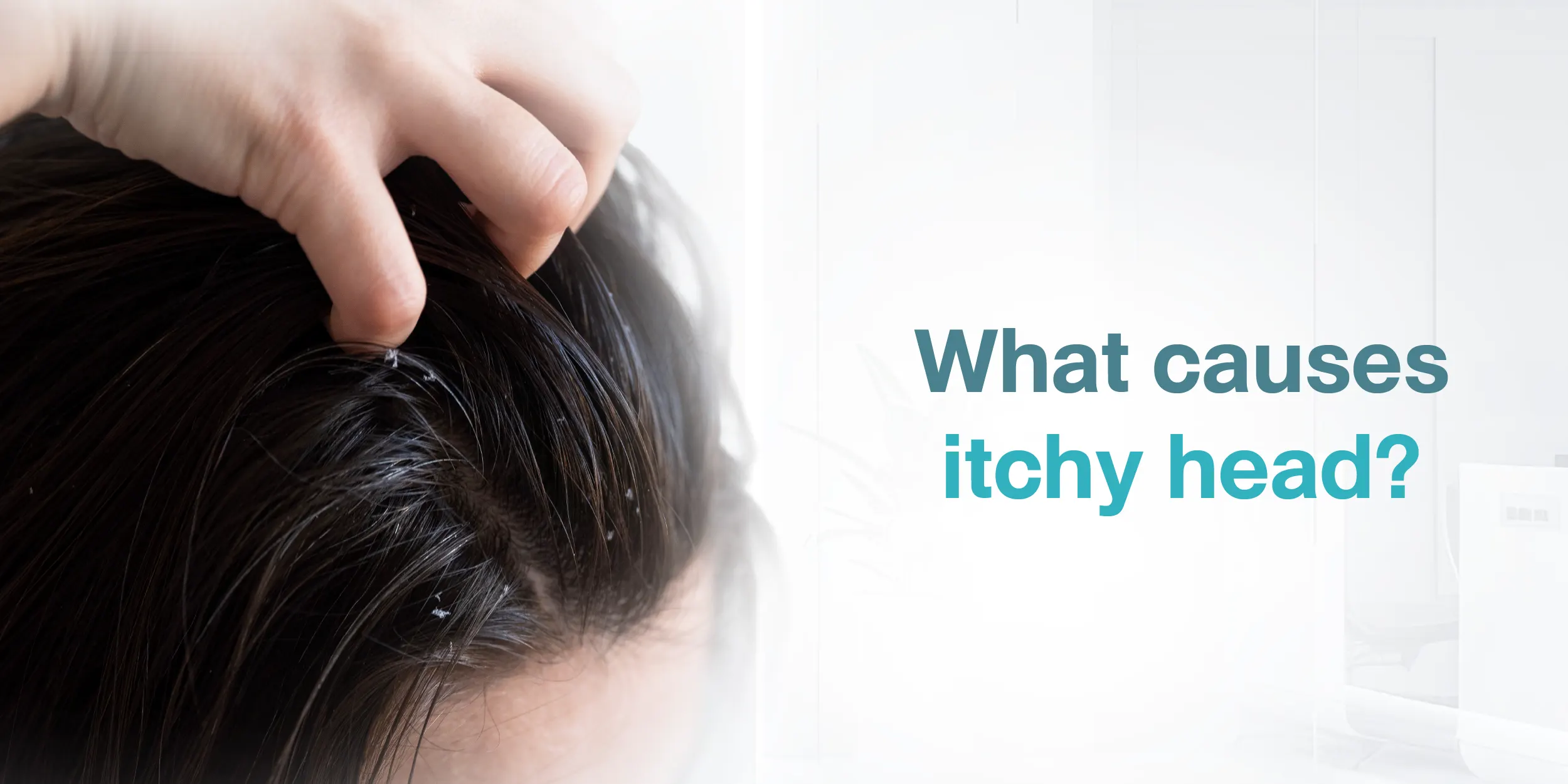
What causes itchy head?
Itchy scalp does not occur without a cause. It is the result of an imbalance in scalp condition. The key factor is scalp inflammation, which may be caused by fungi, bacteria, allergic reactions to chemical substances from shampoo or hair care products, as well as scratching behavior or unknowingly damaging the scalp. When inflammation occurs, the body responds with continuous itching, redness, or irritation.
In addition, an imbalance of oil on the scalp is another common cause. When the scalp becomes too oily or too dry, it affects the balance of the hair follicles, causing them to gradually weaken. New hair that grows will become smaller over time, leading to noticeable thin hair. This type of itching usually does not go away on its own; instead, it recurs and becomes more severe if not properly treated. If left untreated for a long period, the scalp will slowly deteriorate and become the starting point of long-term hair problems.
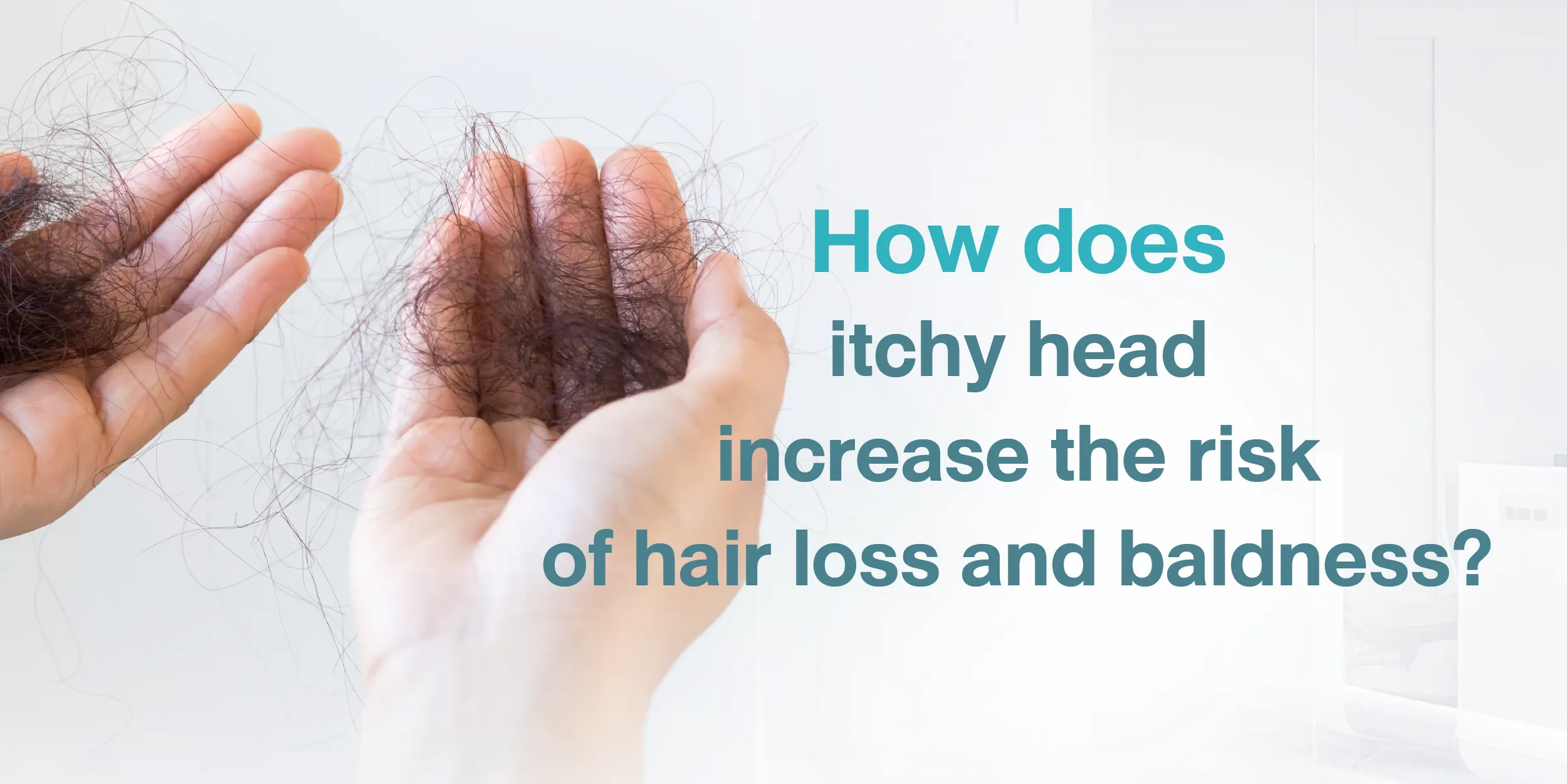
How does itchy head increase the risk of hair loss and baldness?
Repeated itchy head is not only a source of irritation but also reflects abnormalities in the scalp that directly affect the hair follicles. When the scalp is in a state of irritation or ongoing inflammation, the hair roots become weaker and cannot anchor firmly to the scalp. As a result, hair falls out more easily and in greater amounts, while new hair is unable to grow back to replace it.
When hair loss continues, hair density gradually decreases. New hair becomes smaller, thinner, and weaker until the hairline starts to recede or the scalp becomes visibly more exposed. If left unaddressed, some hair follicles may stop functioning permanently and eventually develop into baldness.
Especially in individuals with genetic factors, ignoring early signs of hair loss can make later hair restoration more difficult. Therefore, it is important to observe the condition of the scalp and hair to prevent progression from hair loss to baldness.
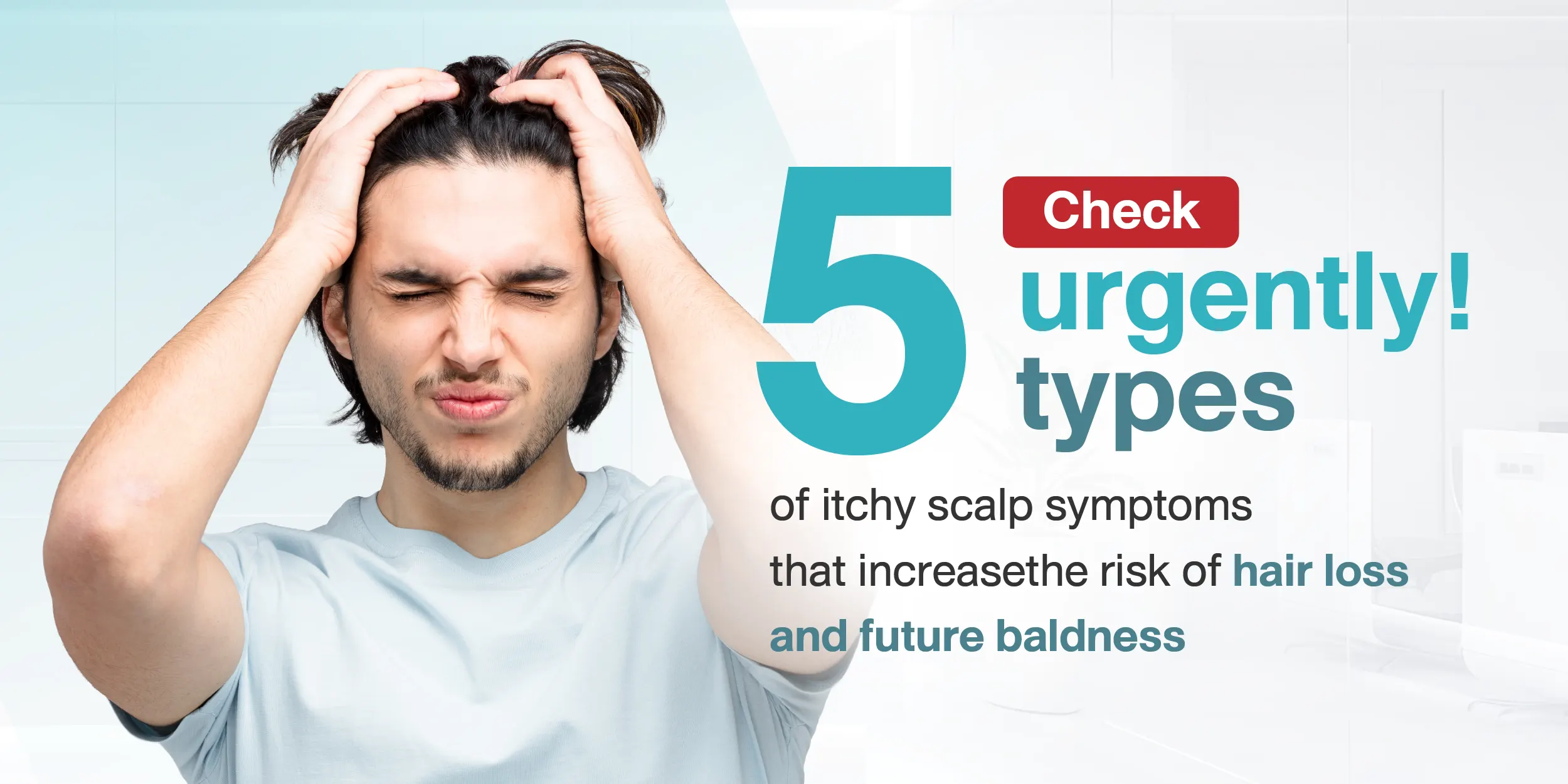
5 Types of itchy head symptoms that may increase risk of hair loss and baldness
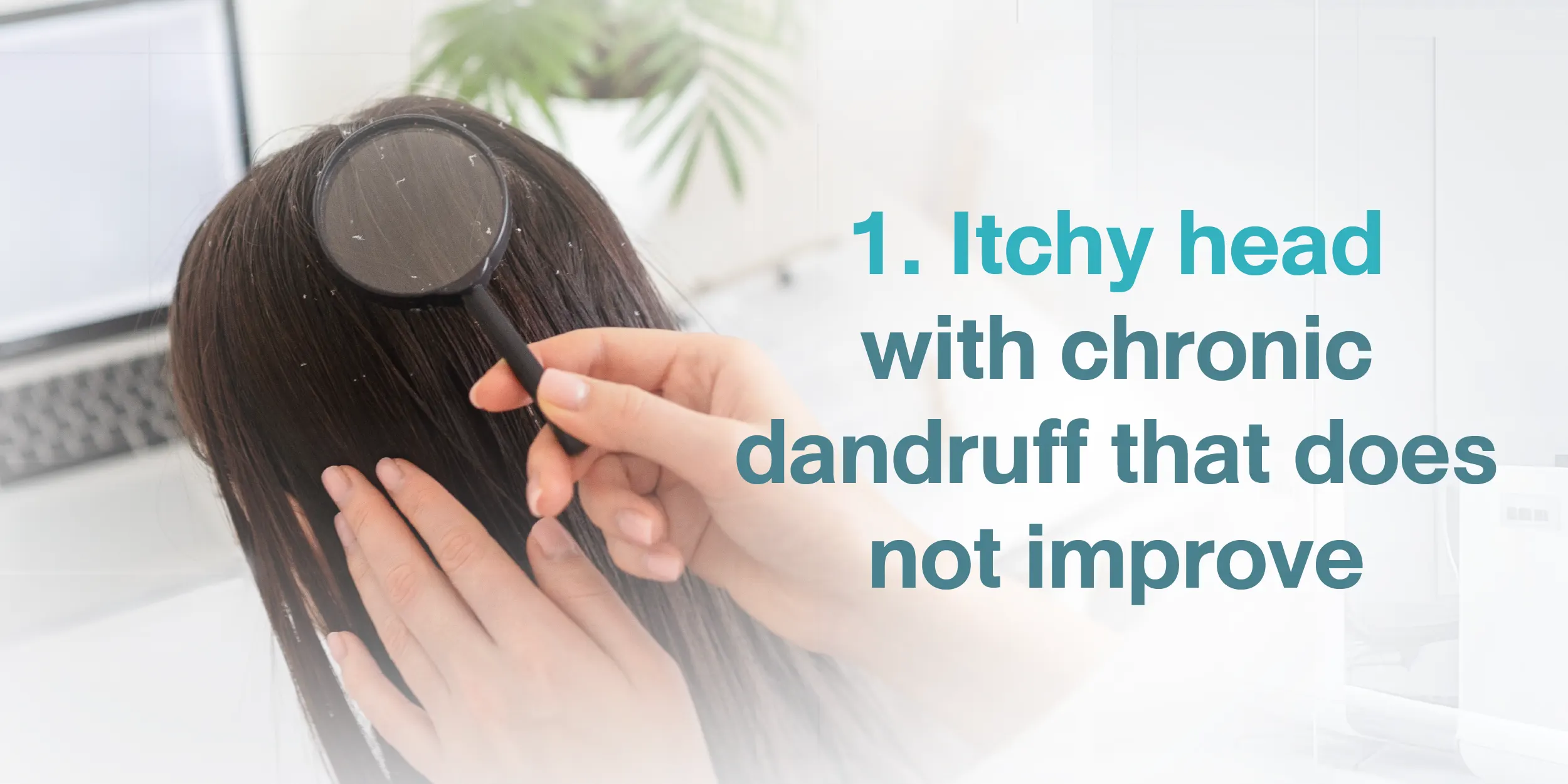
1. Itchy head with chronic dandruff that does not improve
Itchy head that comes with a large amount of dandruff and persistent itchy head even after changing shampoo and seeing no improvement is often a sign of scalp abnormalities, such as fungal buildup or chronic inflammation. This condition continuously deteriorates the environment of the hair follicles. When the hair roots become weak, hair falls out more easily, increasing the risk of hair loss in the long term. If left untreated for a long time, it may develop into thin hair and eventually lead to baldness in the future.
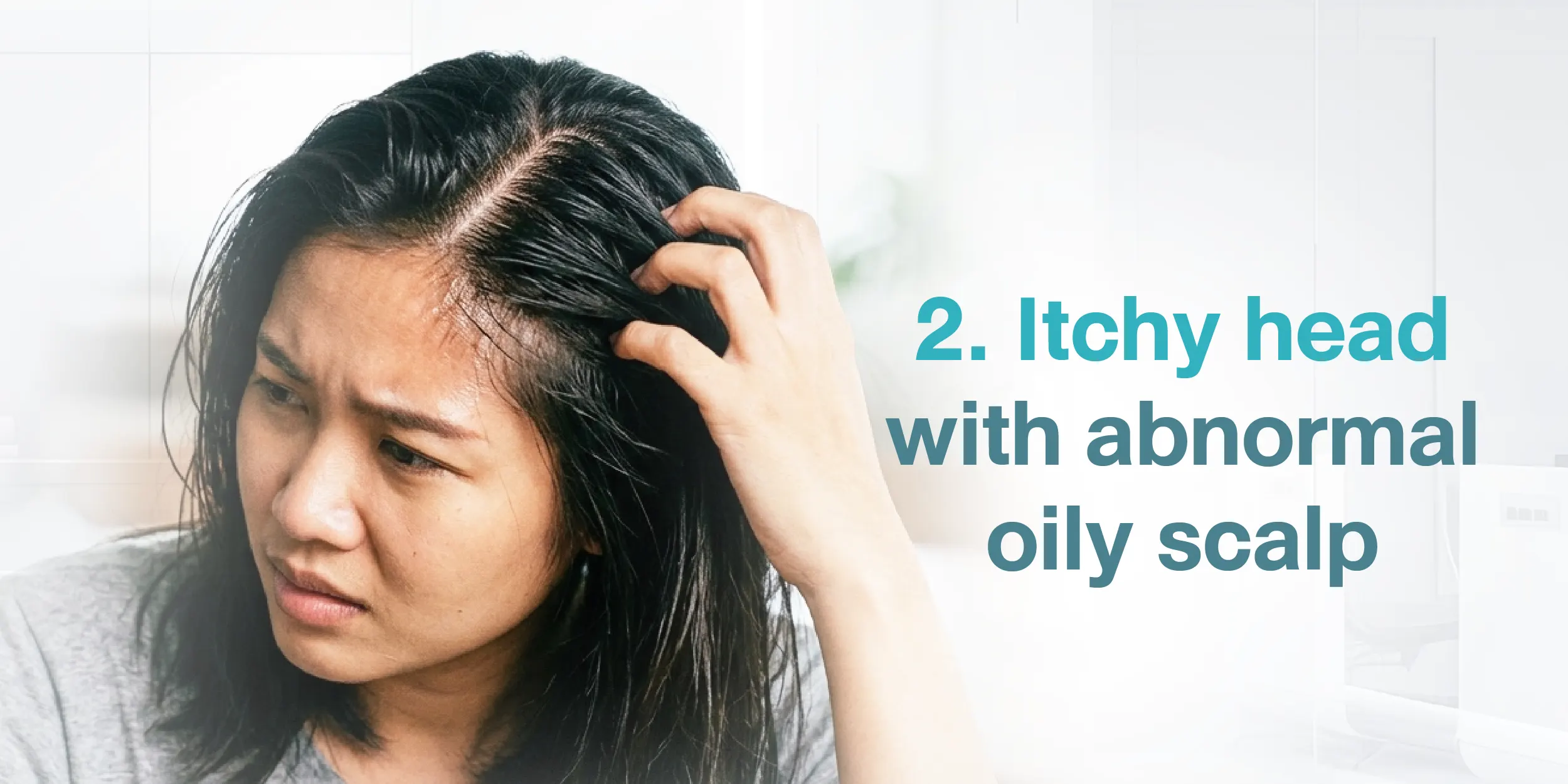
2. Itchy head with abnormal oily scalp
Excess oil on the scalp contributes to itchy head and often becomes a breeding ground for fungi and bacteria. These microorganisms can damage hair follicles and obstruct the delivery of nutrients to the hair, causing hair to become thinner over time. Without proper care, the risk of hair loss will continuously increase and may eventually lead to baldness.
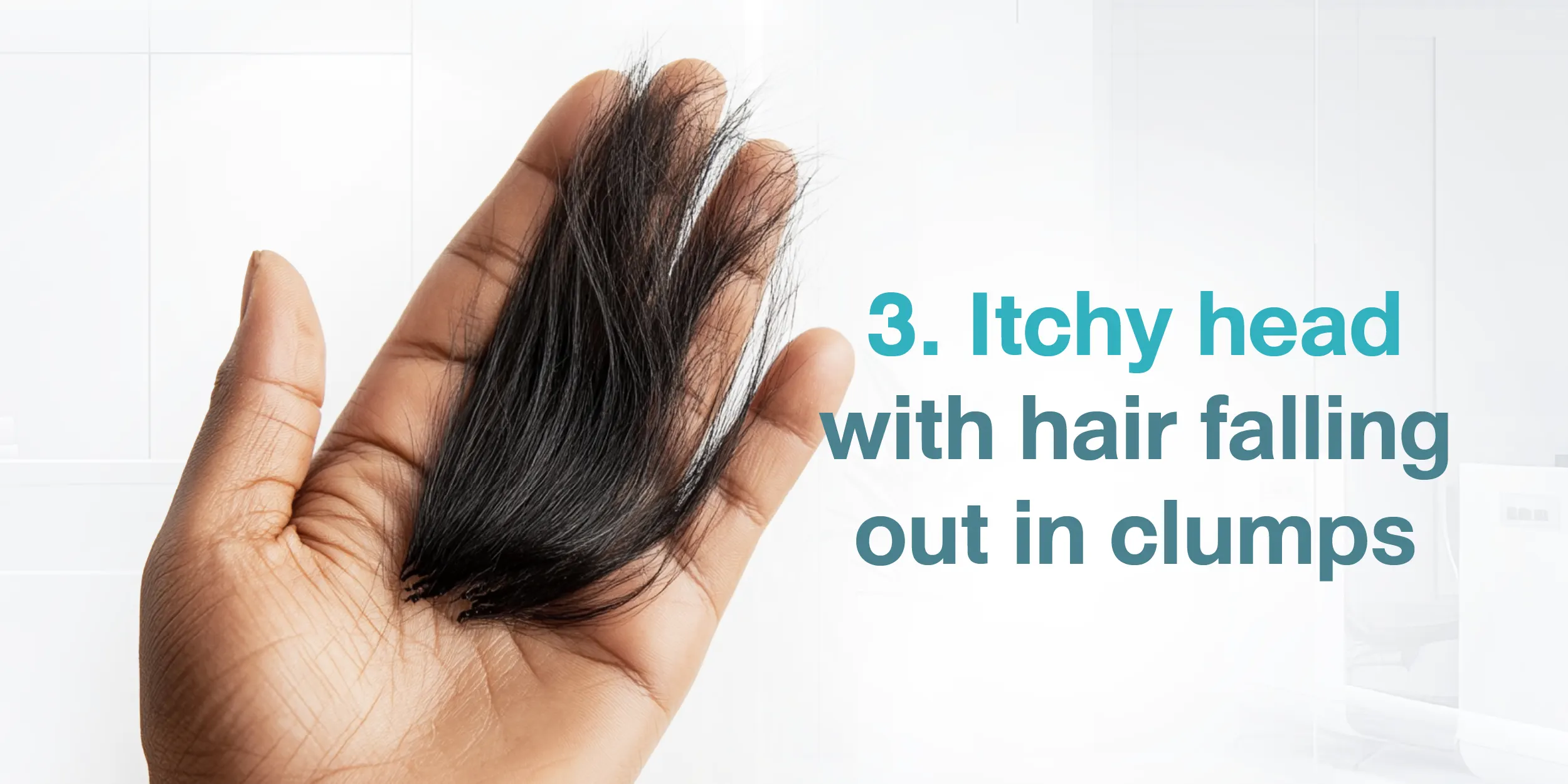
3. Itchy head with hair falling out in clumps
If you notice that every time you wash your hair or scratch your scalp, a large amount of hair falls out abnormally, this is a warning sign that should not be ignored. This type of itchy head often indicates that the hair roots are significantly weakened. Hair growth cycles are disrupted. When hair loss continues, new hair becomes thinner and shorter over time, unable to replace lost hair effectively, increasing the chance of baldness in the long term.
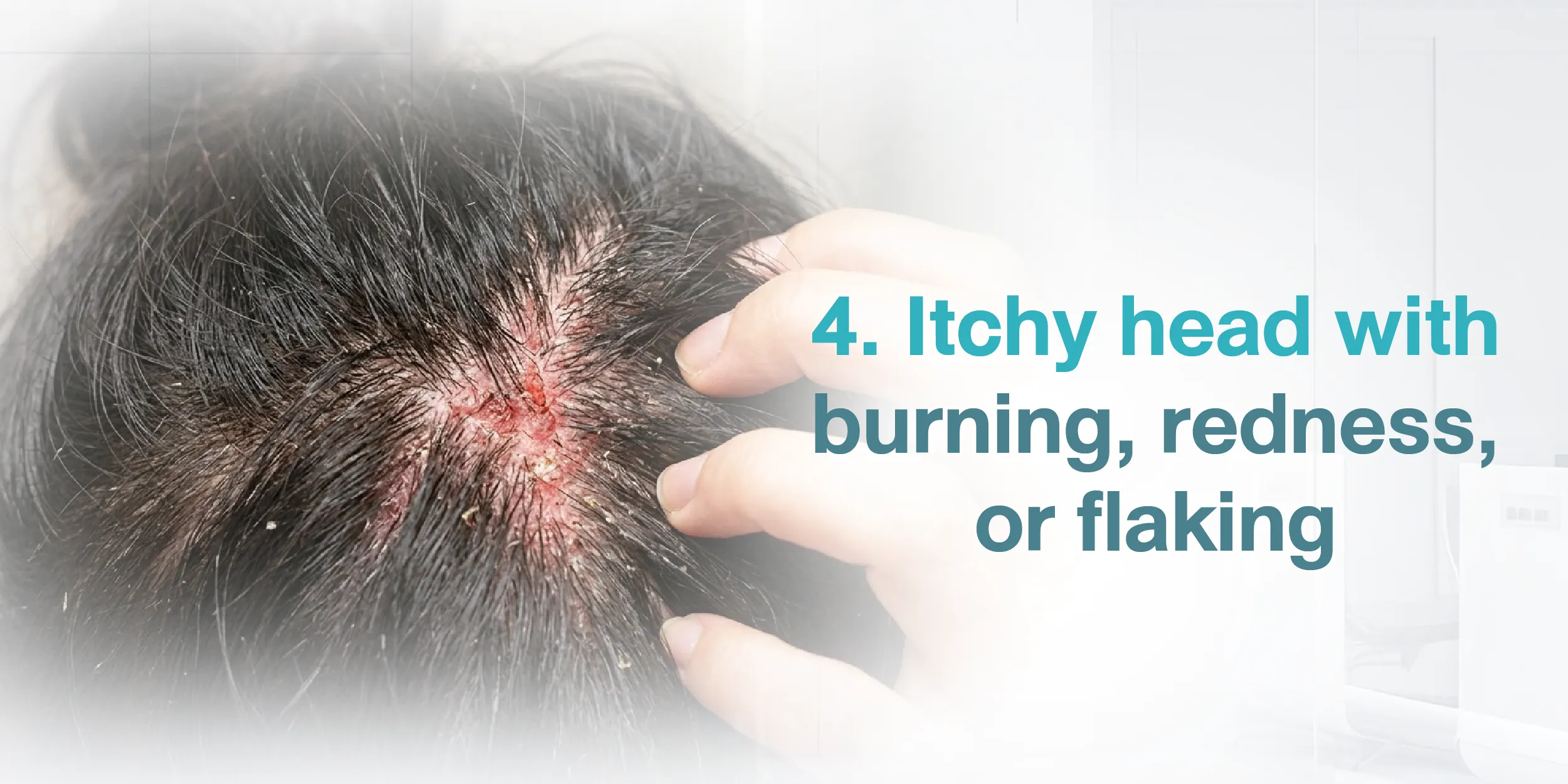
4. Itchy head with burning, redness, or flaking
Itchy head accompanied by burning sensations, redness, or flaking skin is usually caused by allergic reactions to chemicals from shampoo, hair dye, or styling products. These conditions lead to scalp inflammation, which directly affects the strength of hair roots. When inflammation occurs repeatedly, hair follicles deteriorate faster, hair falls out more easily, and hair loss begins to develop in a way that is harder to recover if left untreated for too long.
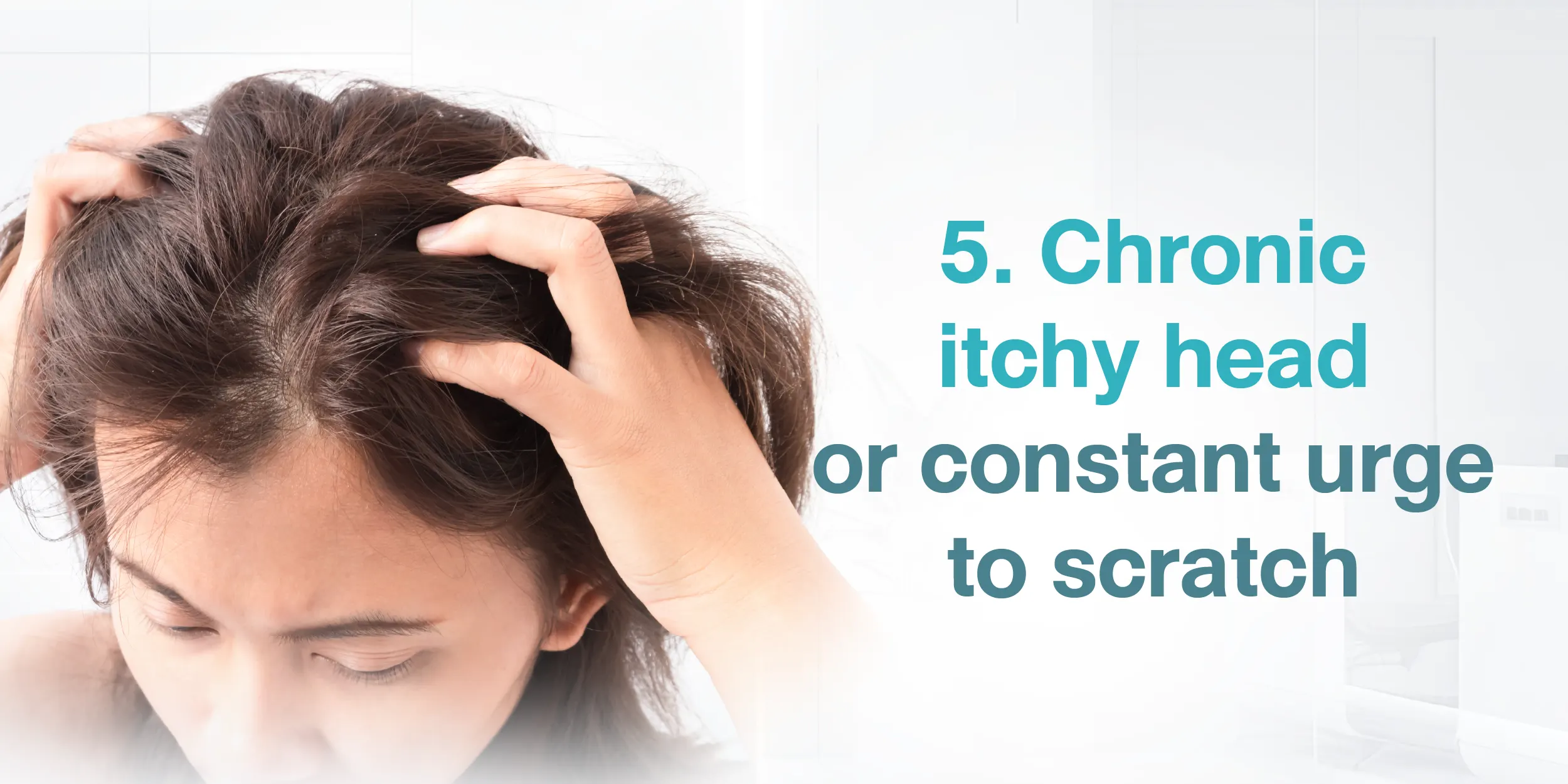
5. Chronic itchy head or constant urge to scratch
Itchy head that persists for a long period or causes a constant urge to scratch the scalp, even without visible dandruff, wounds, or redness, often reflects underlying scalp abnormalities. When irritation accumulates, hair follicles gradually weaken.
Repeated scratching also causes continuous friction on the follicles, disrupting the hair growth cycle. Hair becomes easier to shed and hair loss increases beyond normal levels. Over time, new hair becomes smaller and thinner, reducing overall hair density.
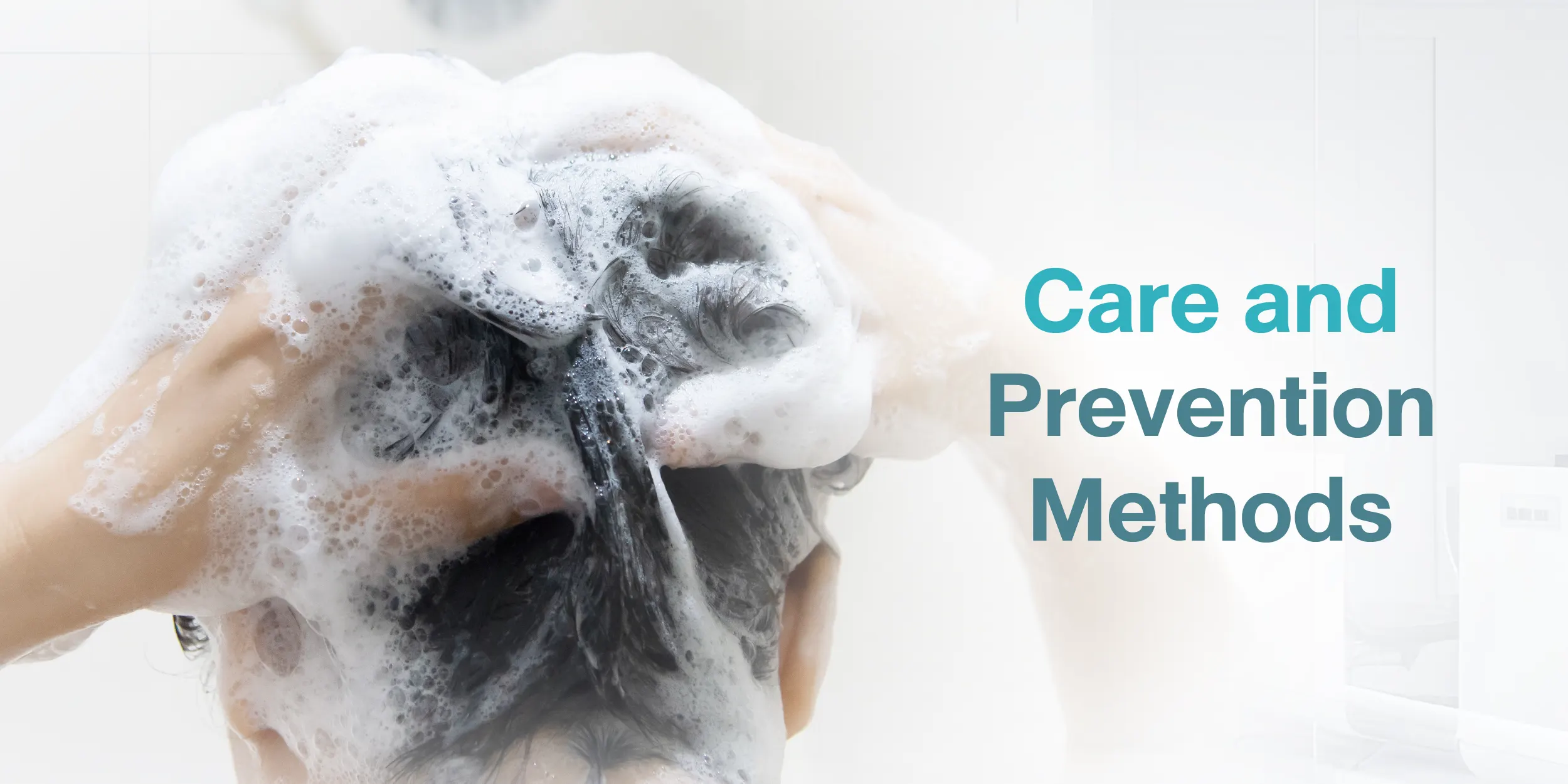
Care and Prevention Methods
Chronic itchy head is not a minor issue that can be ignored. If left untreated, it may lead to weakened hair roots, scalp inflammation, and increase the risk of hair loss progressing to baldness, or may affect long-term hair care planning, including for those seeking information after receiving treatment at a hair transplant clinic. The prevention and care guidelines are as follows:
- Choose a gentle shampoo for the scalp
Avoid shampoos containing sulfates, alcohol, or strong fragrances, as these may trigger itching and inflammation. - Wash hair properly, but not too frequently
Wash 2–4 times per week and rinse thoroughly to reduce buildup that may affect hair follicles. - Avoid scratching the scalp
Repeated scratching can damage the scalp and accelerate hair shedding, which may eventually lead to baldness. - Limit heat and chemical treatments
Frequent dyeing, perming, or blow-drying with high heat can dry out the scalp and disrupt its balance. - Support hair health from within through proper nutrition
Consume nutrients that help strengthen hair roots such as zinc, biotin, and protein from eggs, nuts, grains, and leafy vegetables. These nutrients help strengthen hair, reduce hair fall, and improve scalp health in the long term. - Monitor symptoms and consult a specialist
If symptoms do not improve after adjusting care habits, or if abnormal hair loss begins to occur, consult a dermatologist or a hair transplant clinic with experienced specialists for proper diagnosis and treatment.
Summary
Itchy head is not a minor issue as many people believe. If it occurs repeatedly without proper care, it may lead to abnormal sebaceous gland function, clogged pores, inflammation, and eventually result in thinning hair or permanent hair loss.
For those experiencing thinning hair, visible scalp, or signs of baldness, consulting a professional hair transplant clinic is an effective option for accurate scalp evaluation.
At DHI Thailand, we focus on analyzing the root cause of each individual case rather than treating only the symptoms. We also provide personalized hair and scalp care solutions, including DHI hair transplant techniques, which emphasize precision, minimize scalp trauma, and deliver natural-looking long-term results, helping reduce future hair problems.