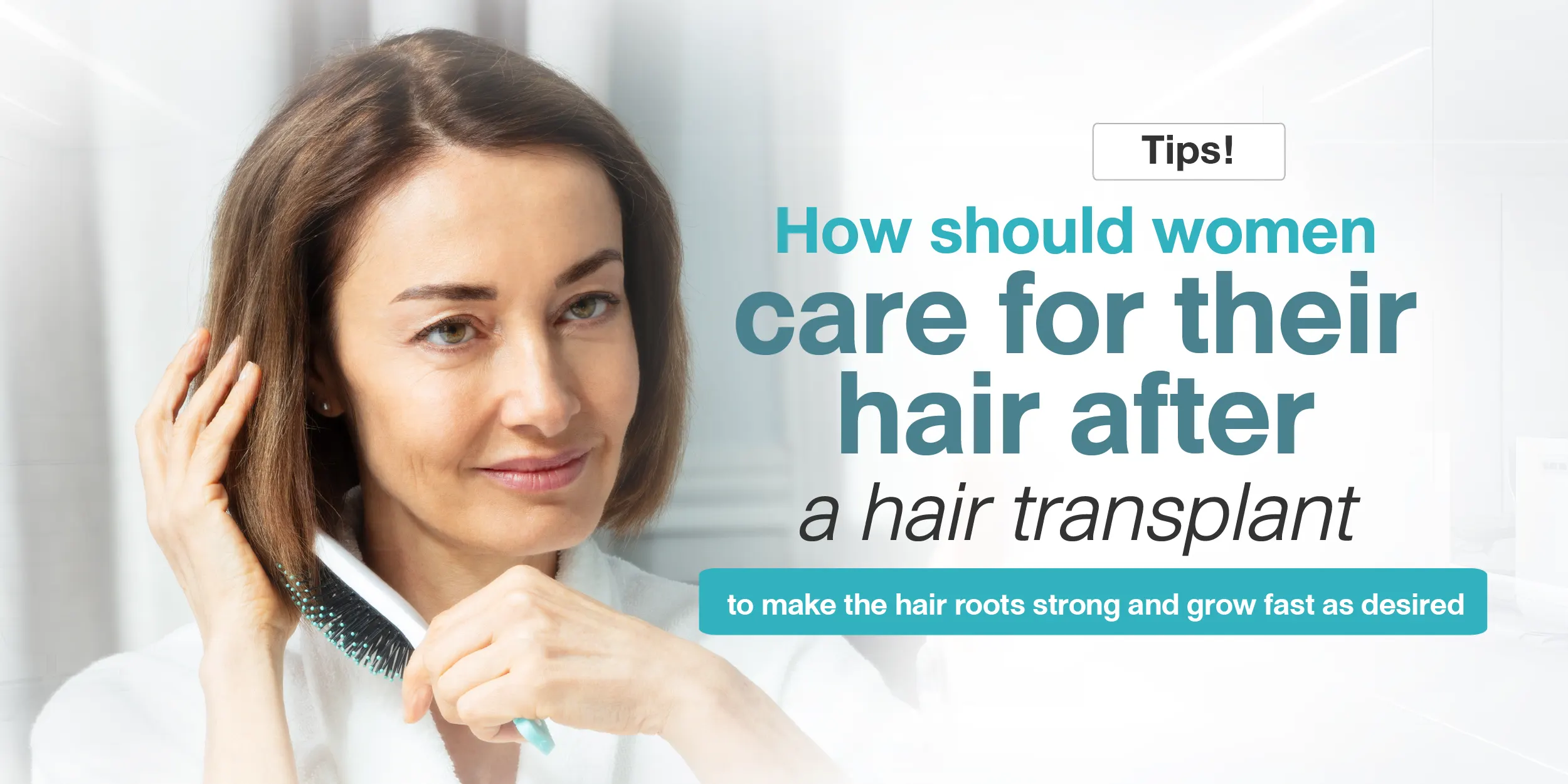
How should women take care after a hair transplant
After women hair transplant, many people often understand that once the procedure is finished, the results will gradually improve on their own without any additional care. But in reality, beautiful and natural results depend on post-procedure care just as much as the hair transplant process itself.
Especially in the early period after the hair transplant, this is considered the most important phase, because it is the time when the hair roots are beginning to attach to the scalp and build new stability for the hair strands. If during this period the care or hair nourishment is not appropriate, it may cause the attachment of the hair roots to be not strong enough, affecting hair density and uniformity in the future.
What many people often overlook is the continuity of care, which has a direct effect on building strong hair roots. If proper care is done from the beginning stage, it will help new hair grow well, reduce the chance of shedding, and help the results of women hair transplant look natural and stable in the long term.
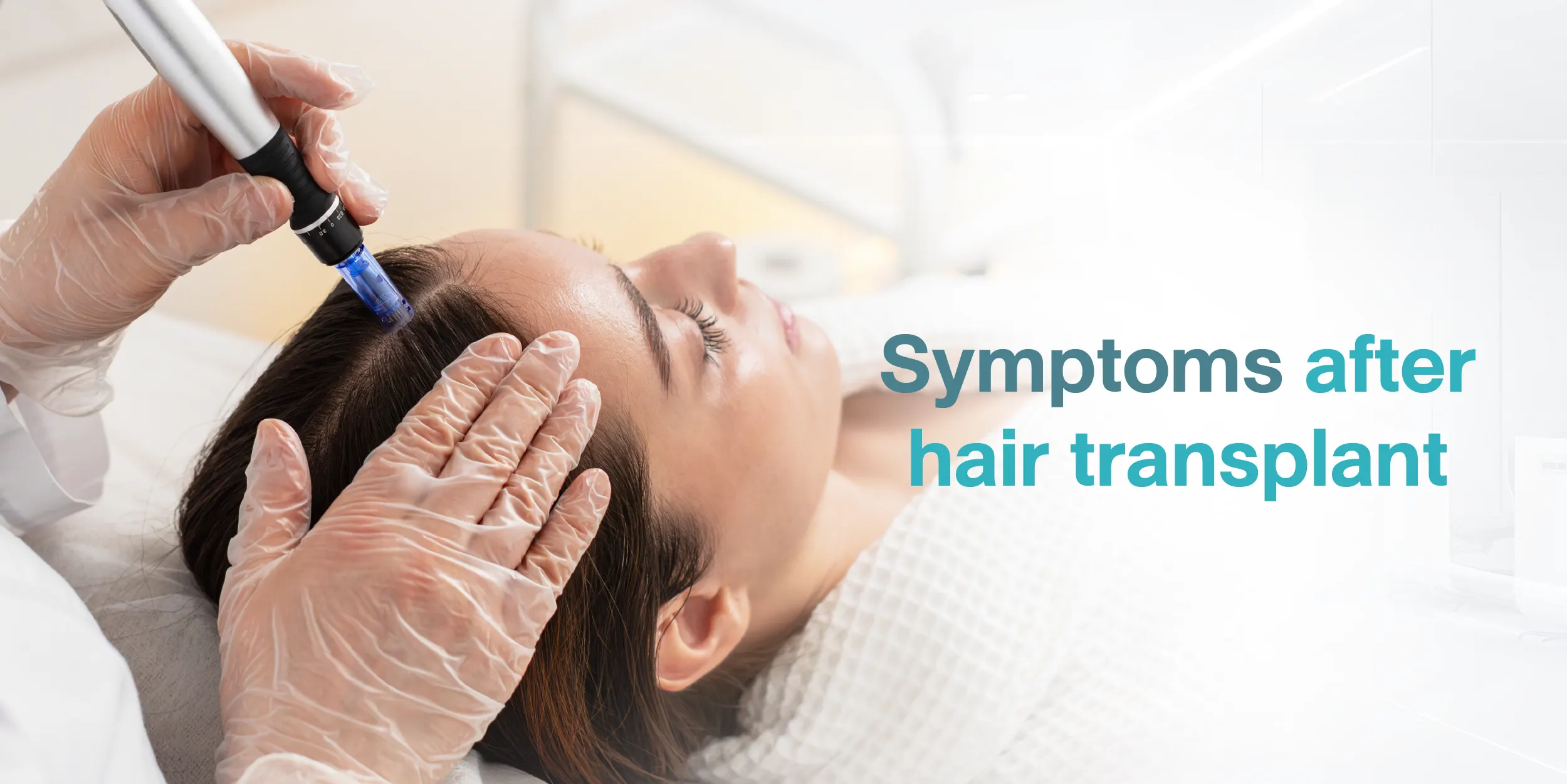
Symptoms after hair transplant
After post–hair transplant care, in the early period the body will begin the recovery process and adjust the scalp to accommodate the new hair roots. During this stage, some symptoms may occur, which are considered normal and usually gradually improve over time. Understanding these symptoms will help with proper and safe hair care. Common symptoms include:
- Mild swelling in the forehead or scalp area, usually occurring within the first 24–72 hours. This is a result of tissue response and will gradually decrease within a few days if proper post hair transplant care is followed.
- A feeling of tightness or slight soreness in the treated area, which is a result of the scalp recovery process. Rest and proper hair nourishment will help improve the condition.
- The appearance of small scabs on the scalp around 3–10 days is part of the natural recovery process. They should not be picked or scratched. Gentle post–hair transplant care should be prioritized.
- Mild itching during 7–14 days is a sign of skin recovery. Appropriate hair nourishment helps reduce irritation and supports better scalp balance.
Overall, these symptoms are considered a normal physiological response of recovery. With continuous and proper post hair transplant care and hair care, it will help the hair roots to attach more effectively.
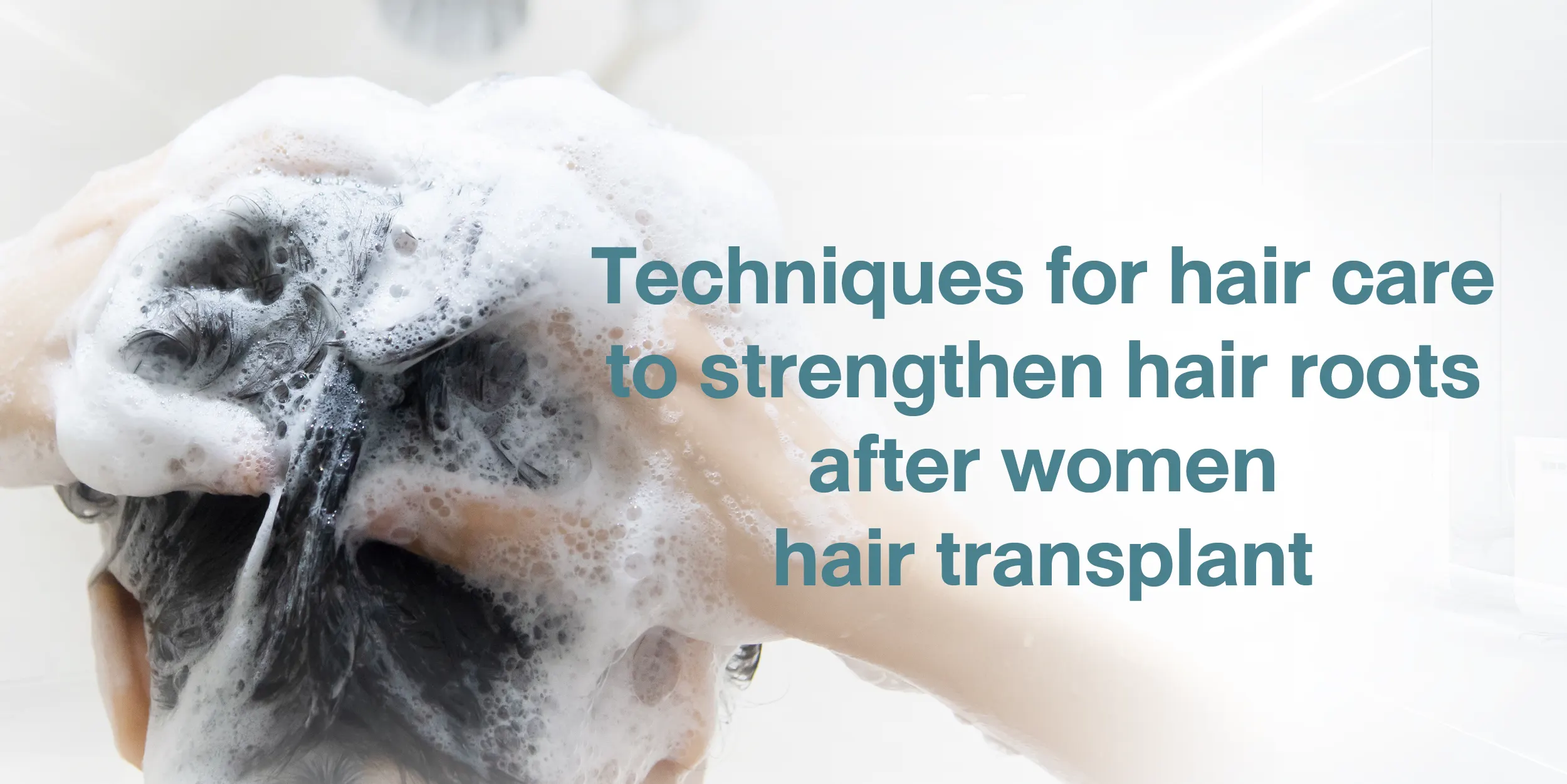
Techniques for hair care to strengthen hair roots after women hair transplant
After women hair transplant, care during the recovery period is the most important factor that affects graft attachment and long-term results. Proper hair care helps reduce the risk of shedding, reduce inflammation, and support strong hair roots recovery. Therefore, strictly following the instructions is essential. Simple techniques include
-
Avoid scratching, picking, or touching the scalp
After surgery, hair grafts are still not fully attached to the scalp tissue (immature graft anchoring). Strong touching may cause grafts to fall out and increase the risk of infection. Generally, the dressing should be left intact for at least 24 hours, or follow the doctor’s instructions after women hair transplant.
-
Careful hair washing and scalp cleaning
After 24 hours, doctors usually allow gentle washing (gentle washing protocol) to remove blood and scabs. However, it must be done very gently because grafts are still fragile. Strong washing may cause graft damage.
Patients must learn proper self-washing techniques, as it must be done at home once daily for about 1 month to maintain cleanliness and prevent wound blockage. Hair washing steps include:
- Use room-temperature water and gently rinse the scalp, avoiding direct high water pressure
- Use doctor-recommended shampoo, foam it first, then gently apply without rubbing
- Leave foam for 2–3 minutes to let dirt loosen naturally
- Rinse gently with low water pressure
- Conditioner can be used only on hair strands, avoid transplanted area
- Dry with cool air at low pressure or gently pat dry
-
Use Low-Level Laser Therapy (LLLT) to support hair root recovery
Doctors may use Low-Level Laser Therapy (LLLT) to stimulate blood circulation, reduce inflammation, and speed up healing. When blood flow to hair roots improves, it helps hair root recovery become faster and more stable.
-
Proper sleeping position without disturbing the grafts
After women hair transplant, sleeping position is very important. Pressure or friction may affect immature grafts and disrupt attachment. It is recommended to sleep on your back and avoid sleeping face down. A neck pillow or support pillow can help stabilize the head and reduce movement. Slightly elevated head position also helps reduce swelling and supports better hair care and strong hair roots recovery.
-
Avoid exercise, heavy lifting, or bending down
These activities may increase pressure in the scalp and cause grafts to loosen. Avoid sweating activities such as swimming or sauna. Also avoid accidental head impact from objects or tight spaces.
-
Avoid sunlight exposure
After hair transplant, direct UV exposure may cause irritation and dryness, affecting the healing environment of the scalp. If going outdoors, wear a loose-fitting cloth hat or use proper protection to reduce direct sun exposure and support long-term strong hair roots.
-
Avoid alcohol and smoking
Should be avoided at least 48 hours before and after surgery, as they affect blood circulation and wound healing, which may impact graft survival.
-
Proper nutrition intake
Many people overlook this, but consuming hair-nourishing food such as high-quality protein, vitamin B, iron, and zinc helps support keratin production, which is the main structure of hair. This helps improve strong hair roots and hair development.
-
Medication and supplements must be under medical supervision
Always consult a doctor before using any medication, especially blood-thinning drugs or hair growth stimulants such as Minoxidil, as they may affect early graft stability.
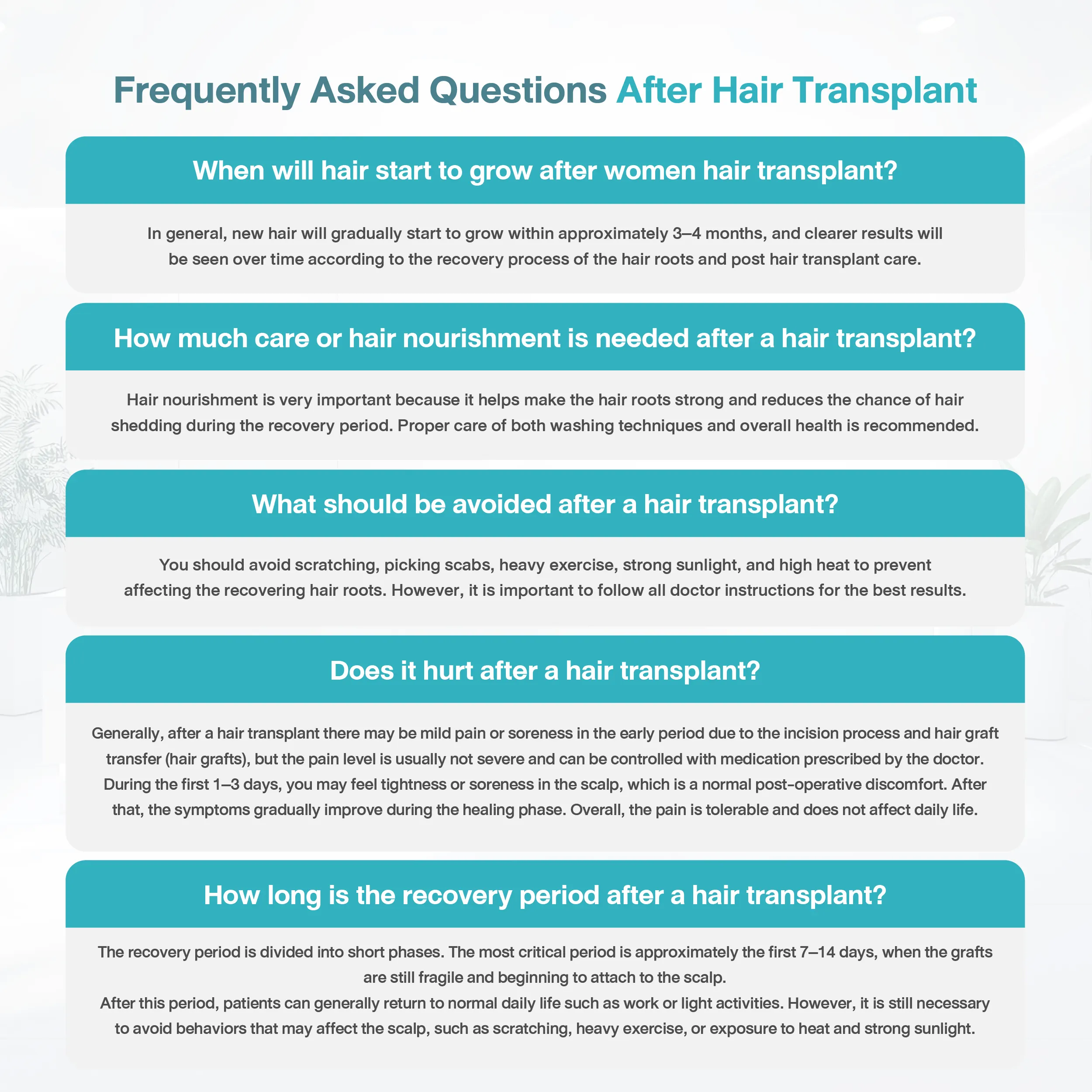
Frequently Asked Questions After Hair Transplant
-
When will hair start to grow after women hair transplant?
In general, new hair will gradually start to grow within approximately 3–4 months, and clearer results will be seen over time according to the recovery process of the hair roots and post hair transplant care.
-
How much care or hair nourishment is needed after a hair transplant?
Hair nourishment is very important because it helps make the hair roots strong and reduces the chance of hair shedding during the recovery period. Proper care of both washing techniques and overall health is recommended.
-
What should be avoided after a hair transplant?
You should avoid scratching, picking scabs, heavy exercise, strong sunlight, and high heat to prevent affecting the recovering hair roots. However, it is important to follow all doctor instructions for the best results.
-
Does it hurt after a hair transplant?
Generally, after a hair transplant there may be mild pain or soreness in the early period due to the incision process and hair graft transfer (hair grafts), but the pain level is usually not severe and can be controlled with medication prescribed by the doctor.
During the first 1–3 days, you may feel tightness or soreness in the scalp, which is a normal post-operative discomfort. After that, the symptoms gradually improve during the healing phase. Overall, the pain is tolerable and does not affect daily life.
-
How long is the recovery period after a hair transplant?
The recovery period is divided into short phases. The most critical period is approximately the first 7–14 days, when the grafts are still fragile and beginning to attach to the scalp.
After this period, patients can generally return to normal daily life such as work or light activities. However, it is still necessary to avoid behaviors that may affect the scalp, such as scratching, heavy exercise, or exposure to heat and strong sunlight.
Summary
Post women hair transplant care is extremely important and directly affects the strength of the hair roots. Proper hair nourishment, combined with consistent internal and external care, will help the hair roots become strong, allow new hair to grow naturally, and support effective hair root recovery.
For those who want confidence in every step from planning, hair transplant procedure, to aftercare choosing treatment with specialist doctors from dhi hair transplant and hair transplant clinic DHI Thailand with standard protocols will ensure proper care and personalized medical guidance from experienced professionals.