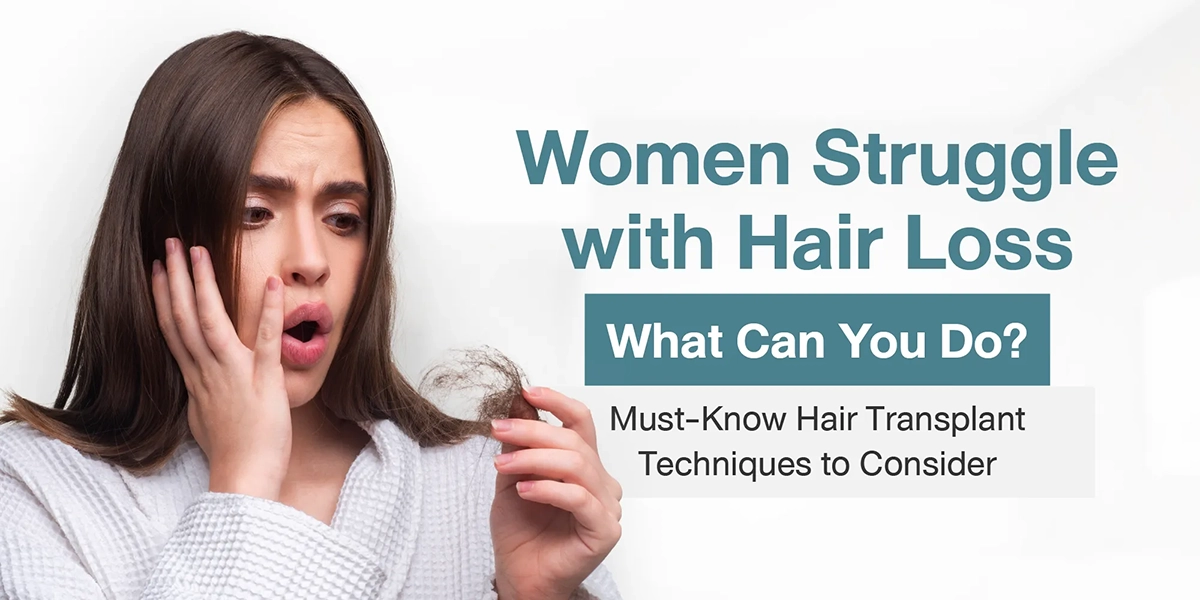
Hair loss isn’t just a male problem. In fact, women also experience noticeable hair thinning, receding hairlines, and volume loss—often in a way that deeply affects self-esteem. Due to smaller facial features and finer hair density, hair loss can be especially distressing for women, with even minimal thinning having a visible impact on appearance.
The good news? Thanks to modern hair transplant techniques, more women now have the opportunity to restore their hair naturally—without relying on chemical solutions or ineffective treatments.
But before choosing any procedure, it’s essential to understand the main causes of hair loss in women and to compare leading hair transplant methods that offer the safest and most natural results in 2025.

Main Causes of Hair Loss in Women
- Hormonal Changes (Estrogen Fluctuations) Many women experience hair thinning during pregnancy, postpartum, or menopause due to a drop in estrogen levels. This hormonal shift shortens the growth phase of hair, leading to widespread shedding.
- Nutritional Deficiencies Extreme dieting or poor nutrition can deplete the body of essential hair-building nutrients like protein, iron, zinc, and B vitamins—especially B7 (biotin) and selenium. These deficiencies weaken roots and increase breakage.
- Chronic Stress Long-term emotional or physical stress can increase cortisol levels, disrupting the hair growth cycle. This often leads to Telogen Effluvium, a hair loss condition where more hair enters the shedding phase.
- Underlying Health Issues or Medications Thyroid disorders, autoimmune diseases, and certain medications (e.g., blood pressure meds or antidepressants) can trigger or worsen hair loss symptoms in women.
- Damaging Hair Habits Regular use of heat styling tools, tight hairstyles, chemical dyes, or excessive brushing can damage hair shafts and follicles, leading to gradual thinning. These are damaging hair habits that often go unnoticed until visible loss occurs.
By recognizing these contributing factors early, women can better determine whether changes in routine or a medical procedure like a hair transplant is the right next step.

Why Hair Transplant is Worth Considering
When shampoos, serums, and scalp lasers fail to deliver results, hair transplant techniques you shouldn’t miss—such as FUT, FUE, and especially DHI—can provide real transformation. These methods use your own hair follicles to rebuild volume naturally, without synthetic fibers or harmful chemicals.

Must-Know Hair Transplant Techniques
1. FUT (Follicular Unit Transplantation)
FUT involves removing a strip of scalp from the donor area (typically the back of the head), then microscopically dividing it into 1–4 hair grafts for implantation. It allows for the transplantation of a large number of grafts in one session and is ideal for wide thinning areas. However, it leaves a linear scar and requires 7–10 days of recovery.
2. FUE (Follicular Unit Extraction)
FUE is a modern technique designed to minimize scarring. It uses a small punch tool to individually extract hair grafts from the donor site. These are then transplanted into the thinning area. With no large scar and a quicker recovery time of 3–5 days, FUE suits those seeking a less invasive solution. The cost per graft is slightly higher than FUT.
3. DHI (Direct Hair Implantation)
DHI advances FUE by using an Implanter Pen, which allows simultaneous graft extraction and implantation. This gives doctors precision over the angle, direction, and depth of each graft, resulting in ultra-natural outcomes. It leaves minimal scarring, requires only 1–3 days for recovery, and boasts a graft survival rate of up to 97%. DHI is ideal for women seeking dense, scar-free restoration with fast results.

Preparation and Aftercare for Hair Transplant
- Consult a specialist to assess your scalp condition and design a hairline that matches your facial structure.
- Avoid alcohol and smoking for at least 7–10 days before the procedure to minimize inflammation.
- Get enough rest and sleep with your head elevated during the first few nights to reduce swelling.
- Gently wash your hair 48–72 hours post-surgery using mild shampoo—do not scrub.
- Avoid sun exposure and strenuous activity during the first 1–2 weeks to support healing.

Ready for a Hair Transplant? Choose DHI Thailand
If you’re a woman dealing with hair loss, finding the right hair transplant technique is key to restoring your hair and confidence.
Want a large number of grafts in one session? Choose FUT.
Want minimal scarring and faster recovery? Choose FUE.
Want the most natural-looking results with no scarring and quick return to daily life? DHI is the answer.
DHI Thailand is an officially licensed clinic from DHI Global, offering:
- Customized hairline design with precise control of graft direction and depth
- Up to 97% graft survival rate
- Minimal scarring and rapid healing
- Full aftercare support until your new hair grows thick and beautiful
Book your free consultation today for a personalized hair transplant plan and access exclusive promotions.
📞 Call: 061-145-5969
📩 Message our page for a free online consultation
Let us help you reclaim your confidence and transform your appearance—with DHI Thailand.