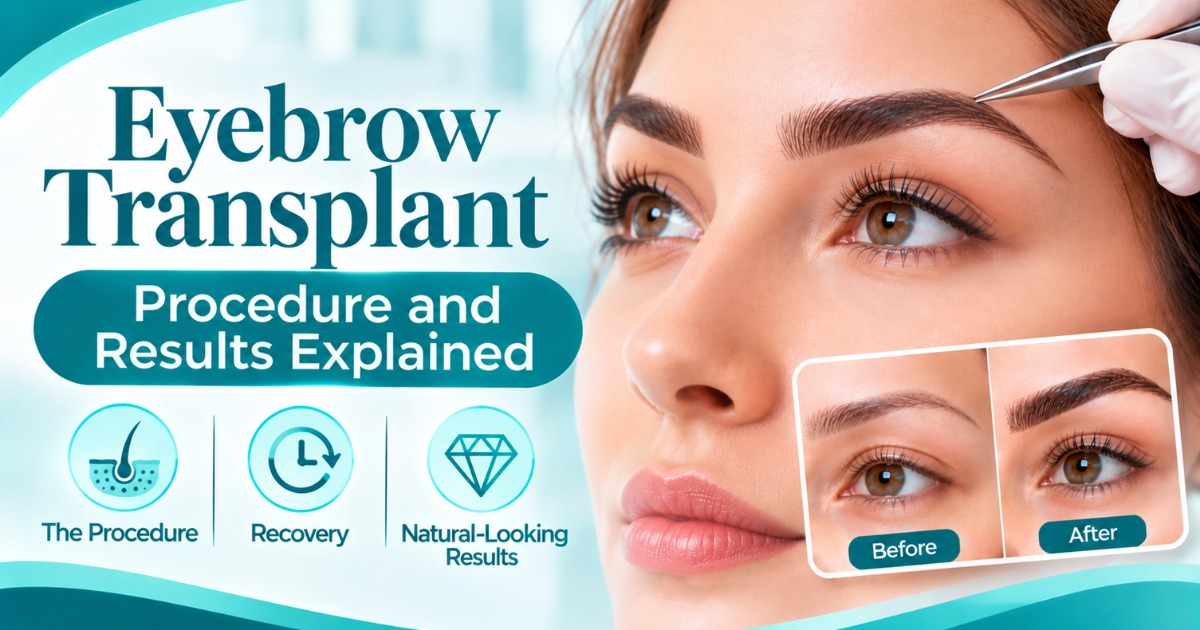
Eyebrows can be very important in giving definition to facial features, expressing emotions, and creating an overall balanced look. However, thin, sparse, and asymmetrical eyebrows may develop due to genetic factors, age, over-plucking, trauma, and medical conditions.
An eyebrow transplant offers a surgical solution by transferring healthy hair follicles to areas where eyebrow hair is missing or sparse. Unlike temporary cosmetic treatments, it aims to restore natural hair growth for long-term results.
Understanding the procedure, recovery process, benefits, and possible risks can help you decide whether eyebrow transplantation is suitable for you.
Key Takeaways
- Restores Eyebrow Hair: Transfers healthy hair follicles to sparse or missing eyebrow areas.
- Suitable Candidates: Men and women with thin, over-plucked or uneven eyebrows may be eligible.
- DHI Technique: Allows precise follicle placement for natural hair direction and shape.
- Gradual Results: New growth may begin in 3-4 months, with results developing over 9-12 months or longer.
- Potential Risks: Swelling, redness, infection, scarring and uneven growth may occur.
- Personalised Treatment: Cost and results depend on donor hair, follicle requirements and individual needs.
- Proper Aftercare: Following medical instructions supports healing and recovery.
What Is an Eyebrow Transplant (EBT)?
An eyebrow transplant is a hair restoration procedure that involves extracting healthy hair follicles, usually from the back of the scalp, and implanting them into the eyebrow area.
The procedure aims to improve eyebrow density, restore missing hair, and create a shape that complements the individual’s facial features.
At DHI Thailand, this is done using Direct Hair Implantation. This means individual hair follicles are implanted using a special tool to give the desired depth, angle, and direction of the hair.
Who Is a Suitable Candidate for an Eyebrow Transplant?
Eyebrow transplants may suit those with partial or complete eyebrow hair loss.
Suitable candidates may include:
- People with naturally thin eyebrows
- Those with thinning eyebrows due to age
- Individuals who have lost hair in their eyebrows due to trauma, burns, and scarring
- Those with asymmetrical eyebrows due to over-plucking
- Men & women wishing to improve the shape or fullness of their eyebrows.
Candidates must have sufficient healthy donor hair. Realistic expectations are also important.
If the patient has an active inflammatory condition or is suffering from ongoing eyebrow hair loss, medical treatment may be needed before undergoing an eyebrow transplant.
What Are the Benefits of an Eyebrow Transplant?
An eyebrow transplant offers several potential benefits –
1. Long-Term Hair Growth
Successfully transplanted follicles can continue producing hair for many years, providing a lasting improvement in eyebrow coverage.
2. Natural-Looking Appearance
Careful placement of individual follicles can help recreate the natural direction and shape of eyebrow hair.
3. Improved Eyebrow Density
The procedure can fill sparse areas and improve the overall appearance of thin or uneven eyebrows.
4. Personalised Eyebrow Design
The shape, thickness, and density can be designed to suit the facial features.
5. Reduced Dependence on Makeup
Once the transplanted hair grows, individuals may need less eyebrow makeup to cover sparse areas.
Eyebrow Transplant Procedure: Step by Step
As eyebrow hair can grow in varied directions, careful planning is required.
Step 1: Consultation and Assessment
The doctor will examine the eyebrow hair, assess the donor hair available, and discuss the desired shape and fullness of the eyebrows.
Step 2: Eyebrow Design
The shape of the eyebrows will be designed to suit the proportions of the face, current hair, and personal preference.
Step 3: Donor Hair Extraction
Healthy follicles are harvested from a suitable area. Follicles are often taken from the posterior region of the scalp.
Step 4: Follicle Preparation
The extracted follicles are examined and prepared for implantation to support careful placement.
Step 5: Direct Hair Implantation
At DHI Thailand, we use a specialised implanter to place follicles into the planned eyebrow area. Particular attention is given to the angle, depth, and direction of each hair.
Step 6: Post-Procedure Care
After implantation, patients receive instructions on protecting the treated area, maintaining hygiene, and attending follow-up appointments.
Eyebrow Transplant Recovery Timeline: What to Expect
Recovery varies depending on individual healing and the procedure performed.
- 1-3 days: Mild swelling, redness or discomfort may occur.
- 1-2 weeks: Crusting will begin to heal in the follicles.
- 2-8 weeks: Some of the hair may fall out as part of the natural growth process.
- 3-4 months: New hair growth may start to become visible.
- 6-9 months: Improvement in fullness and coverage may occur.
- 9-12 months & more: Continued improvement in results as more mature hair grows from the transplant.
Note: These are approximate stages rather than guaranteed recovery milestones.
What Are the Risks and Limitations of Eyebrow Transplant?
Although eyebrow transplants are generally well tolerated in suitable patients, there are some risks associated with the procedure.
Risks may include:
- Swelling, redness and/or bruising
- Inflammation or infection around the transplanted follicles
- Small scarring in donor/recipient site
- Incorrect hair direction and asymmetry in eyebrows
- Poor hair growth and/or lack of fullness
- Hairs in eyebrows may not match natural eyebrows
How Much Does an Eyebrow Transplant Cost?
The cost of an eyebrow transplant will vary depending on:
- Number of follicles required.
- Level of hair loss in eyebrows.
- Desired design complexity.
- Quality of donor hair.
- Medical assessment and treatment requirements.
- Professionalism and aftercare of the clinic.
At DHI Thailand, treatment is tailored to the individual. During your consultation, the number of follicles required and a rough cost of the procedure can be determined.
Pre-Procedure Instructions Before Eyebrow Transplantation
To allow you to be assessed for suitability and for the procedure to be planned, please do the following.
- Inform the doctor of any medical conditions, allergies and previous procedures.
- Inform the doctor of any prescription medicines, supplements and treatments currently being undertaken.
- Avoid smoking and drinking alcohol if advised.
- Follow advice given regarding using skin products and makeup on eyebrows.
- Undergo any recommended medical tests.
- Discuss desired shape, fullness, and limitations.
Do not stop taking medical prescriptions unless advised by the treating doctor.
Post-Procedure Instructions After Eyebrow Transplantation
Following aftercare instructions is important for healing and protecting newly implanted follicles.
Patients are generally advised to:
- Avoid rubbing, scratching, or picking at the transplanted area.
- Protect the eyebrows from unnecessary pressure.
- Avoid strenuous exercise and excessive sweating during the initial recovery period.
- Follow the doctor’s instructions regarding washing and skincare.
- Use prescribed medication only as directed.
- Attend scheduled follow-up appointments.
- Contact the clinic if unusual pain, increasing redness, discharge, or fever develops.
DHI Thailand advises avoiding water and sweat exposure to the treated eyebrows during the first 3-5 days, subject to individual medical instructions.
Why Choose DHI Thailand for an Eyebrow Transplant?
At DHI Thailand Clinic, we focus on personalised eyebrow restoration through careful assessment, planning, and follicle implantation.
Our approach includes:
Personalised Consultation: We assess eyebrow hair loss, donor hair availability, and the patient’s desired appearance before recommending treatment.
Direct Hair Implantation: We use a specialised implanter designed to help control the depth, angle, and direction of implanted follicles.
Individual Eyebrow Design: We plan eyebrow shape and density according to facial proportions and existing eyebrow hair.
Doctor-Led Treatment: Our published clinical approach emphasises procedures performed by doctors trained in DHI techniques.
Post-Procedure Guidance: We provide aftercare recommendations to support healing and monitor treatment progress.
Our objective is to achieve natural-looking eyebrow restoration while maintaining appropriate medical standards and realistic expectations.
DHI Thailand Eyebrow Transplant Results
Eyebrow transplant results develop gradually as the implanted follicles recover and begin producing new hair.
Patients may initially experience shedding before new hair becomes visible. Over the following months, eyebrow coverage and density can improve.
The final appearance depends on several factors, including:
- Number and quality of transplanted follicles.
- Natural hair texture and growth characteristics.
- Accuracy of follicle placement.
- Individual healing and follicle survival.
- Compliance with aftercare instructions.
At DHI Thailand, we aim to create eyebrows that complement the patient’s facial features and existing hair growth pattern.
Patients can explore the before-and-after photographs published on our official eyebrow restoration page. These examples illustrate individual outcomes and should not be interpreted as guaranteed results.
Conclusion
An eyebrow transplant can provide a long-term solution for people with thin, sparse, or missing eyebrow hair. By transferring healthy follicles and carefully planning their placement, the procedure can improve eyebrow coverage and create a natural-looking appearance.
However, successful treatment requires suitable donor hair, realistic expectations, and proper aftercare.
At DHI Thailand, we assess each patient’s needs before recommending eyebrow restoration. If you are considering treatment, book a consultation with us to discuss your suitability, expected results, and personalised treatment options.
FAQs
1. Is an eyebrow transplant a permanent solution for thin eyebrows?
An eyebrow transplant can provide long-lasting results because successfully implanted follicles continue producing hair. However, individual outcomes vary, and underlying hair loss conditions may affect results.
2. How long does an eyebrow transplant last?
Successfully transplanted follicles can continue growing for many years. Long-term results depend on follicle survival, individual health, and the underlying cause of eyebrow hair loss.
3. How painful is an eyebrow transplant?
The procedure is generally performed under local anaesthesia to minimise discomfort. Patients may experience temporary tenderness, swelling, or mild discomfort during recovery.
4. What is the success rate of eyebrow transplants?
A published study involving 352 patients reported satisfactory hair growth, direction, and appearance in 91% of participants. This is a study-specific outcome, not a guaranteed DHI Thailand success rate.
5. Is an eyebrow transplant better than microblading?
An eyebrow transplant restores actual hair growth, while microblading uses pigment to create the appearance of eyebrow hairs. The better option depends on individual preferences, suitability, budget, and desired results.
6. Can an eyebrow transplant look natural?
Yes. Natural-looking results are possible when follicles are carefully selected and implanted according to the eyebrow’s natural growth direction, angle, and density.
7. Can both men and women undergo eyebrow transplantation?
Yes. Both men and women may undergo eyebrow transplantation if they have suitable donor hair, stable hair loss conditions, and meet the necessary medical requirements.