
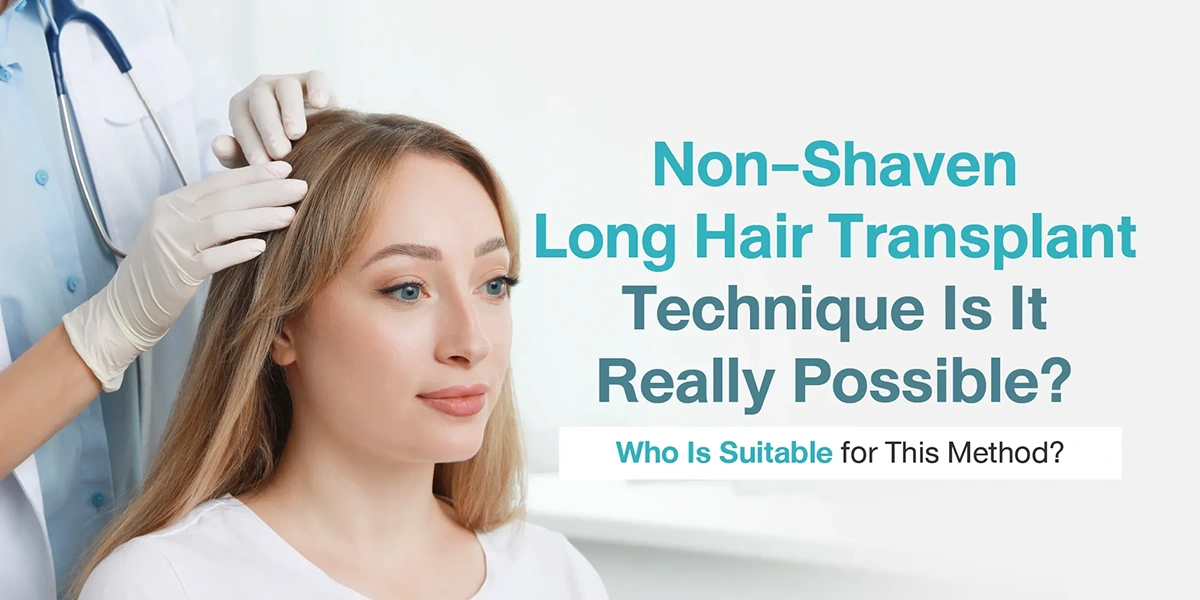
Hair loss, thinning hair do not only affect external appearance, but can also gradually reduce self-confidence in everyday life without people realizing it. Many individuals begin by taking care of themselves with medication, serums, or vitamins, hoping their hair will return to being strong and healthy. However, over time, they often find that problems such as Hair loss, thinning hair, Patchy hair loss, a receding hairline, or thinning hair that exposes the scalp clearly still persist. This leads them to look for solutions that address the problem at its root, and it often becomes unavoidable to consider Hair transplant surgery.
However, concerns about Hair loss, thinning hair, Patchy hair loss, or other hair-related issues can occur in both women and men. Hair transplant surgery is another option that offers various Hair transplant technique options. The traditional shaved hair transplant technique (Shaven FUE) may not meet the needs of those who still have to live their daily lives, work, or meet people as usual. Due to these limitations, a newer Hair transplant technique has emerged the Non-shaven hair transplant (Non-Shaven FUE), which allows the treatment to be more discreet and minimizes disruption to everyday life.
In this article, the DHI Thailand team will guide you through an in-depth understanding of Hair transplant technique, specifically the Non-shaven hair transplant method. We will explain its principles, advantages, and limitations, who is suitable or not suitable for this technique, as well as how to choose a Hair transplant clinic and Where to get a hair transplant that best addresses each individual’s concerns helping you make a more confident decision before choosing the right approach for hair care.

What Is the Non-Shaven Hair Transplant Technique?
The treatment of hair loss and thinning hair today has continuously evolved with advances in technology and medical approaches. Among all available options, hair transplant surgery remains the method that delivers the most visible and reliable results. This procedure involves transplanting hair grafts from the back or sides of the scalp to areas with hair loss. Currently, there are two main approaches: the traditional hair transplant method and newer techniques designed to create smaller wounds and more natural-looking results.
One of the most popular methods today is the FUE hair transplant technique. This technique involves extracting hair grafts one by one, with each graft typically containing 1–4 hair strands. The advantage of this method is reduced scarring and a shorter recovery period. However, a limitation of this hair transplant technique is that it requires cutting or shaving the hair in the donor area so the doctor can clearly see the extraction points. This causes concern for many people especially those with patchy hair loss or localized thinning regarding their appearance during the recovery period.
As a result, medical professionals have developed an advanced form of hair transplant surgery known as the non-shaven hair transplant, or Non-Shaven FUE. This method allows hair transplantation without shaving the entire donor area. The existing hair remains in place to naturally conceal the graft extraction sites, enabling patients to continue their daily lives as usual.
Today, the non-shaven hair transplant is considered an option that elevates the overall results of hair transplant surgery, both in terms of aesthetic outcomes and natural appearance. When performed at an experienced hair transplant clinic, the procedure can also be carefully planned to help the hair grow back thick and dark more quickly.

Advantages of the Non-Shaven Hair Transplant
- Helps create a new hairline that blends naturally with existing hair. The doctor can precisely control the direction and angle of each hair root using an advanced Hair transplant technique.
- No need to shave the entire scalp or the donor area, making it ideal for those who want a Non-shaven hair transplant while still maintaining their normal daily life.
- Donor-area wounds at the back of the head are concealed by existing hair, helping boost confidence after the procedure and making it less noticeable that Hair transplant surgery was performed.
- Short recovery period. Patients can return to work or daily activities quickly, and hair can usually be washed the next day.
- Uses specially designed graft extraction tools that reduce hair tangling, preserve graft quality, and increase the chances that hair grows back thick and dark naturally.

Limitations of the Non-Shaven Hair Transplant
- The number of grafts that can be harvested is limited, usually no more than 1,500–2,000 grafts on average, depending on scalp condition and hair characteristics.
- The procedure takes longer than shaved FUE (Shaven FUE) because every step requires a high level of precision.
- Post-procedure wound care requires extra attention to ensure optimal healing and long-term results consistent with a Permanent hair transplant process.
- May not be suitable for individuals with extensive Hair loss, thinning hair, or large areas of baldness.
- Higher cost due to the complexity of the Hair transplant technique and the longer duration of Hair transplant surgery.

Who Is Suitable for the Non-Shaven Hair Transplant Technique?
Although the Non-shaven hair transplant is an appealing option that helps minimize the impact on appearance, it is not suitable for everyone. Doctors must evaluate multiple factors together to ensure natural-looking results. Below are the groups of people who are generally suitable for this Hair transplant technique:
-
People with early to moderate hair loss or thinning hair
If existing hair is still present, the Non-shaven hair transplant can effectively increase hair density. New hair is blended seamlessly with existing hair, creating a fuller and more natural look without the need to shave and compromise confidence.
-
People with patchy hair loss or localized hairline recession
Such as thinning at the temples, small crown areas, or widened part lines. This technique targets specific problem areas precisely, without requiring overall hair shaving, making it ideal for Patchy hair loss cases.
-
People who want to avoid shaving their hair
This method is well suited for business professionals, working individuals who need to meet clients, or anyone who prefers not to draw attention to having undergone Hair transplant surgery, as they can continue daily life and work as usual after the procedure.
-
People seeking discreet and seamless results
Ideal for those who value privacy and do not want others to notice that they have undergone a hair transplant especially individuals whose careers rely heavily on personal image and social appearance.

Post Hair Transplant Care Guidelines
Days 1–7 After Surgery
- Spray saline solution on the transplanted area every hour (except during sleep) for approximately 5 consecutive days to maintain moisture and help the hair roots anchor properly.
- Take hair-stimulating medication, pain relievers, and antibiotics exactly as prescribed by the doctor.
- Avoid touching, picking, or scratching the transplanted area, as well as any form of impact or friction.
- Avoid bending your head forward to reduce the risk of swelling around the face and forehead.
- Wear a head covering when going outdoors to protect from dust, wind, and sunlight for at least 1 week.
- Avoid activities that cause heavy sweating and refrain from strenuous exercise during the first week.
After 7 Days
- Attend light therapy sessions or additional supportive treatments according to the treatment plan of the Hair transplant clinic.
- You may resume normal daily activities, but should still avoid activities that involve potential impact or injury.
Possible Post-Procedure Symptoms
- Small acne-like bumps may appear in the transplanted area (rare).
- Mild swelling around the forehead or eyes may occur for about 2–3 days, depending on the individual.
- Overall side effects occur in less than 1% of cases and usually resolve on their own.
Recovery Period
The Non-shaven hair transplant generally requires a short recovery period. Most patients need only 1 day of rest. Hair washing is usually allowed the next day. The wounds gradually heal within approximately 7–10 days without disrupting daily life or work, as long as medical instructions are followed strictly.
Frequently Asked Questions

How is the non-shaven hair transplant different from conventional hair transplantation?
The main difference lies in appearance during the treatment period. The Non-shaven hair transplant does not require shaving large areas of hair, allowing the result to look discreet as if Hair transplant surgery had not been performed so patients can return to work and daily life immediately.
Is it suitable for everyone with hair loss or thinning hair?
This technique is suitable for individuals with early to moderate Hair loss, thinning hair, or localized Patchy hair loss. For extensive baldness, doctors may recommend alternative approaches that are more appropriate.
When will results be visible?
After Hair transplant surgery, temporary hair shedding (shock loss) may occur initially, which is normal. New hair typically starts to grow within 3–6 months and becomes progressively denser, with many patients eventually noticing that Hair grows back thick and dark.
Is the non-shaven hair transplant painful?
Local anesthesia is used during the procedure, so pain is minimal. Mild tightness or soreness may occur afterward and can be managed with prescribed medication.
Summary
The Non-shaven hair transplant is a modern solution for people seeking to address hair loss without disrupting daily life. It requires minimal downtime, preserves appearance, and is especially suitable for those with localized Patchy hair loss or thinning hair who want natural-looking results.
If you are unsure whether your hair condition is suitable for this Hair transplant technique, consulting an experienced specialist can help clarify the best approach. Choosing a reputable Hair transplant clinic that emphasizes personalized design and clear medical standards can significantly increase the likelihood of achieving a Permanent hair transplant with natural results.
For those wondering Where to get a hair transplant, an evaluation with the medical team at DHI Thailand certified by the American Board can help you understand your hair concerns and plan the most suitable treatment, allowing your hair to gradually recover until Hair grows back thick and dark, along with renewed confidence.

