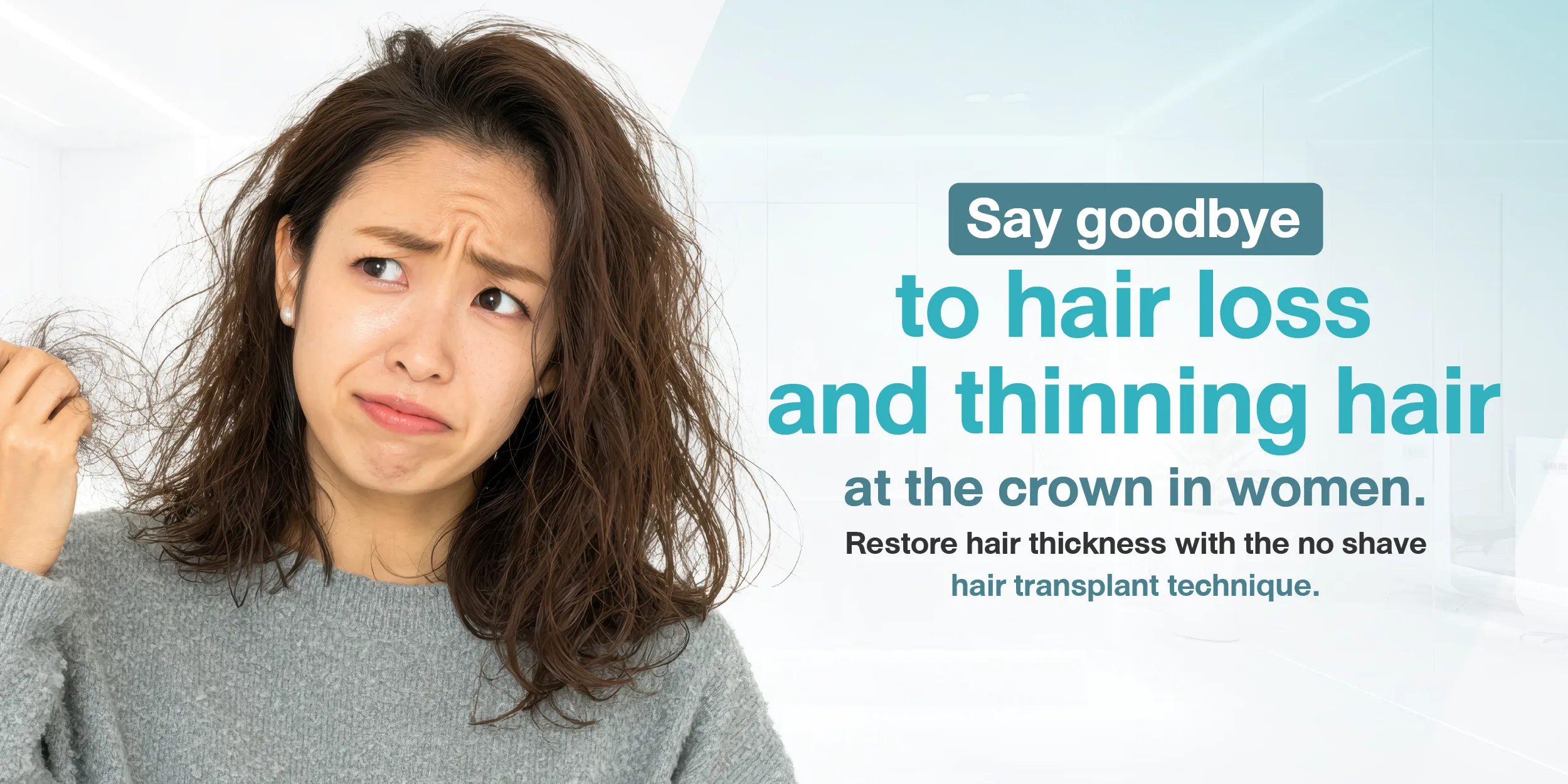
One major cause is the DHT hormone, which affects the hair growth cycle, causing hair follicles to weaken, hair strands to become finer, and Hair loss, thinning hair to progressively worsen. When left untreated, many cases begin with hair appearing flatter, a widening part line, and increasing difficulty in styling. It is commonly found in working-age women over 30 years old or during the postpartum period. If left for a long time, the thinning becomes more apparent and may approach Baldness, leading to a loss of confidence.
This article will guide you to understand the causes of Hair loss, thinning hair in women, how to assess severity, appropriate Treatment methods for thinning hair, including FUE hair transplant or the DHI technique, as well as how to choose a Hair transplant clinic. It also covers the No-shave hair transplant technique that helps increase hair density safely and precisely.
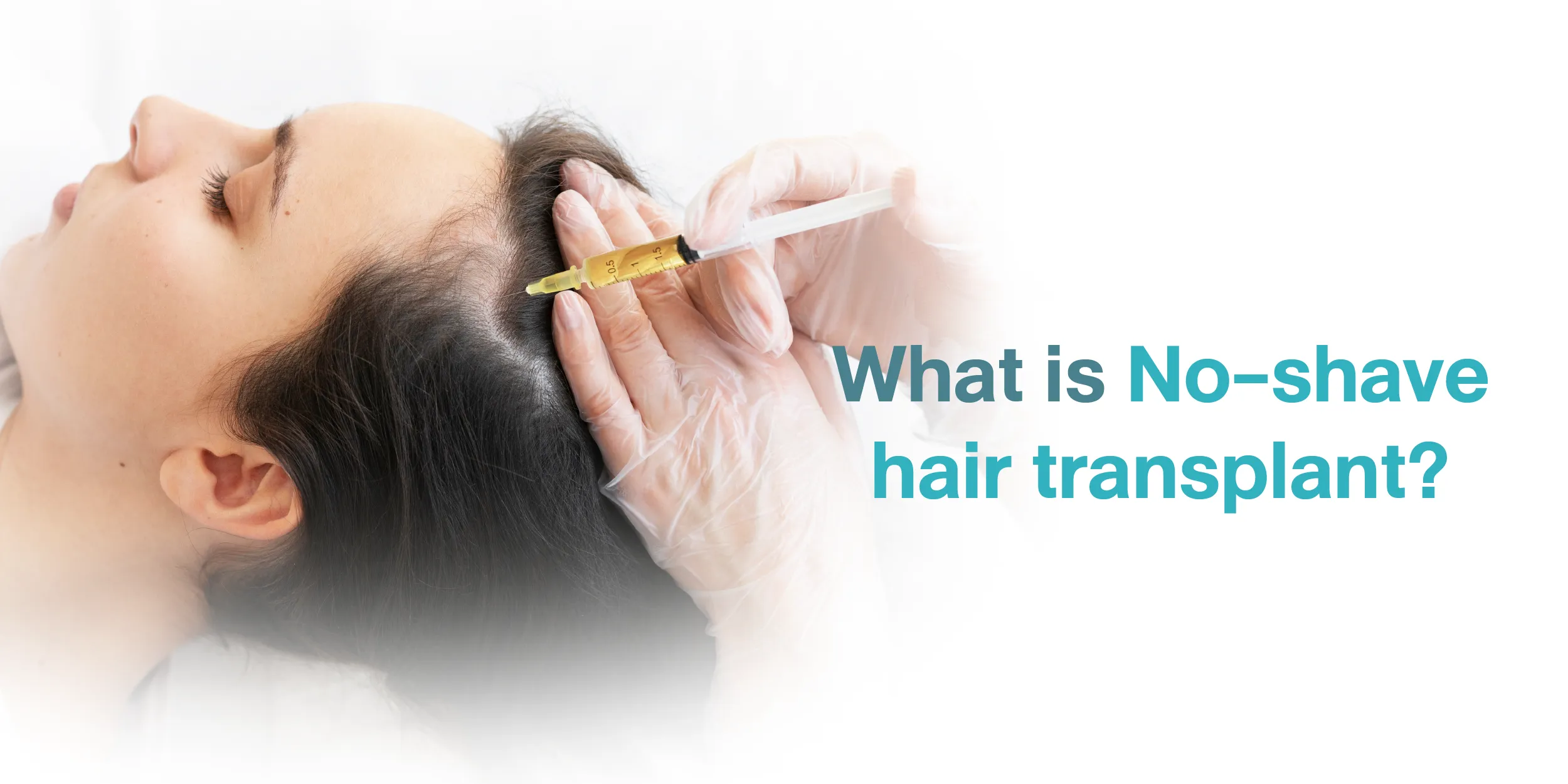
What is No-shave hair transplant?
No-shave hair transplant (Non-Shaven FUE) is a technique designed to treat Hair loss, thinning hair without shaving the donor area at the back of the head. Unlike traditional FUE hair transplant, which requires trimming the hair short before graft extraction, this method allows patients to keep their existing hair length. It is especially suitable for individuals who value privacy and do not want visible signs after the procedure, particularly those experiencing Thinning hair at the crown or a receding hairline.
During the procedure, the doctor uses a specialized micro punch tool to extract healthy hair grafts one by one with high precision, inserting between existing long hairs. This process requires significant expertise to minimize trauma to surrounding hair and preserve graft quality. The extracted follicles are then implanted into areas showing early signs of Baldness or reduced density, ensuring natural-looking and seamless results.
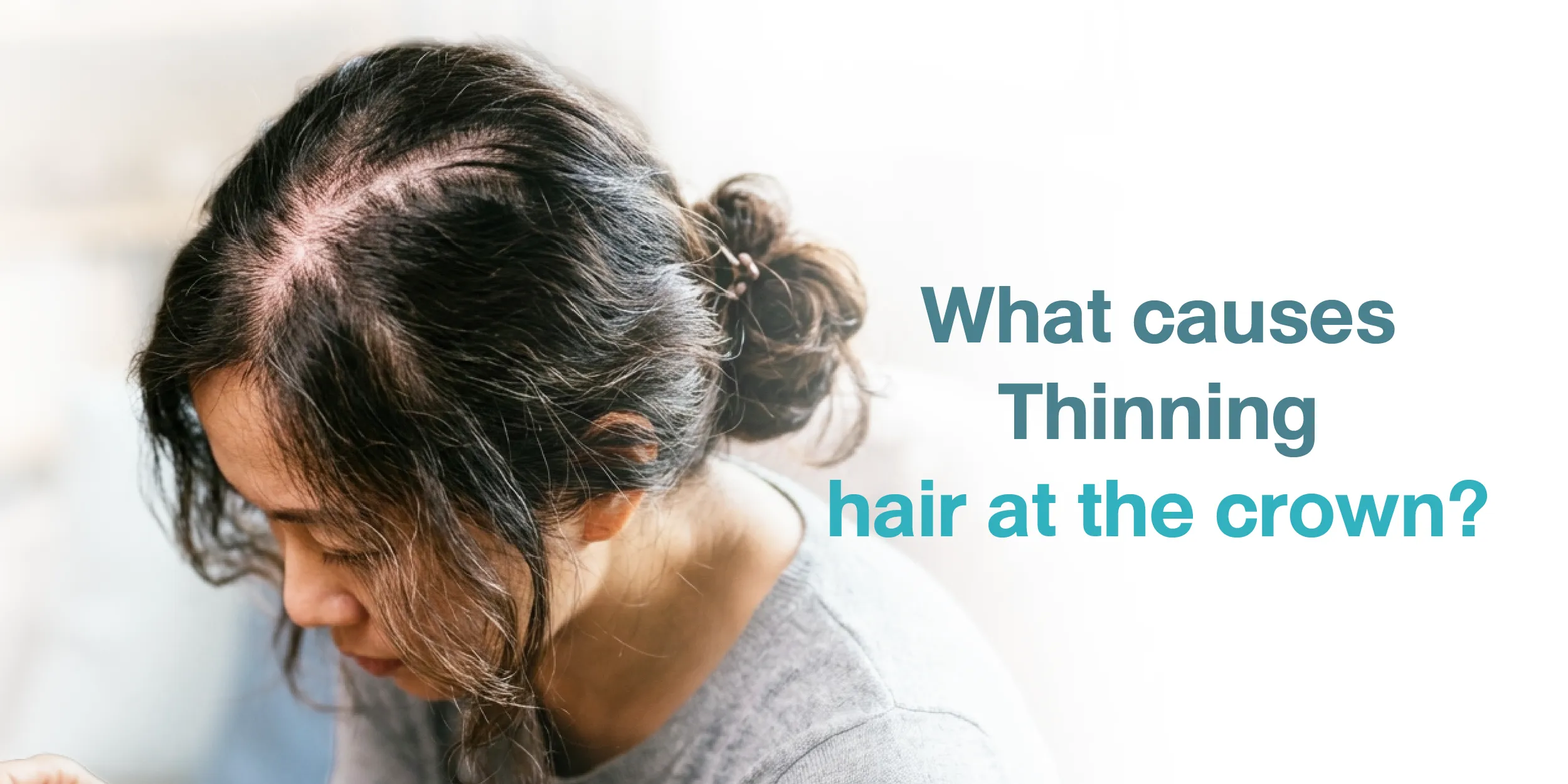
What causes Thinning hair at the crown?
Thinning hair at the crown is a common pattern of Hair loss, thinning hair found in both men and women. The primary cause is often genetic predisposition and sensitivity of hair follicles to the DHT hormone, which gradually miniaturizes follicles. As a result, newly grown hair becomes finer, thinner, and more prone to shedding, making the scalp increasingly visible in the crown area.
In addition to hormonal factors, other contributing causes include chronic stress, lack of sleep, poor nutrition, frequent chemical treatments, excessive heat styling, and certain medical conditions that affect the hair growth cycle. If left untreated, the condition may progressively worsen and eventually develop into Baldness.
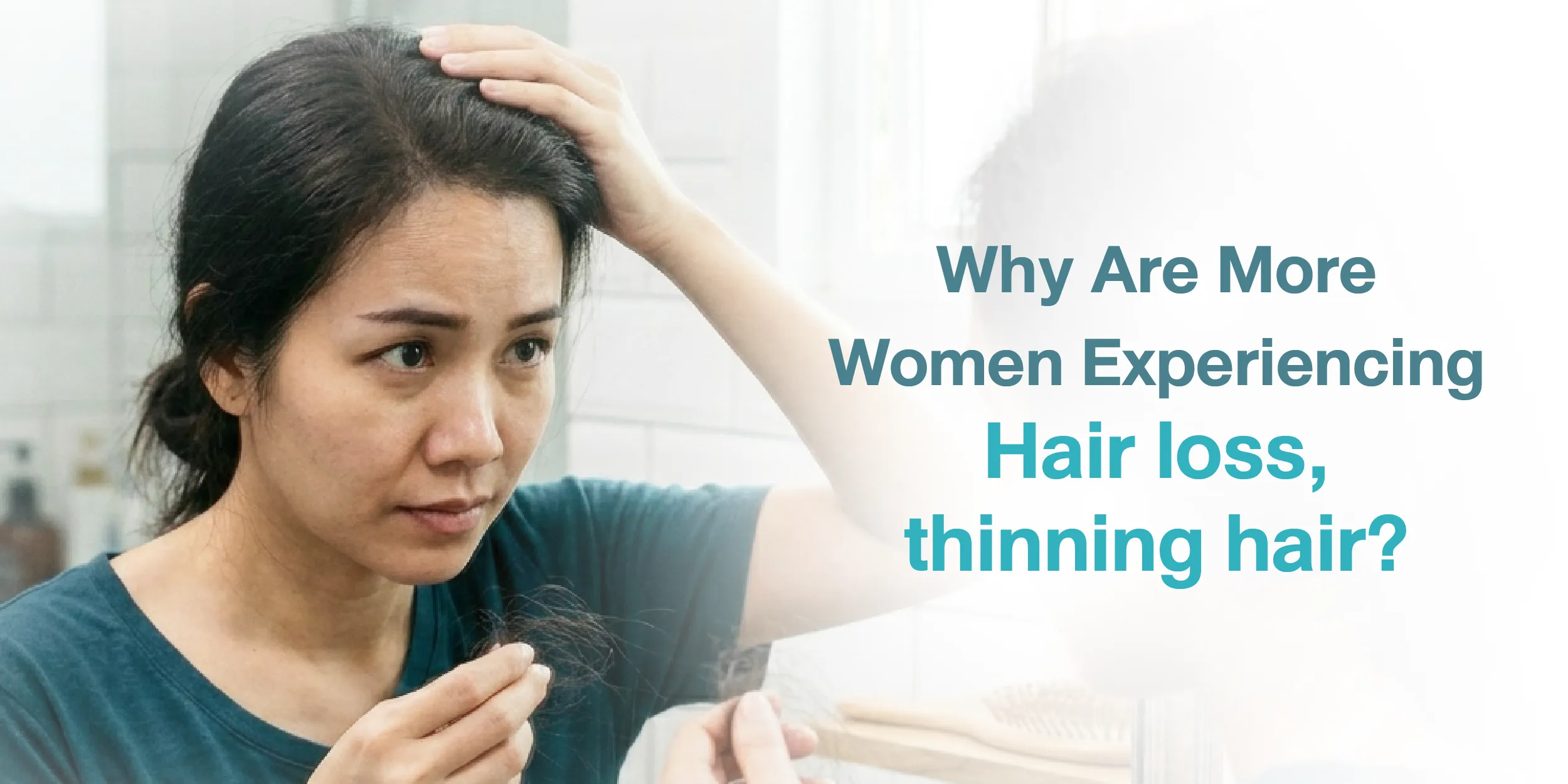
Why Are More Women Experiencing Hair loss, thinning hair?
The causes of Hair loss, thinning hair in women are often multifactorial. It is rarely due to genetics alone; rather, it typically results from a combination of hormonal, lifestyle, and health-related factors working together.
1. Hormones and Genetics
One of the key contributors is the DHT hormone, a derivative of male sex hormones. Although women naturally have lower levels than men, some may have hair follicles that are more sensitive to the DHT hormone than normal. This sensitivity shortens the hair growth cycle, causing strands to become finer and thinner over time, eventually leading to a diffuse pattern similar to Thinning hair at the crown.
2. Stress and Lifestyle Habits
Chronic stress, insufficient sleep, extreme dieting, or rapid weight loss can push hair prematurely into the shedding phase. As a result, daily hair fall increases beyond the normal range, contributing to noticeable Hair loss, thinning hair.
3. Frequent Chemical and Heat Exposure
Regular chemical treatments such as perming, straightening, and coloring along with frequent use of heat styling tools like flat irons and blow dryers weaken the hair shaft. This makes hair more fragile, prone to breakage, split ends, and excessive shedding.
4. Health Conditions and Physical Changes
Certain medical conditions, including thyroid disorders, anemia, and postpartum hormonal changes, can also trigger Hair loss, thinning hair. These internal changes directly affect the hair growth cycle and may accelerate thinning if not properly addressed.
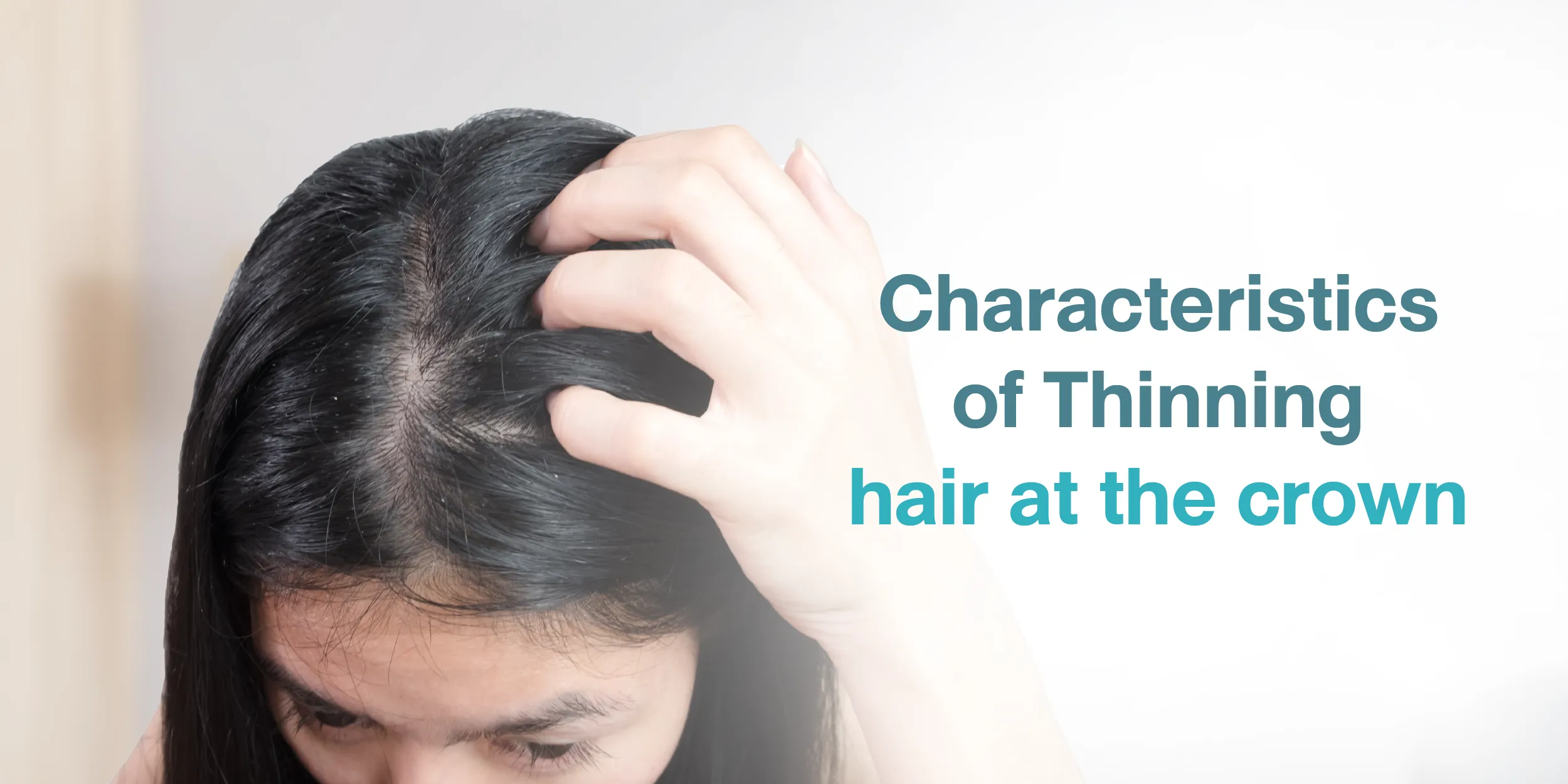
Characteristics of Thinning hair at the crown
Thinning hair at the crown usually develops gradually. In the early stages, many people may not notice it because hair does not fall out in obvious clumps. Instead, the change is seen in overall hair density. Common signs include:
- A visibly wider part line
- Increased scalp visibility under bright light
- Finer, thinner, and flatter strands at the crown
- Difficulty styling due to reduced volume in the middle of the scalp
- Hair shedding may not seem excessive, but new strands grow back progressively thinner
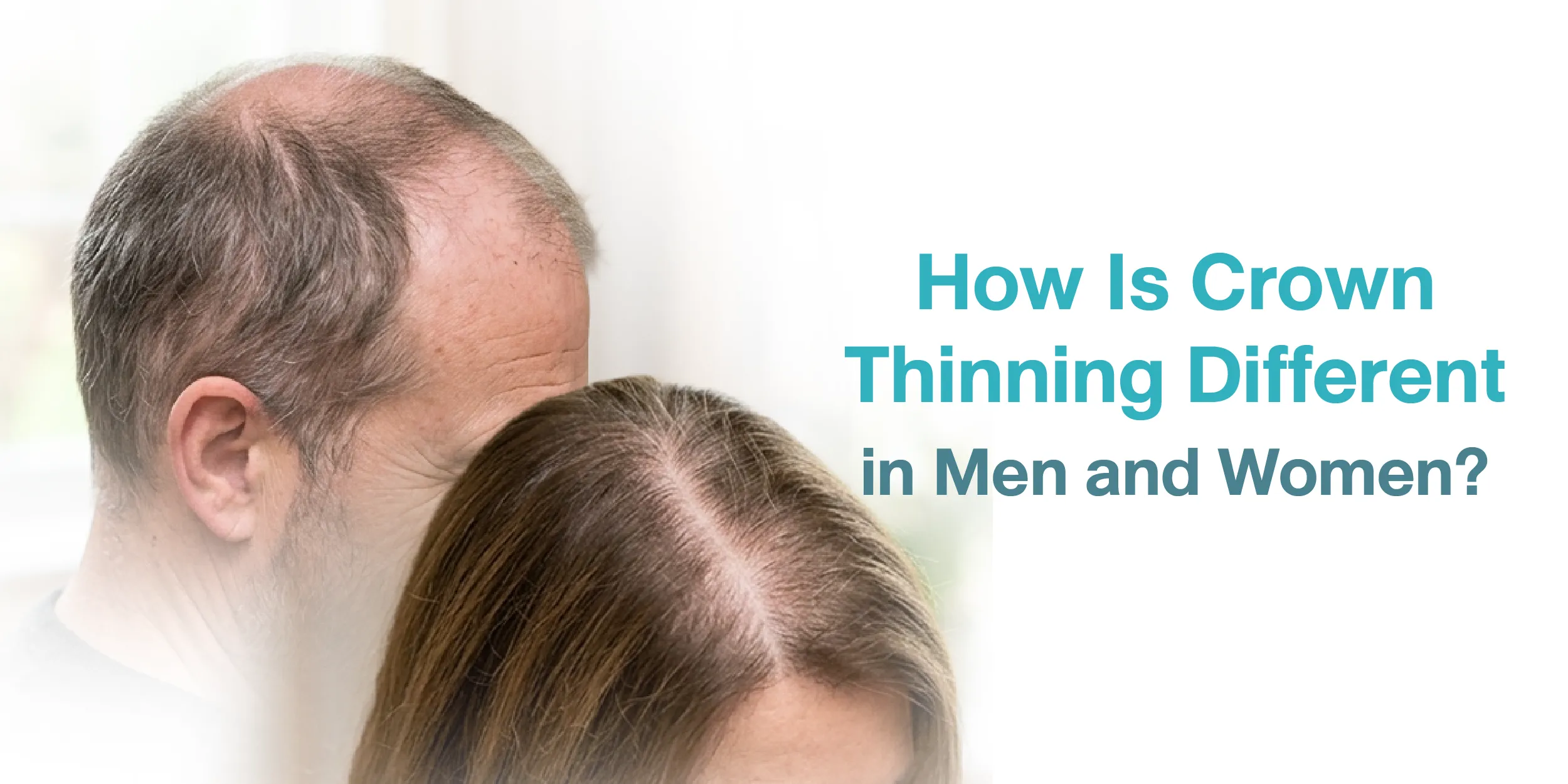
In women, thinning typically appears as diffuse hair loss across the crown area. In men, it often begins at the crown together with a receding frontal hairline. If left untreated, density continues to decrease and may eventually progress to Baldness.
How Is Crown Thinning Different in Men and Women?
Although Hair loss, thinning hair affects both genders, the pattern and progression differ clearly.
Men
- Often starts with a receding frontal hairline forming an “M” shape
- Thinning at the crown (vertex) forming a distinct circular patch
- May gradually connect, leading to extensive Baldness
- Strongly linked to genetics and male hormones that accelerate follicle miniaturization
Women
- Diffuse thinning across the crown area
- Widening part line while the frontal hairline usually remains intact
- Rarely develops into clearly defined bald patches like in men
- Commonly associated with hormonal changes, stress, postpartum conditions, or internal health factors
In summary, male thinning tends to follow a defined shape and expands into clear bald areas, whereas female thinning is more diffuse, with gradual density reduction rather than completely bare spots.
Approaches and Treatment methods for thinning hair
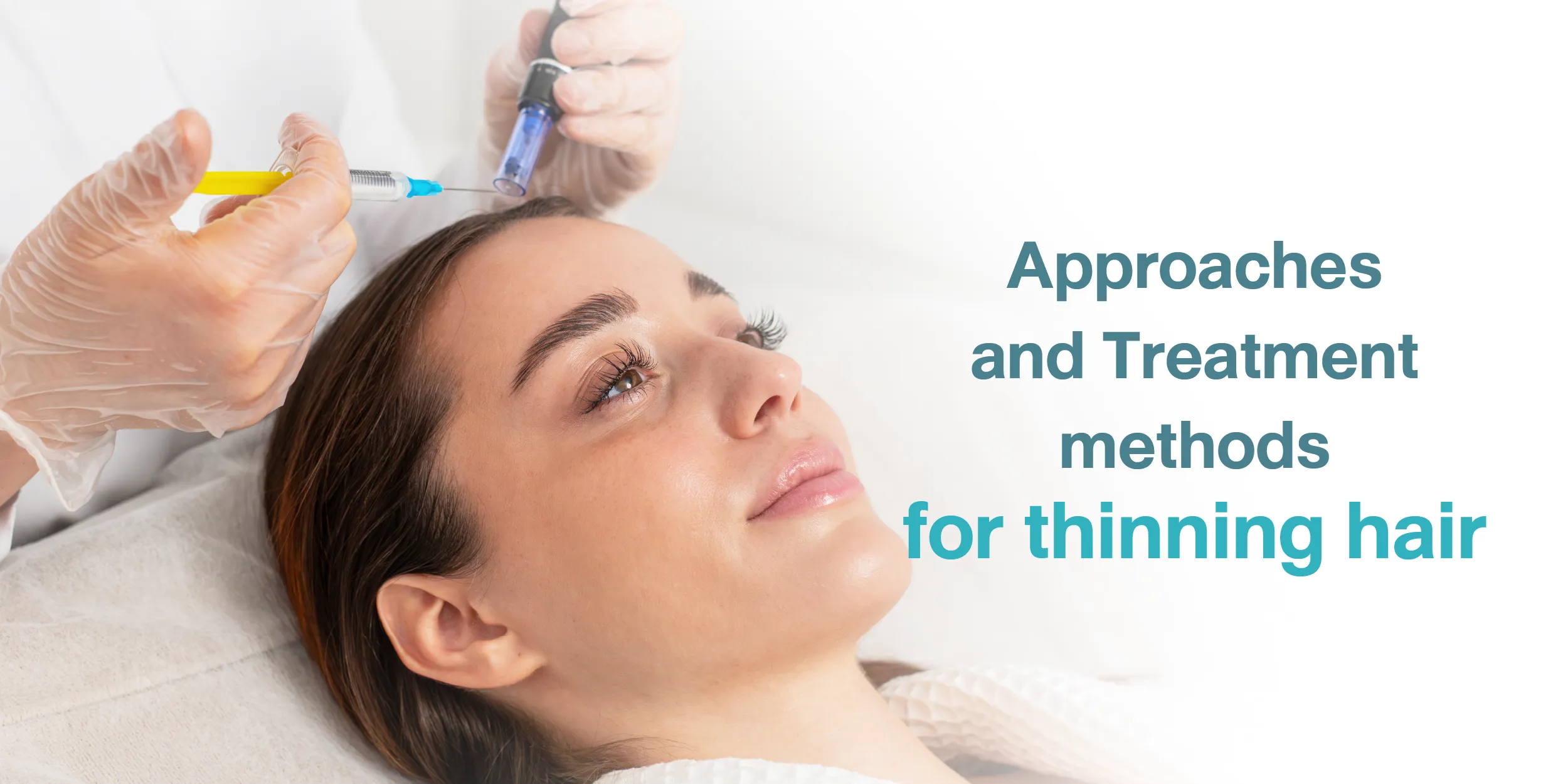
Choosing appropriate Treatment methods for thinning hair depends on the underlying cause, severity, and follicle condition, as factors such as genetics, the DHT hormone, and lifestyle often overlap.
Medication and Supplements
For early-stage Hair loss, thinning hair, doctors may recommend topical treatments, oral medication, or nutritional supplements to slow shedding, reduce the effects of the DHT hormone, and stimulate normal hair growth cycles. This approach is suitable when follicles have not permanently miniaturized.
Regenerative Treatments
Procedures such as PRP therapy or laser stimulation help improve scalp circulation and strengthen existing follicles. These are ideal for individuals who still have viable hair roots.
Hair Transplant Treatment
When thinning becomes pronounced and follicles in the affected area have permanently shrunk, stimulation alone may not be sufficient. Hair transplantation offers a long-term solution. Techniques such as FUE hair transplant or DHI involve transferring strong follicles from the back of the scalp to thinning areas to restore natural density. For individuals considering a No-shave hair transplant, consultation with a qualified hair transplant doctor is essential before proceeding with treatment.
Summary
Hair loss, thinning hair, especially Thinning hair at the crown in women, often develops gradually. It may begin with a widening part line, finer and weaker strands, and a noticeable reduction in hair density without immediate awareness. A key contributing factor is the DHT hormone, which affects the hair growth cycle by weakening follicles and causing newly produced hair to become progressively thinner. Without proper care, the condition may advance toward Baldness, impacting overall appearance and long-term confidence.
Choosing the right Treatment methods for thinning hair should begin with a thorough assessment of the underlying causes and severity. Options range from medications and nutritional supplements to reduce the effects of the DHT hormone, to scalp-stimulating treatments that support follicle health. For individuals seeking more definitive and natural-looking results, procedures such as FUE hair transplant or No-shave hair transplant can restore density without significantly affecting daily appearance during recovery.
Under the supervision of a qualified Hair transplant clinic, careful treatment planning helps improve graft survival rate and ensures proper direction and angle placement for seamless blending with existing hair. Today, many patients place their trust in DHI Thailand, which follows international safety standards and is supported by a medical team with over 20 years of experience. This commitment ensures natural-looking outcomes tailored to each individual’s needs.